Thinking Process
PHASE 1: VISUAL DECONSTRUCTION
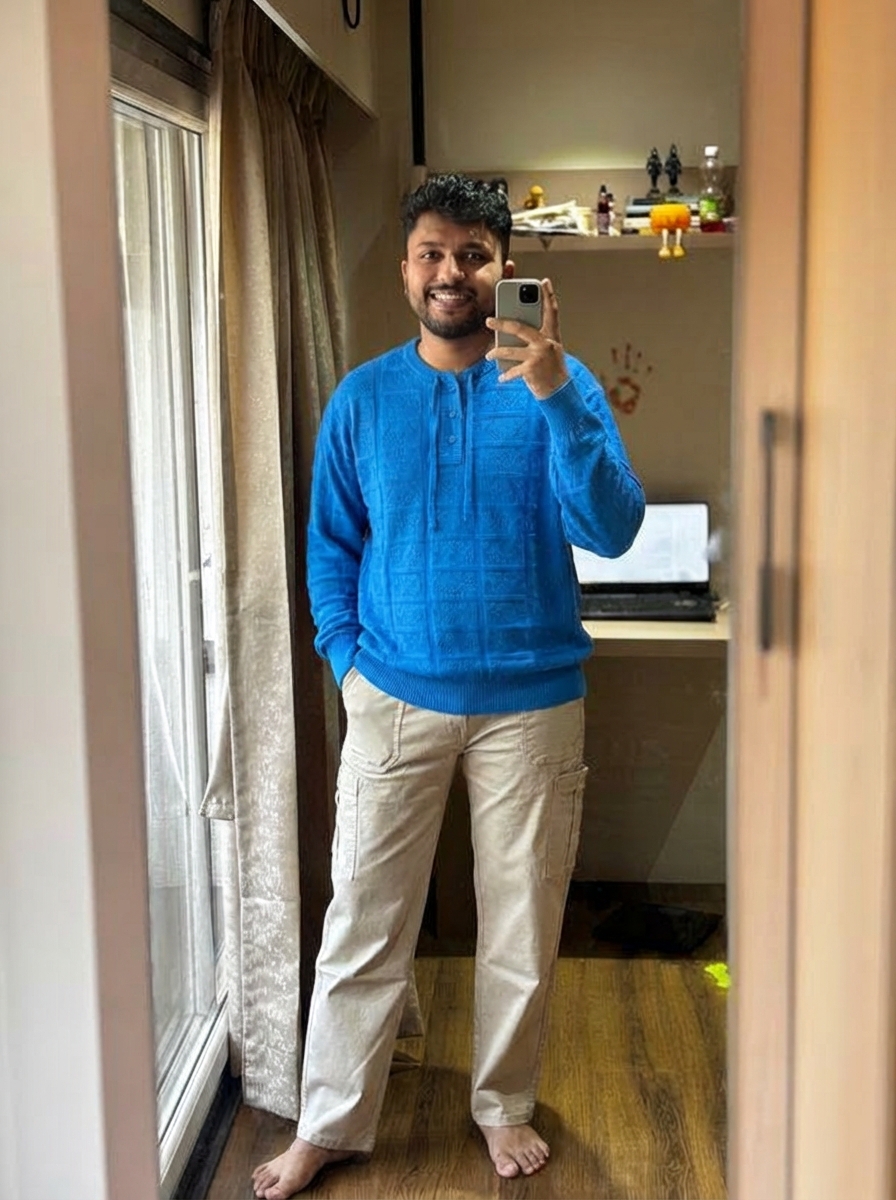
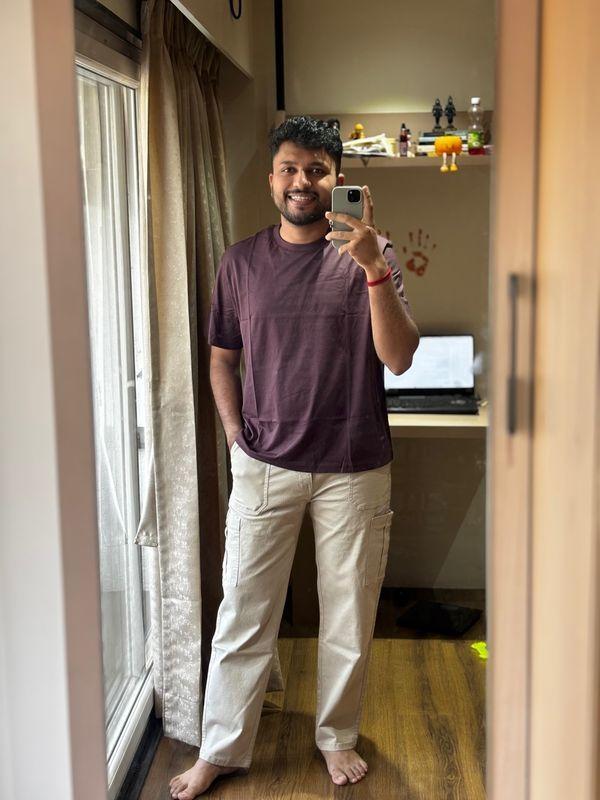
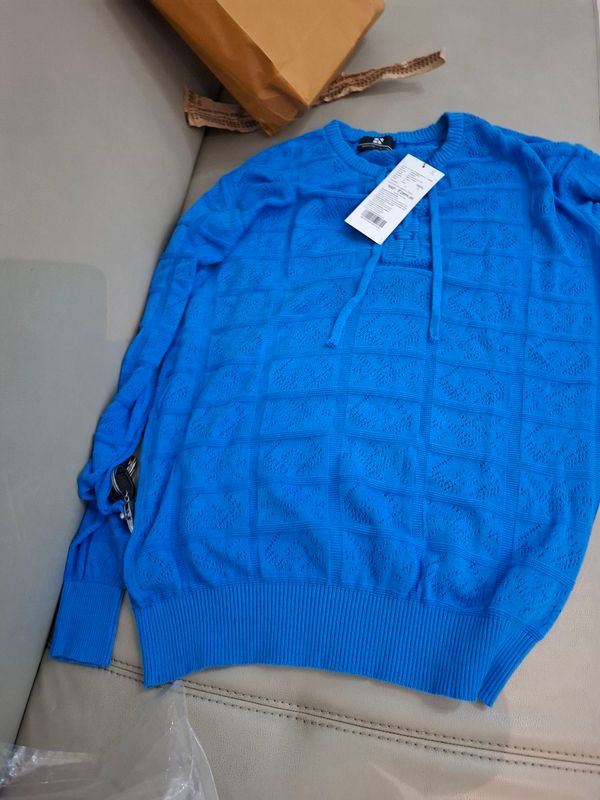
- **Fabric Physics:** The source garment is a textured, medium-weight waffle or grid-knit fabric (likely cotton or acrylic blend). Unlike the user's current lightweight t-shirt, this material has significant volumetric density. It creates soft, matte light diffusion rather than specular highlights. The simulation must account for the fabric's self-collision due to the knit structure; it will not drape as fluidly as silk but will hold its shape more than a basic jersey tee.
- **Key Features:** The distinct square/grid perforation pattern is the primary visual identifier and must remain high-resolution without blurring during warping. The ribbed elastic cuffs and hemline are structural anchors. The drawstrings at the neckline are loose physics objects. *Note: The retail tag visible in the source image must be digitally excised.*
PHASE 2: FIT & DRAPE SIMULATION
- **Body Mapping:**
- **Left Arm (Phone Hand):** The user's elbow is bent at an acute angle. The knit fabric must exhibit "compression bunching" at the inner elbow (antecubital fossa) and tension stretching across the outer elbow. The sleeve length must extend to the wrist, interacting with the red wristband.
- **Right Arm (Pocket):** The user's right hand is inserted into the pants pocket. The garment hem must interact physically here—either tucking slightly with the hand or bunching above the wrist depending on the desired styling, creating tension lines radiating from the pocket insertion point up toward the shoulder.
- **Torso:** The fit should be relaxed but structured. The hemline needs to fall naturally over the hips, slightly wider than the current tucked-in look, respecting gravity's pull.
- **Occlusion Handling:**
- **Primary Occlusion:** The smartphone and the user's left hand (fingers/knuckles) are strictly foreground elements. A precise segmentation mask is required to layer the new garment *behind* these objects.
- **Secondary Occlusion:** The red string/bracelet on the left wrist must remain visible on top of or just peeking out from the new sleeve cuff.
PHASE 3: ENVIRONMENT & LIGHTING
- **Light Match:** The target environment features warm, overhead indoor artificial lighting (likely tungsten or soft white LED), casting shadows downwards (note shadows under the current t-shirt folds). The source garment is lit by flat, cool studio/window light. The blue sweater must be re-lit to accept the warm ambient occlusion of the room.
- **Color Calibration:** The electric blue of the source is too cool for the target scene. A color grading curve must be applied to warm up the blue tones slightly and deepen the shadows to match the contrast levels of the user's beige pants and the room's dark wood tones.
PHASE 4: IDENTITY PROTECTION
- **Facial Lock:** The user's entire head region, including hair, beard, ears, and neck skin up to the clavicle, must be mask-frozen. The expression and gaze must remain pixel-perfect.
- **Body Integrity:** The simulation is strictly prohibited from altering the user's biomechanical structure. The shoulder width, torso volume, and arm thickness must remain consistent with the original image. No "slimming" or "muscular enhancement" filters are permitted.