Thinking Process
PHASE 1: VISUAL DECONSTRUCTION
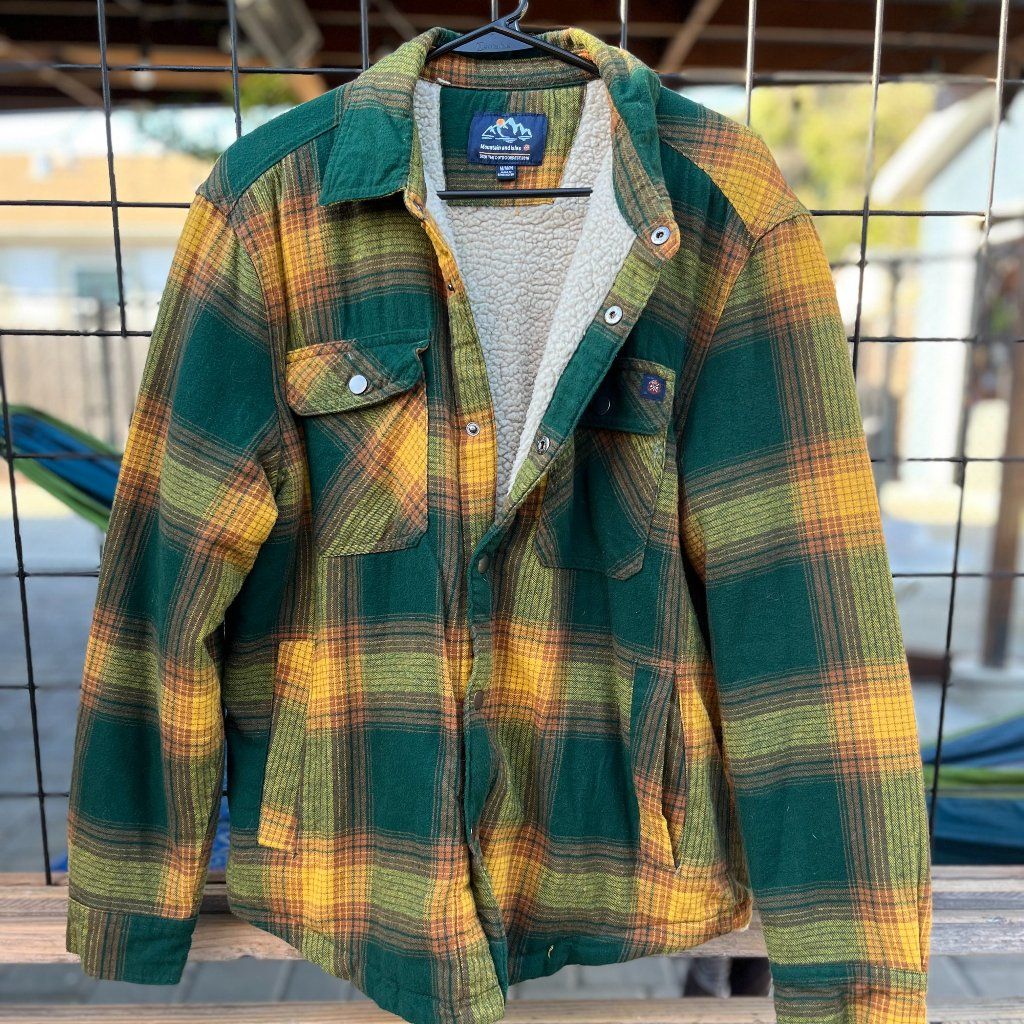
- **Fabric Physics:** The source garment is a heavyweight flannel with a thick sherpa (fleece) lining. Unlike the user's current thin cotton t-shirt, this material is rigid and has significant volume. It will not cling to musculature. The exterior should reflect light with a matte, fuzzy texture characteristic of brushed cotton, while the inner white sherpa lining (visible at the collar) must appear porous and soft, absorbing light rather than reflecting it.
- **Key Features:** The distinct yellow and green plaid pattern must maintain spatial coherence without warping unnaturally. Critical details to preserve include the dual chest pockets with snap buttons, the side-entry hand warmer pockets, the metallic snap closures down the placket, and the thick, rolled sherpa collar. The structural stiffness of the collar and cuffs must be maintained.
PHASE 2: FIT & DRAPE SIMULATION
- **Body Mapping:** Due to the garment's thickness, a volumetric offset from the user's torso is required; it must sit "on top" of the current silhouette, not replace the skin layer directly.
- *Right Arm (Extended):* The fabric will experience tension across the right pectoral and axilla (armpit). The sleeve will pull back slightly from the wrist, likely bunching near the elbow due to fabric stiffness.
- *Left Arm (relaxed):* The sleeve should hang relatively straight with minor stacking/bunching at the wrist cuff.
- *Torso:* The jacket will hang straight down from the chest, masking the inward curve of the waist that is currently visible in the t-shirt.
- **Occlusion Handling:**
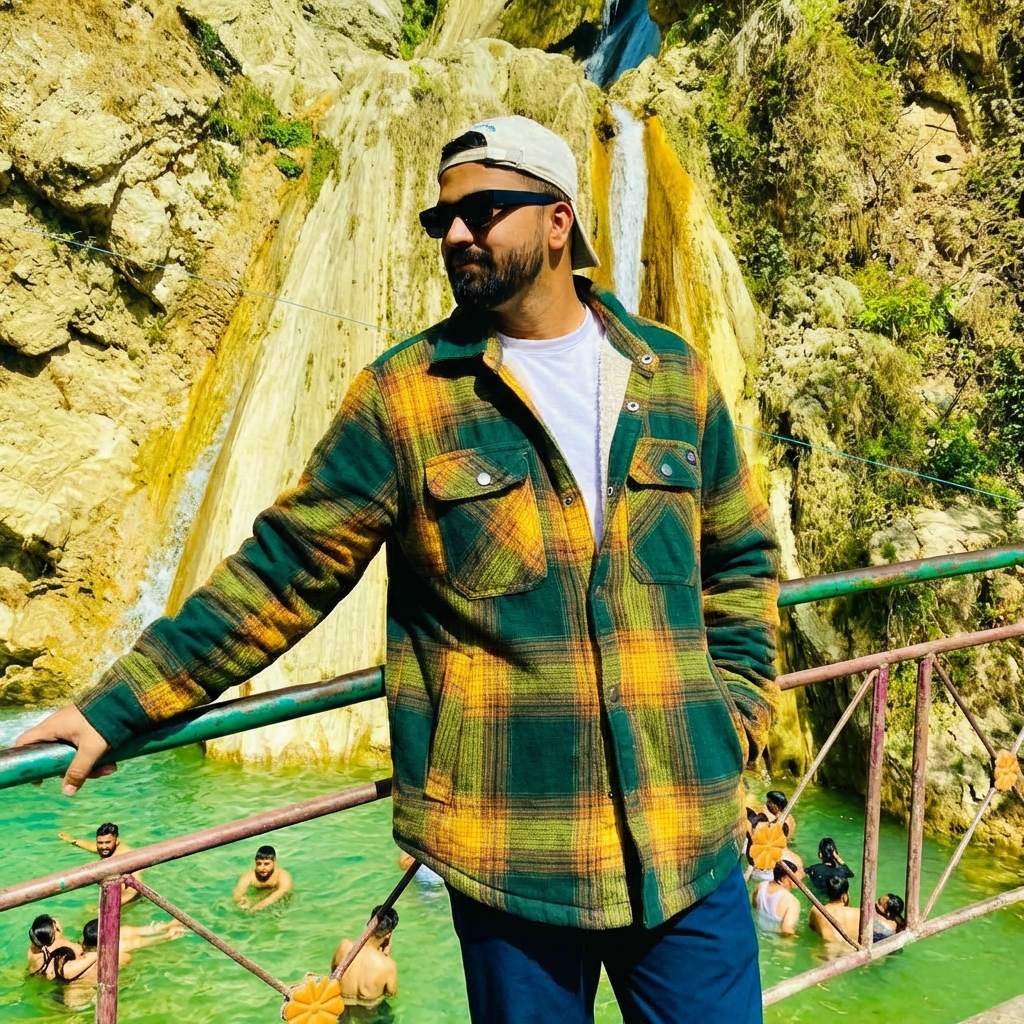
- **CRITICAL:** The green metal railing cuts across the user's lower waist/thigh area. The new garment (which is longer than the current t-shirt) must be masked *behind* this railing.
- The user's right hand grips the railing; the sleeve cuff must terminate naturally at the wrist, ensuring the hand remains the top layer.
- The beard overlaps the neck area; the new sherpa collar must nestle *under* the beard line.
PHASE 3: ENVIRONMENT & LIGHTING
- **Light Match:** The scene features hard, high-contrast natural sunlight coming from the upper right (user's left side is in shadow). The simulation must cast deep, sharp shadows on the left side of the jacket and underneath the chest pocket flaps. The "hills and valleys" of the plaid wrinkles must show high contrast to simulate the depth of the flannel material.
- **Color Calibration:** The scene has strong warm highlights and green ambient bounce from the water. The yellow in the plaid should shift slightly warmer (golden), while the deep greens of the jacket must harmonize with the background foliage without blending into it. Shadow areas on the jacket should pick up a subtle teal tint from the water reflection below.
PHASE 4: IDENTITY PROTECTION
- **Facial Lock:** Absolute freeze on the user's face, including the sunglasses, nose, ears, and cap. The jawline and beard must remain pixel-perfectly identical to the original image.
- **Body Integrity:** The user's underlying skeletal structure and stance must not be altered. While the jacket adds visual bulk due to material thickness, the user's arm length, shoulder width, and head-to-body ratio must remain unchanged. No slimming or athletic enhancement effects are permitted.