Thinking Process
PHASE 1: VISUAL DECONSTRUCTION
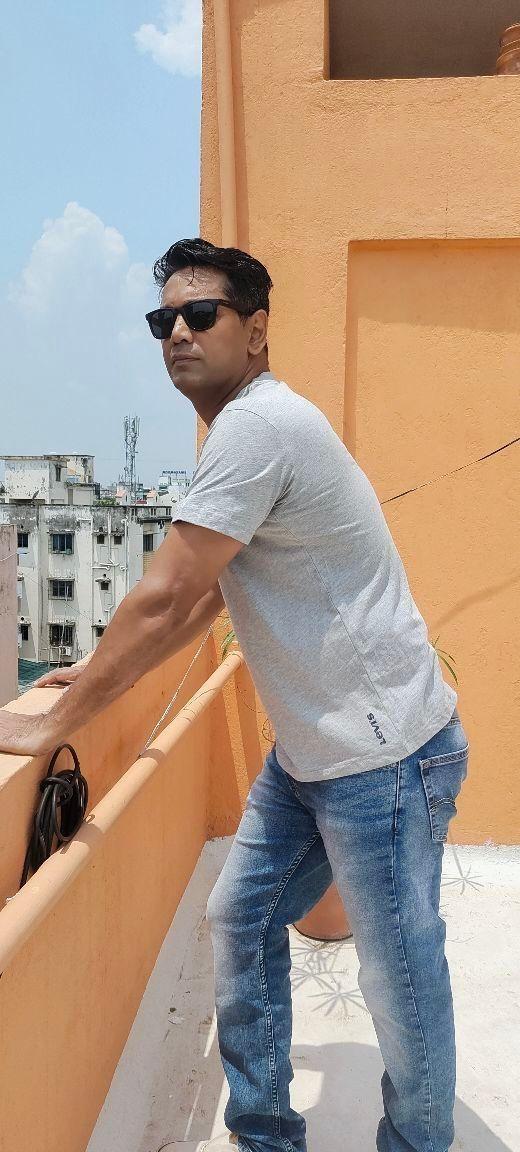
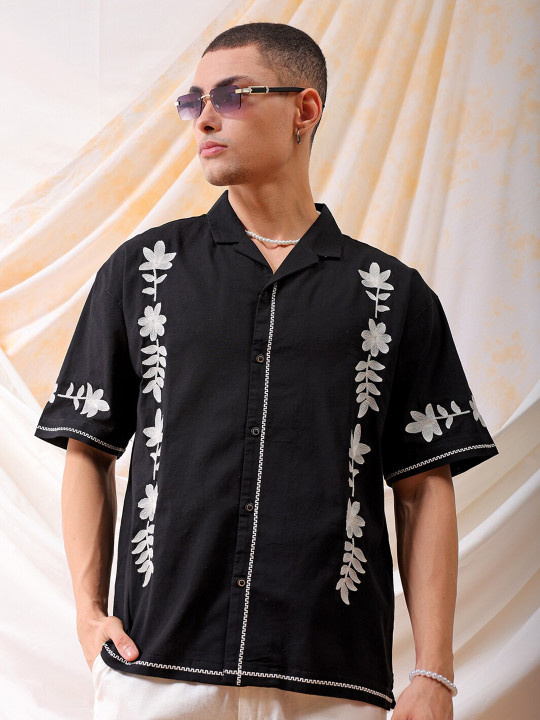
- **Fabric Physics:** The source garment is a structured, medium-weight cotton or linen blend with a matte finish. Unlike the user's current clingy knit t-shirt, this material has low elasticity and high structural integrity. Light reflection should be diffuse; it will not shine but will show distinct highlights where the sun hits the folds.
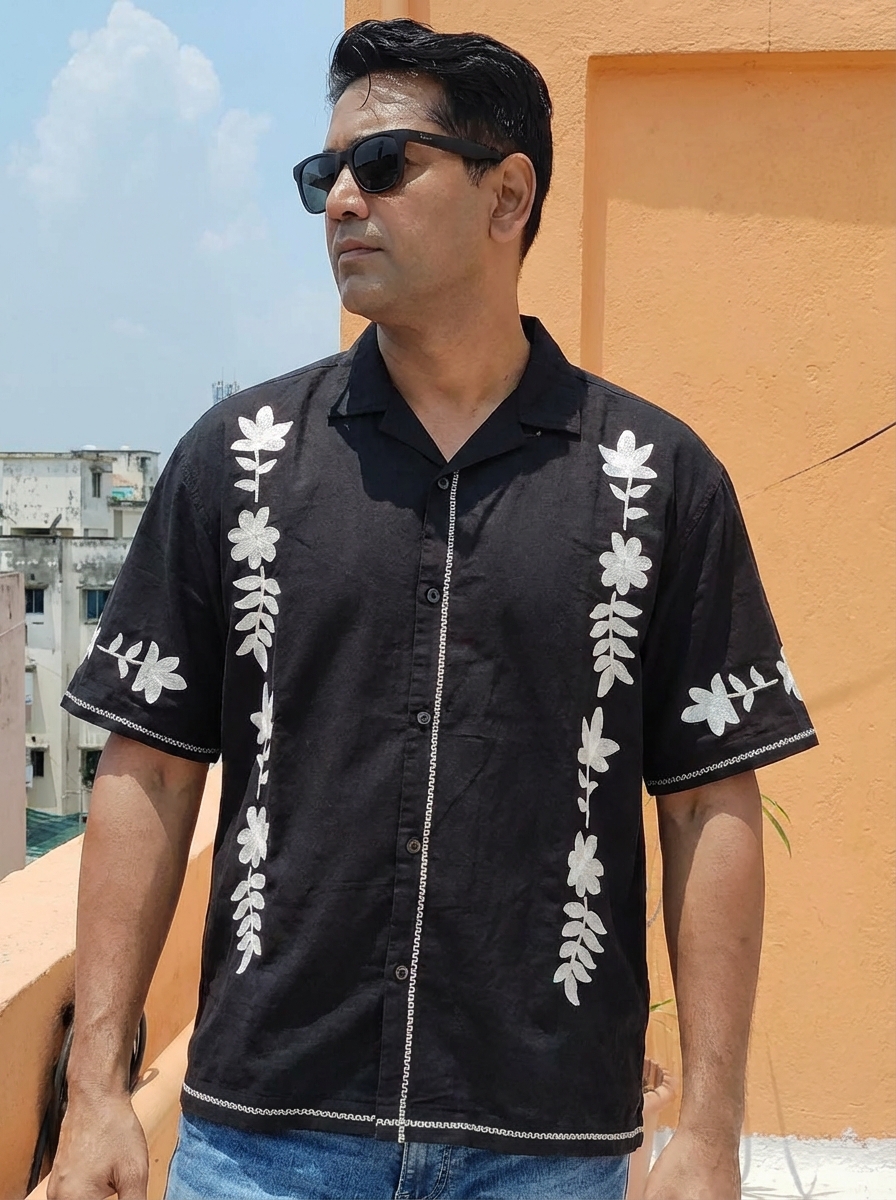
- **Key Features:** The vertical white floral embroidery running down both front panels and the sleeve cuffs is the critical design element. The "camp collar" (open neck) structure, dark buttons, and the white contrast stitching along the bottom hem must be preserved with high fidelity.
PHASE 2: FIT & DRAPE SIMULATION
- **Body Mapping:** Due to the user's forward-leaning pose on the balcony railing, the simulation must account for significant gravitational pull. The fabric should drape vertically from the chest, creating a gap between the garment and the user's abdomen (unlike the current fitted t-shirt). The back of the shirt will pull taut across the scapula, while the front hem will hang freely, potentially interacting with the top of the jeans. The sleeves are loose; the user's deltoids should fill the shoulder, but the cuff should hover around the bicep rather than gripping it.
- **Occlusion Handling:** The primary occlusion is the orange railing/wall where the user's right forearm rests. The garment simulation must respect the depth of the arm leaning on the wall; the shirt sleeve on the right side must terminate or bunch appropriately before the point of contact with the concrete.
PHASE 3: ENVIRONMENT & LIGHTING
- **Light Match:** The user is in a high-contrast, harsh natural sunlight environment (mid-day sun). The source garment (currently in soft studio light) must be re-rendered with hard shadows. The "sun" source is high and to the left. Deep, sharp shadows must be cast within the fabric folds (self-shadowing) and by the collar onto the neck.
- **Color Calibration:** The pitch-black fabric of the source garment must be color-graded to accept "color bleed" from the surrounding environment. Specifically, the black cloth should pick up subtle warm orange tones from the adjacent wall and the sunlight, preventing it from looking like a flat, artificial "void" in the image.
PHASE 4: IDENTITY PROTECTION
- **Facial Lock:** The user's entire head, including the specific hairstyle, sunglasses, jawline, and neck geometry, must be frozen. The skin tone of the arms must be preserved exactly.
- **Body Integrity:** Strictly forbidden to slim the user's arms or alter the shoulder width. The user's muscular arm definition must remain visible where the new short sleeves end. The new garment is a "relaxed fit," so it will naturally silhouette wider than the current t-shirt, but the underlying skeletal structure must remain unchanged.