Thinking Process
PHASE 1: VISUAL DECONSTRUCTION
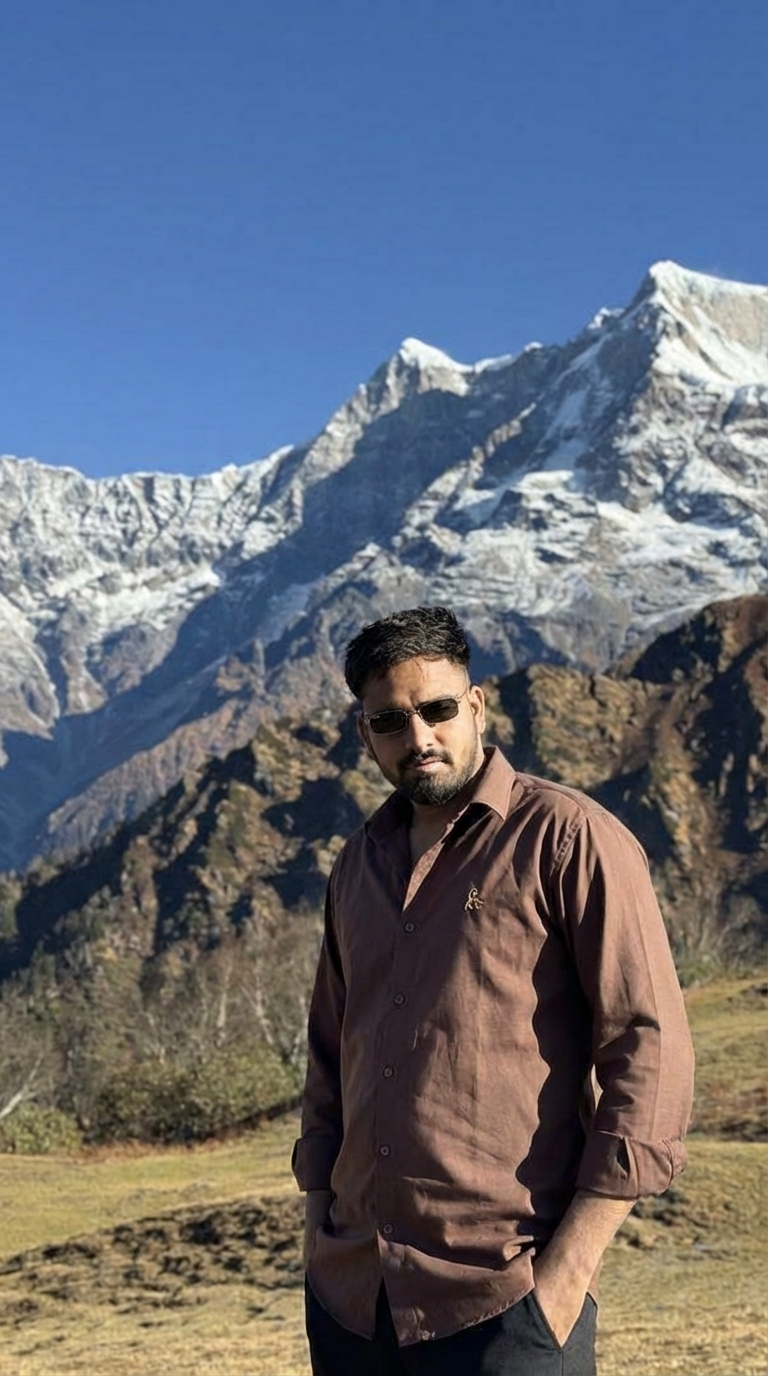
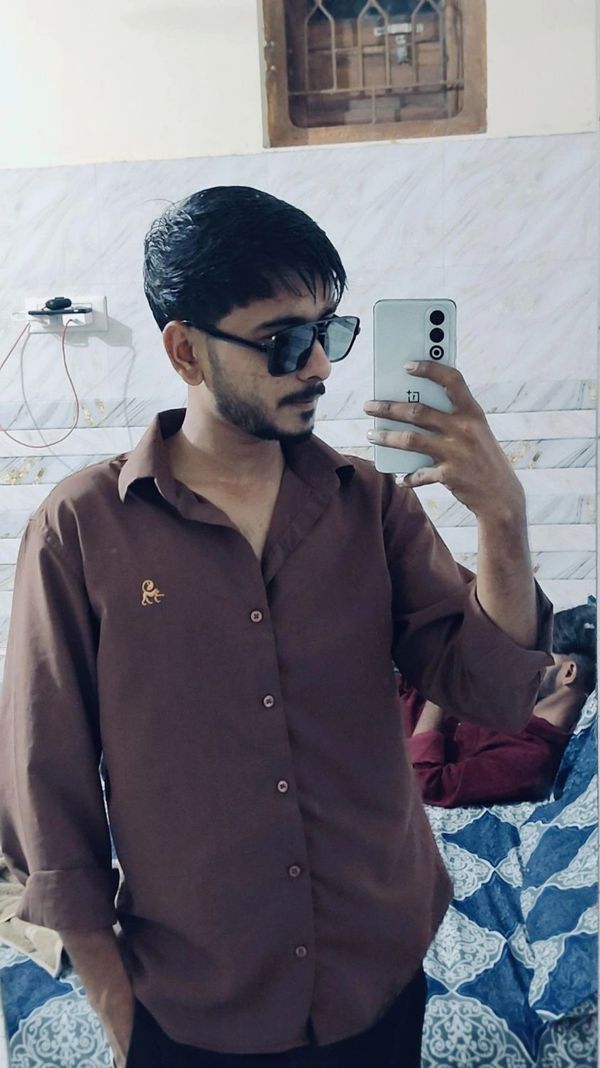
- **Fabric Physics:** The source garment is a brown, long-sleeved button-down shirt, appearing to be a woven cotton or cotton-poplin blend. Unlike the target's current stiff leather jacket, this fabric has medium pliability and a matte finish. It should not reflect light with specular highlights (shine) but rather diffuse light softly. The fabric has a moderate drape weight, meaning it will show sharper, smaller creases at stress points compared to heavy leather.
- **Key Features:**
1. The small gold/yellow logo on the user's left chest (viewer's right) must be preserved.
2. The vertical button placket with visible contrasting buttons.
3. The specific collar shape (spread collar).
4. The rolled cuff styling on the sleeves should be maintained if arm length permits, or adapted to a standard wrist termination.
PHASE 2: FIT & DRAPE SIMULATION
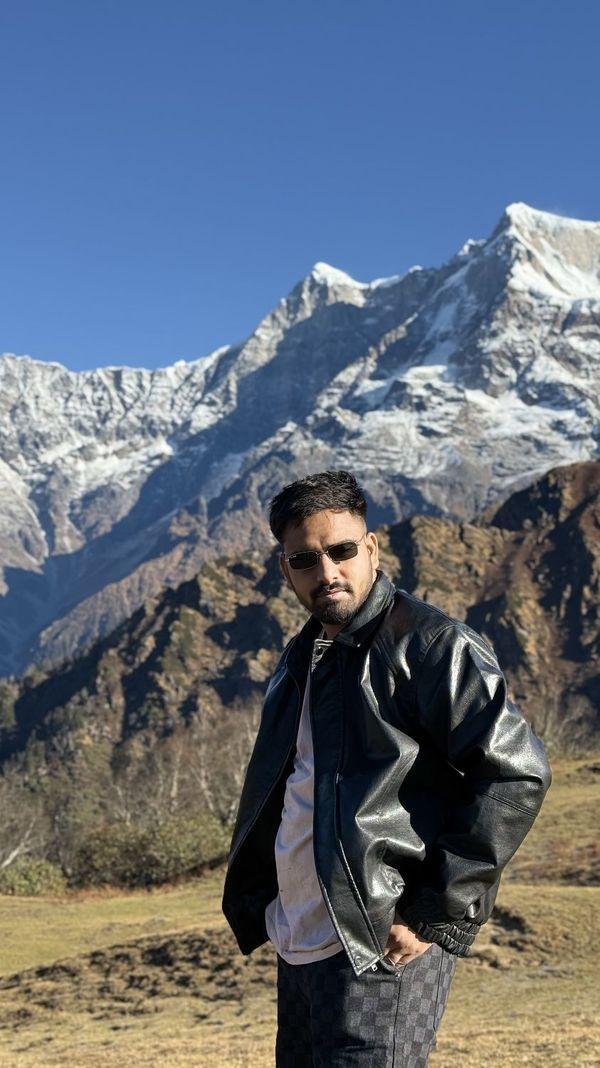
- **Body Mapping:** The target user is standing with a slight twist, and his hands appear to be inserted into pockets (likely the current jacket pockets or pant pockets). Since the leather jacket adds significant artificial bulk, the new shirt must sit closer to the skin, revealing the user's true shoulder width and torso shape. The fabric must "break" and fold near the waistline where the hands interact with the hips. Tension lines should radiate from the shoulders towards the axilla (armpit) and across the chest due to the slight body rotation.
- **Occlusion Handling:**
1. **Hands/Wrists:** The user's hands are currently obscured by the leather jacket pockets. If the hands are intended to be in the *pant* pockets, the shirt hem must drape *behind* the wrists or bunch above them.
2. **Beard:** The user's beard line must layer *over* the collar of the new shirt.
3. **Sunglasses:** Must remain strictly untouched on the face layer.
PHASE 3: ENVIRONMENT & LIGHTING
- **Light Match:** The target environment is high-altitude outdoor daylight (harsh, directional sunlight). The source image is indoor, diffuse artificial light.
- *Direction:* Light source in the target is coming from the top-left (viewer's perspective), creating strong shadows.
- *Shadows:* The new shirt must cast self-shadows (folds, collar shadow on neck) consistent with hard sunlight, not soft indoor light. The right side of the torso (viewer's right) should be in significant shadow.
- **Color Calibration:** The brown of the shirt must be color-graded to match the outdoor color temperature. The indoor lighting has a cool/fluorescent cast; the target environment requires warmer, high-contrast daylight calibration. The brown should appear vibrant in the highlights and deep/cool in the shadows to match the atmospheric scattering of the mountain background.
PHASE 4: IDENTITY PROTECTION
- **Facial Lock:** The region above the neck—specifically the hair, forehead, sunglasses, nose, mouth, and beard—must be completely frozen and masked out of the generation process.
- **Body Integrity:** The user's underlying anatomical structure (shoulder width, neck thickness) must be respected. While the leather jacket makes him look bulkier, the simulation must not "slimming" him artificially; it should estimate the natural body volume minus the thick leather padding. The skin tone on the neck must match the face.