Thinking Process
PHASE 1: VISUAL DECONSTRUCTION
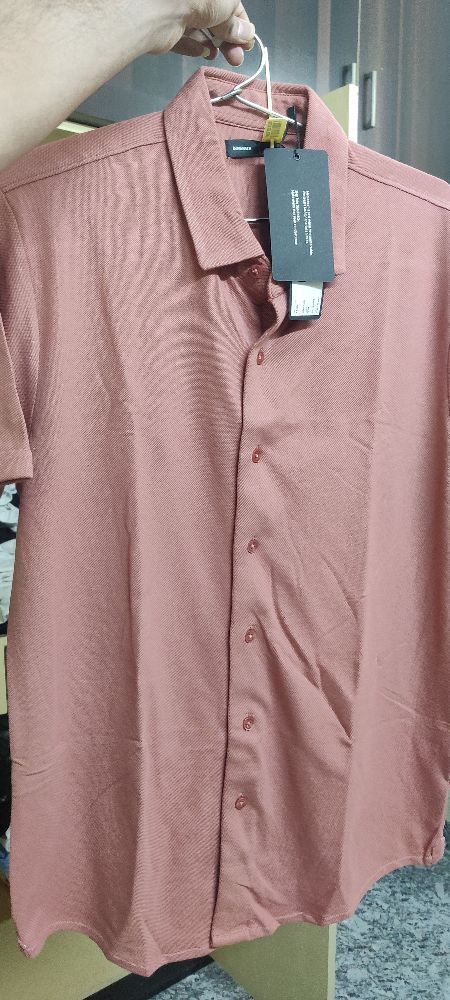
- **Fabric Physics:** The source garment appears to be a textured cotton-poly blend or a pique knit (similar to polo shirt material) with a matte finish. It possesses medium weight stiffness—it will not cling like silk but will not stand rigid like starch. Light diffusion should be soft and non-specular; the fabric absorbs light rather than reflecting it.
- **Key Features:** The distinct "waffle" or micro-grid texture of the weave is critical for realism and must be upscaled. The standard collar structure, the specific brown tone of the buttons, and the button placket alignment must be preserved. The black retail tag hanging from the second buttonhole should ideally be digitally removed for a realistic "worn" look, unless strict "as-is" transfer is required.
PHASE 2: FIT & DRAPE SIMULATION
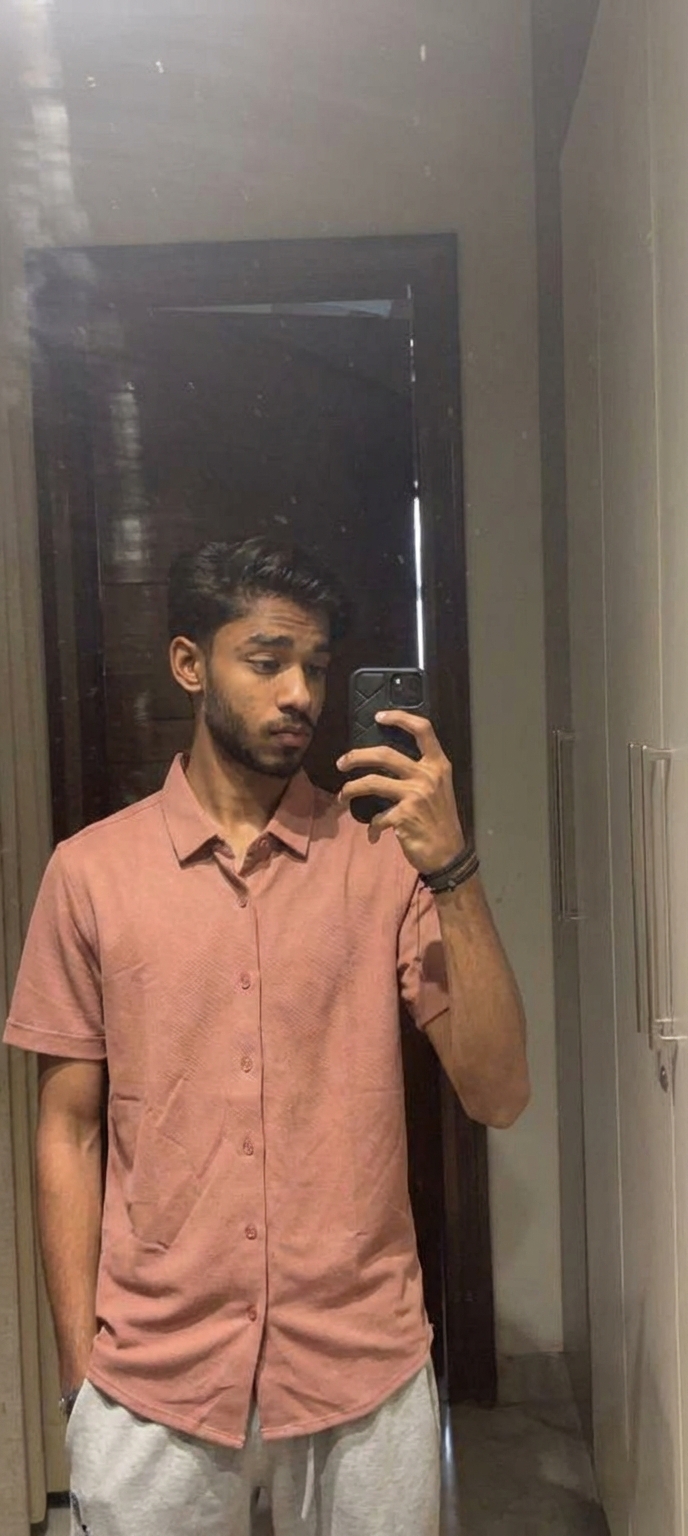
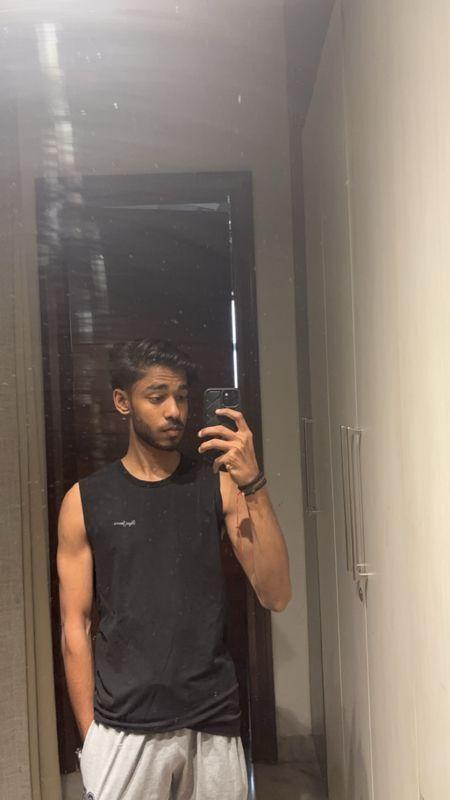
- **Body Mapping:** The user is wearing a sleeveless tank top; the new garment is a short-sleeved button-down. The simulation must volumetrically expand the shoulder area to account for the shirt's construction (padding the deltoids slightly more than the tank top). The collar must rise higher on the neck than the current tank top scoop. Given the left arm is raised holding the phone, slight tension folds should radiate from the left armpit across the pectoral muscle. The right side should hang straight with a slight gravitational pull towards the hip.
- **Occlusion Handling:** CRITICAL: The user's left hand and the smartphone are positioned directly in front of the torso. The new shirt must be rendered *behind* the hand and phone layers (Z-depth masking). The black tank top straps must be completely erased and replaced by the shirt's shoulder yoke and collar.
PHASE 3: ENVIRONMENT & LIGHTING
- **Light Match:** The target environment is a dimly lit room with warm, amber-toned artificial lighting (likely recessed ceiling lights) causing a glare on the mirror. The source cloth is photographed under cooler, flatter light. The shirt's hue must be shifted towards a warmer temperature (adding yellow/orange gain) to match the room's white balance.
- **Color Calibration:** The salmon/dusty pink color will appear darker and more muted in the target environment. Contrast must be increased slightly to match the dynamic range of the user's selfie. Artificial shadowing must be generated under the new collar and sleeves onto the user's skin to ground the object.
PHASE 4: IDENTITY PROTECTION
- **Facial Lock:** The user's entire head, including the voluminous hairstyle, facial hair (beard/stubble), and neck structure, must be frozen and pixel-locked.
- **Body Integrity:** The user's arm musculature (biceps/triceps) and shoulder width must remain unaltered. Do not slim the waist or change the aspect ratio of the torso. The grey sweatpants at the bottom of the frame must remain untouched; the new shirt hem should naturally drape over the waistband without altering the pants' geometry.