
Thinking Process
PHASE 1: VISUAL DECONSTRUCTION
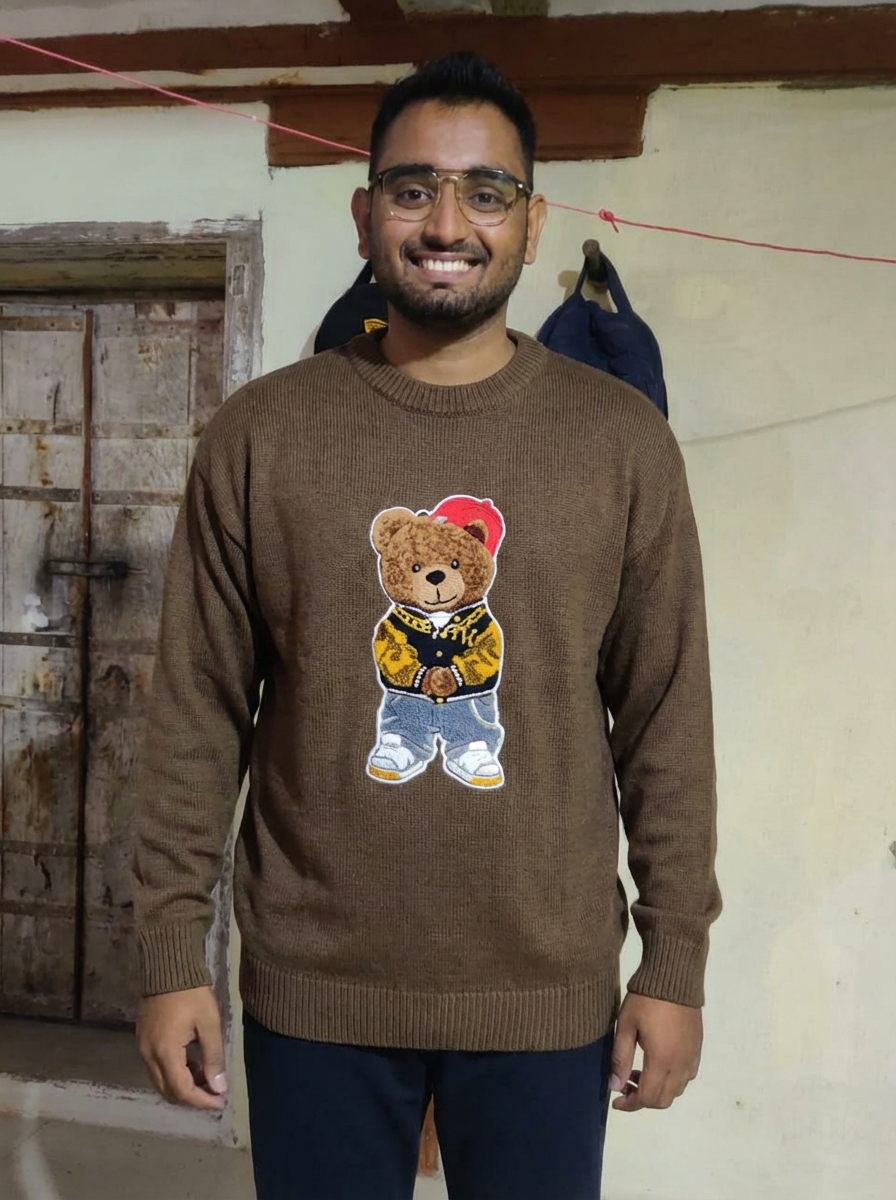
- **Fabric Physics:** The source garment is a heavy-gauge knit sweater (wool or cotton blend). Unlike the user's current crisp woven shirt, this material features high friction and low specular reflection. It must appear matte, absorbing light with a soft falloff. The simulation must render the "fuzz" or micro-texture of the yarn to avoid a plastic appearance.
- **Key Features:**
- **Graphic:** The central "Teddy Bear" embroidery/patch is the focal point and must remain centered on the chest without warping into the armpits.
- **Ribbing:** Distinct ribbed textures on the crew neckline, wrist cuffs, and bottom hemline must be preserved.
- **Seams:** The dropped shoulder seams characteristic of a relaxed fit must be transferred accurately.
PHASE 2: FIT & DRAPE SIMULATION
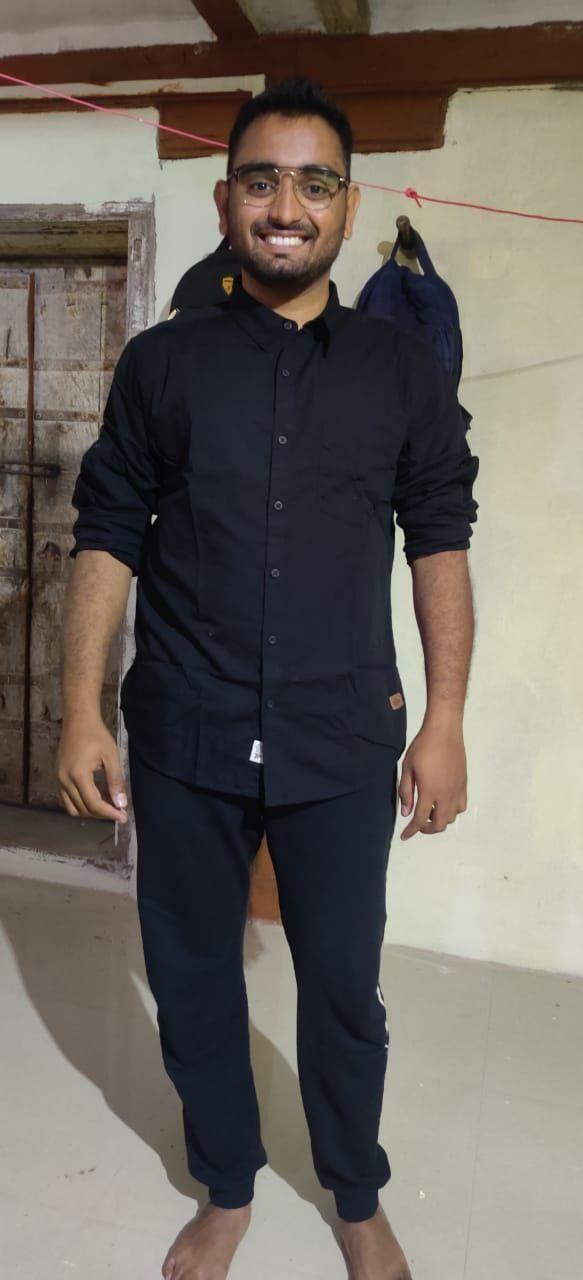
- **Body Mapping:** The sweater has a relaxed/loose fit compared to the user's current semi-fitted shirt.
- **Shoulders:** The garment should round over the user's deltoids rather than creating sharp angles.
- **Torso:** Gravity will cause the fabric to hang straight down from the chest, concealing the waist definition more than the current shirt.
- **Sleeves:** Expect fabric stacking (bunching) just above the wrists due to the elasticated ribbed cuffs meeting the user's forearms.
- **Occlusion Handling:**
- **Neck:** The user's current high collar must be fully masked and replaced by the sweater's lower crew neck. Exposed skin at the throat needs to be synthesized to bridge the gap.
- **Hands:** The user's hands are positioned at the side; the sleeve cuffs must terminate at the wrist bone, ensuring the hands remain layered *over* the garment if the sleeve length extends that far.
PHASE 3: ENVIRONMENT & LIGHTING
- **Light Match:** The user is in an indoor setting with overhead, slightly diffuse artificial lighting (casting downward shadows). The source image has dramatic, directional studio lighting. The sweater's lighting must be flattened and relit to generate soft shadows under the pectoral muscles and deep occlusion shadows in the inner arm folds, matching the user's ambient room tone.
- **Color Calibration:** The source brown is rich and warm. The user's photo has a slightly cool/desaturated cast typical of phone photography in low light. The sweater's RGB values must be slightly desaturated and grain-matched (noise injection) to blend cohesively with the user's photo resolution.
PHASE 4: IDENTITY PROTECTION
- **Facial Lock:** The user's facial structure, specifically the jawline, beard, glasses, and ears, must be strictly frozen. No pixel bleed from the sweater is permitted above the thyroid cartilage.
- **Body Integrity:** Strictly forbidden to warp the user's shoulder width or torso volume to match the slimmer source model. The simulation must apply the cloth *onto* the user's existing biometric volumetric data, adding slight bulk naturally due to the thickness of the knit fabric.