Thinking Process
PHASE 1: VISUAL DECONSTRUCTION
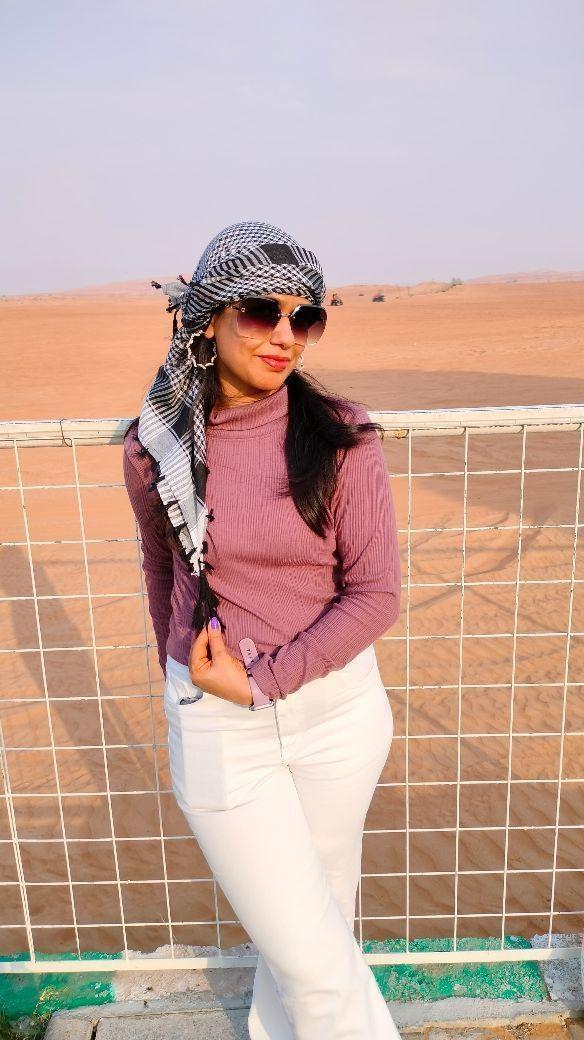
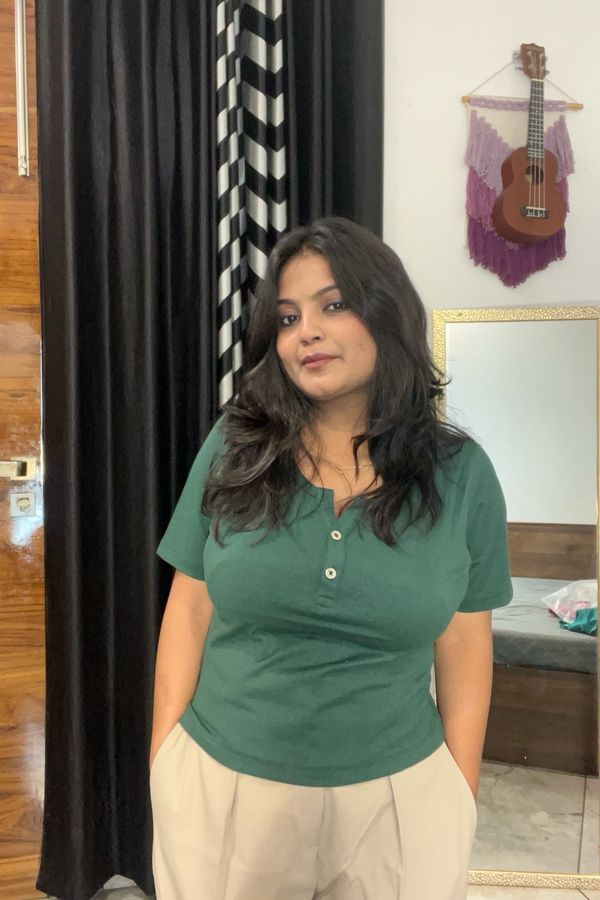
- **Fabric Physics:** The source garment is a cotton jersey blend henley. It has a matte finish with low light specularity and a soft, pliable drape. Unlike the user's current high-tension ribbed synthetic top, the new fabric is heavier and less elastic; it should not hug the skin tightly but rather skim the body contours with a natural gravitational pull.
- **Key Features:** The three contrasting white buttons on the center placket, the reinforced crew/scoop neckline, and the short-sleeve construction are critical design elements. The hemline appears slightly curved and relaxed, which must be preserved against the user's waistline.
PHASE 2: FIT & DRAPE SIMULATION
- **Body Mapping:** The source garment is a looser fit than the target's current top. The simulation must replace the tight silhouette of the turtleneck with the relaxed fit of the henley. The fabric should hang vertically from the bust apex rather than curving inward sharply under the bust. Since the source is short-sleeved and the target is long-sleeved, the simulation requires texture in-painting for the user's forearms to match her facial skin tone, or strict masking to ensure the new short sleeves terminate at the bicep.
- **Occlusion Handling:** This is a high-complexity layering task.
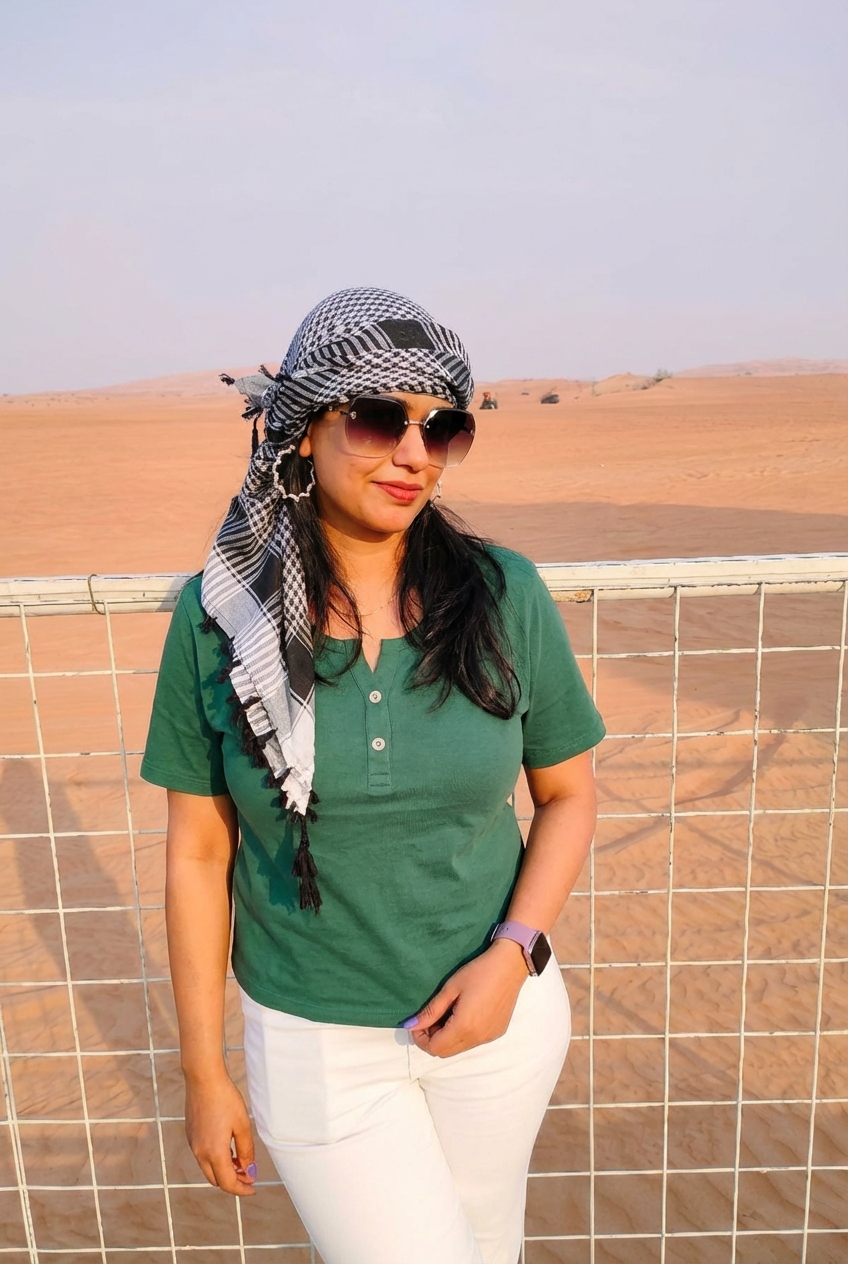
1. **The Scarf (Keffiyeh):** The scarf draping over the user's right shoulder (viewer's left) and chest MUST be segmented as a foreground layer. The green shirt must slide *underneath* this scarf.
2. **Hair:** The long black hair resting on the user's left shoulder (viewer's right) must be masked and layered *over* the new green fabric.
3. **Hand:** The user's left hand (viewer's left), positioned near the waist, must occlude the hem of the shirt.
PHASE 3: ENVIRONMENT & LIGHTING
- **Light Match:** The target environment involves harsh, direct desert sunlight coming from the viewer's left, creating high-contrast, hard shadows. The source image has soft, diffused indoor lighting. The new green garment must be re-lighted to simulate hard exposure on the left side and deep, cast shadows on the right side and within the fabric folds.
- **Color Calibration:** The "forest green" of the source cloth needs to be color-graded to match the warm color temperature of the desert setting. It should appear slightly lighter and warmer (more yellow-toned) where the sun hits it, avoiding the cool/bluish tones present in the indoor source photo.
PHASE 4: IDENTITY PROTECTION
- **Facial Lock:** The user's entire head region, specifically the sunglasses, nose, mouth, and the wrapping of the scarf around the cranium, must be frozen and pixel-perfectly preserved.
- **Body Integrity:** The user's hip width and bust volume must remain unaltered. While the clothing silhouette changes (tight to loose), the underlying biological mesh must not be slimmed or warped. The skin tone generated for the exposed arms (due to sleeve length change) must match the user's facial complexion exactly.