Thinking Process
PHASE 1: VISUAL DECONSTRUCTION
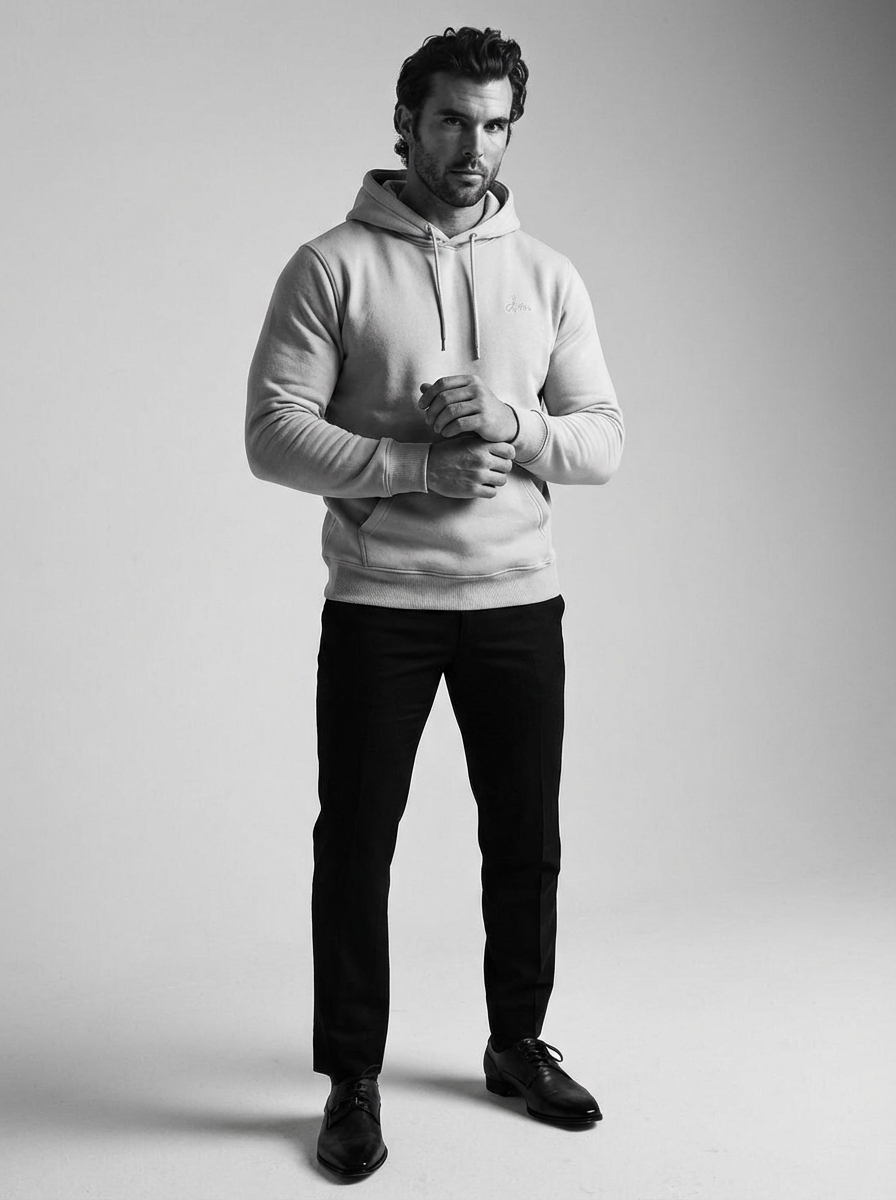
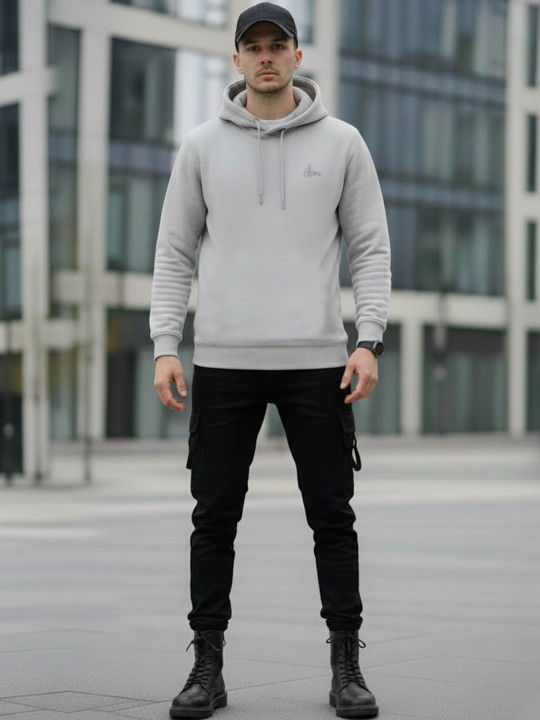
- **Fabric Physics:** The source garment is a cotton-blend fleece hoodie. It possesses a heavy, soft drape with a matte finish. Unlike the user's current thin knit, this material resists minor folding, creating larger, softer buckling patterns. Light absorption should be high (diffuse reflection) with no specular highlights.
- **Key Features:** The small script logo on the left chest must be preserved. The thick ribbed cuffs at the wrists and the ribbed hemline at the waist are structural anchors. The hood structure (laying flat against the upper back/traps) and the hanging drawstrings are critical silhouette changers that must replace the current turtleneck collar.
PHASE 2: FIT & DRAPE SIMULATION
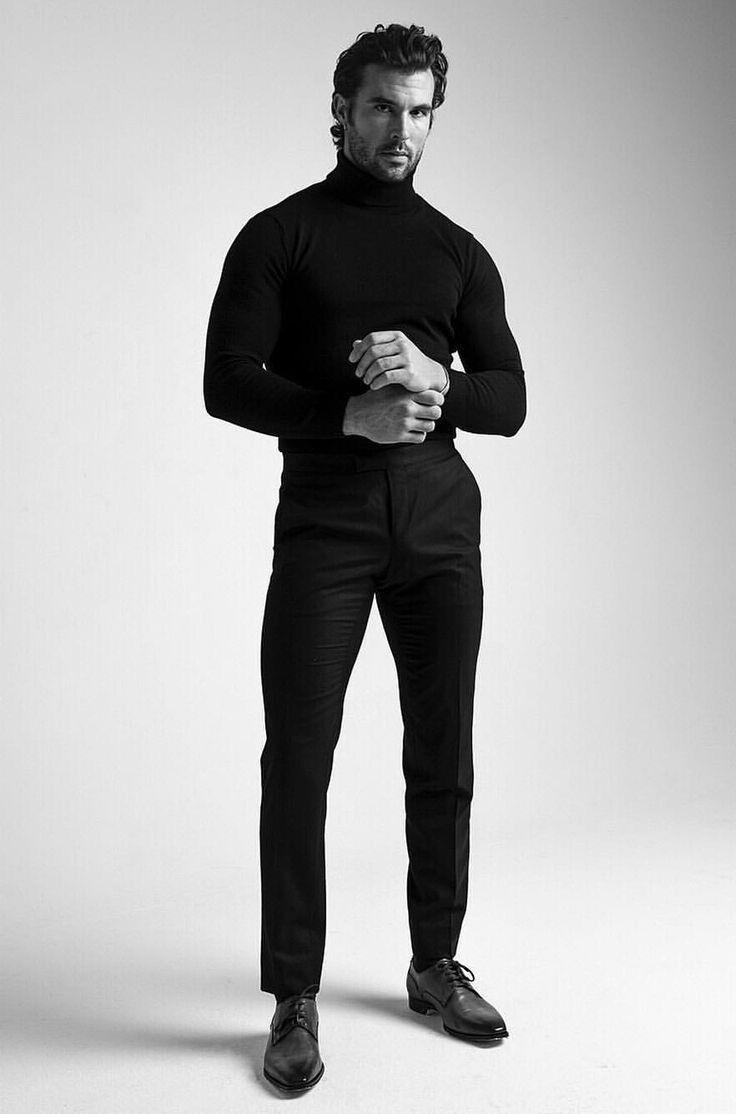
- **Body Mapping:** The target user has a muscular build currently defined by a tight turtleneck. The hoodie must add significant volume to the silhouette, moving away from the skin. The fabric must bunch and fold realistically at the elbows due to the user's bent arm pose (specifically the "accordion" folding of thick fleece). The hem should hang loose over the waistband, not tucked in like the current trousers.
- **Occlusion Handling:** The user's hands are clasped at the mid-torso/chest level. This is the primary occlusion zone. The hoodie fabric must be generated *behind* the hands and forearms. The cuffs of the hoodie will interact with the wrists; if the user's hands are adjusting the current cuffs, the new hoodie cuffs must sit naturally near this interaction point, likely being pushed slightly up the forearm by the friction of the pose.
PHASE 3: ENVIRONMENT & LIGHTING
- **Light Match:** The User Image utilizes high-contrast studio lighting with a strong key light coming from the left (viewer's perspective), casting deep, sharp shadows on the right side of the body. The flat, outdoor lighting of the source hoodie must be completely relighted to match this dramatic chiaroscuro effect. The right side of the hoodie must fall into deep shadow.
- **Color Calibration:** The target image is monochromatic (black and white). The light grey hoodie must be desaturated to match the grayscale tonal range of the scene. The "white" point of the hoodie should be calibrated to be slightly darker than the studio background but significantly lighter than the user's black trousers.
PHASE 4: IDENTITY PROTECTION
- **Facial Lock:** The user's entire head, including the specific hairstyle, beard texture, and facial expression, must remain pixel-perfectly frozen. The neck area, currently covered by the turtleneck, requires careful in-painting if the hoodie's neckline sits lower, though the bulk of the hood will likely cover the trapezius area.
- **Body Integrity:** Do not slim the user's broad shoulder width. The simulation must respect the user's muscular volume; the hoodie should look like an "oversized" or "regular" fit on a large frame, adding bulk rather than reducing the body to fit the garment.