
Thinking Process
PHASE 1: VISUAL DECONSTRUCTION
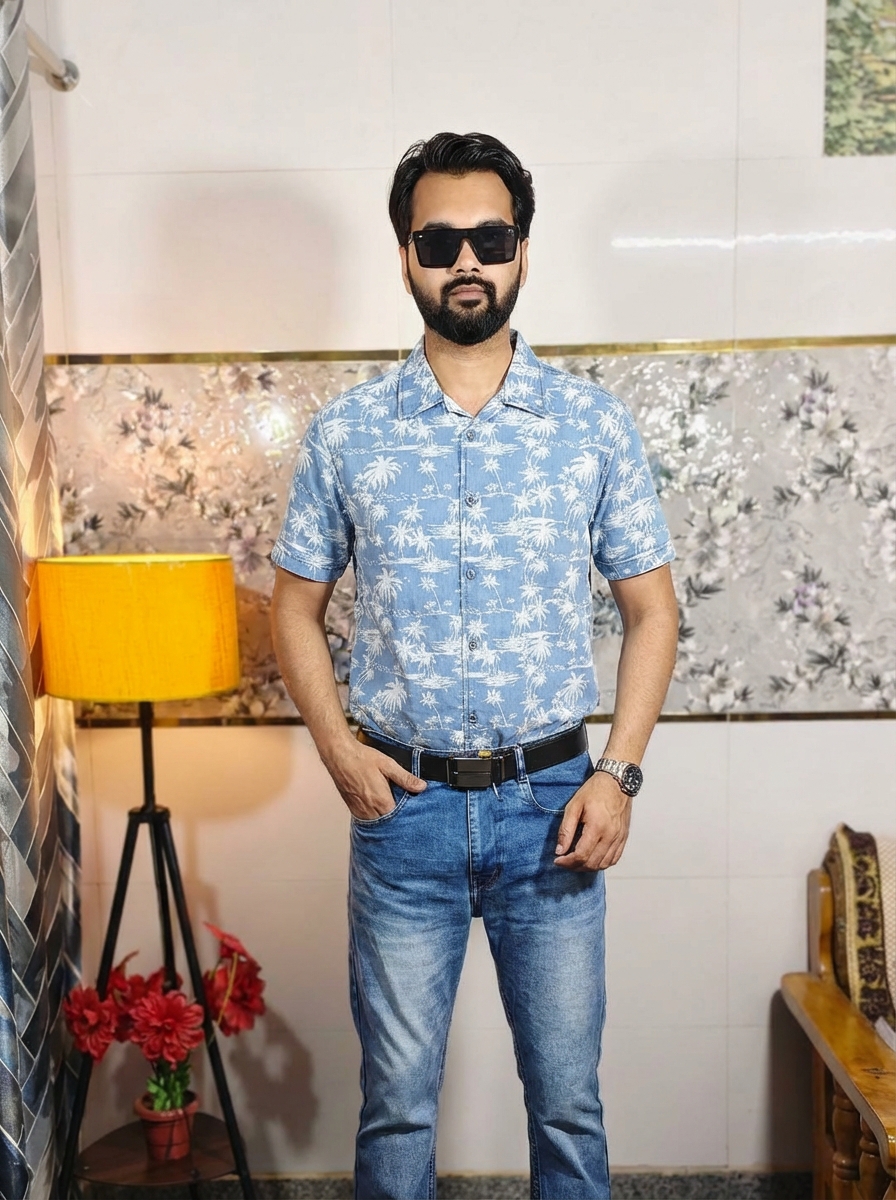
- **Fabric Physics:** The source garment is a lightweight chambray or structured cotton blend. It has a matte finish with a slight textural grain (slub) characteristic of denim-like fabrics. It should behave with moderate stiffness—holding the collar shape and sleeve cuffs without drooping like jersey knit or flowing like silk.
- **Key Features:** The specific palm tree print (white silhouettes on light blue) must remain high-contrast. The collar structure (spread collar), the front button placket with brownish contrast buttons, and the rolled/stitched hem on the short sleeves are critical details to preserve.
PHASE 2: FIT & DRAPE SIMULATION
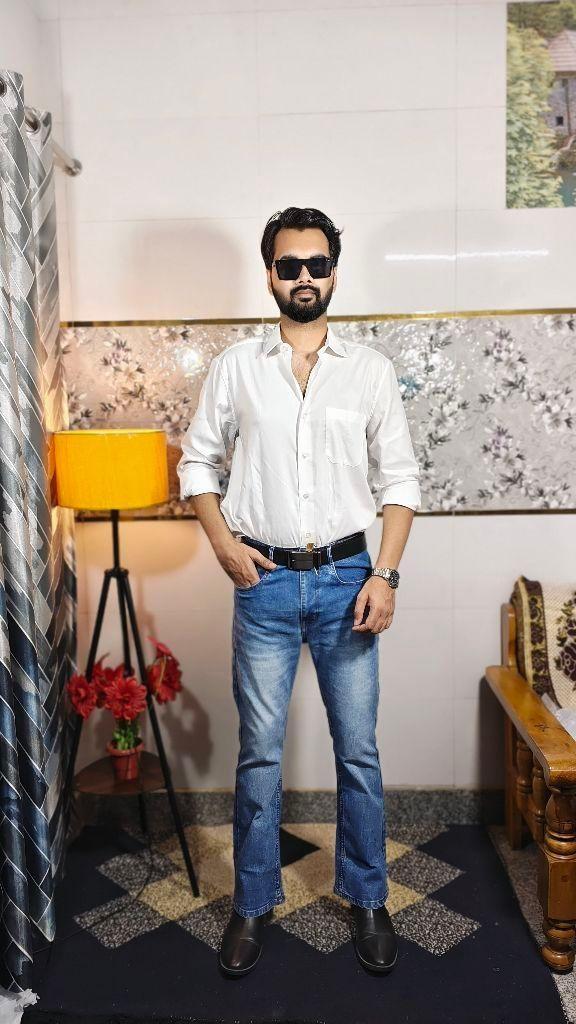
- **Body Mapping:** The target user has a straight, medium build. The source shirt is short-sleeved, while the user is currently wearing long sleeves. The simulation must generate accurate skin texture for the user's forearms to replace the existing white sleeves. The shirt should fit with a "Regular" cut, slightly looser than the user's current fitted white shirt, allowing for natural fabric breaking at the shoulder and armpit.
- **Occlusion Handling:** The user's thumbs are hooked into the pockets/belt area. This implies a high-complexity interaction at the waist. If the new shirt is rendered untucked (default for casual prints), the hemline must fall *behind* the user's hands/wrists but *over* the belt buckle, unless a tuck is enforced. The user's beard overlaps the very top of the collar area and must be layered *over* the new garment.
PHASE 3: ENVIRONMENT & LIGHTING
- **Light Match:** The user's environment has a strong, slightly cool frontal flash/overhead light source (indicated by the reflection on the sunglasses and the hard shadow on the wall behind him) mixed with warm ambient light from the yellow lamp. The new shirt must cast a shadow onto the user's neck and chest consistent with this frontal/overhead source.
- **Color Calibration:** The source image has neutral studio lighting. The blue of the new shirt must be color-graded to accept the slight warm cast from the room's yellow lamp (left side) while maintaining the crisp white of the palm pattern under the primary flash. Shadows on the shirt should lean towards a cool grey/black to match the shadows in the room corners.
PHASE 4: IDENTITY PROTECTION
- **Facial Lock:** The user's entire head region, specifically the sunglasses, beard, nose, and hairstyle, must be completely frozen. The neck skin tone must be sampled to generate the forearm skin required for the short-sleeve transition.
- **Body Integrity:** The user's broad shoulder width and stance must be preserved. Do not slim the torso to match the model in the source image; the shirt must expand to fit the user's actual geometry. The jeans and belt (below the new shirt hem) must remain unaltered.