Thinking Process
PHASE 1: VISUAL DECONSTRUCTION
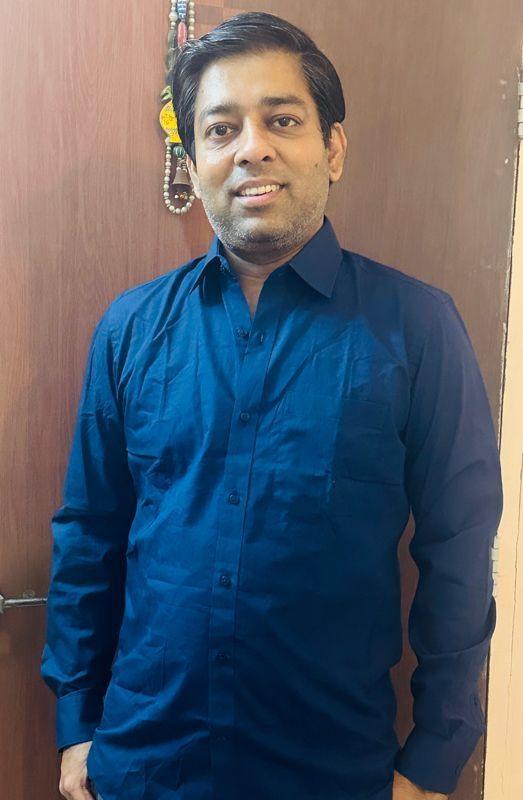
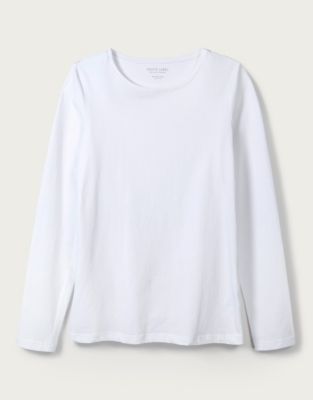
- **Fabric Physics:** The source garment is a long-sleeved jersey cotton or modal blend. Unlike the user's current stiff woven dress shirt, this material has low structural rigidity and high pliability. It implies a matte finish with soft, diffuse light scattering. It must not exhibit the specular highlights seen on the current blue shirt buttons or stiff collar.
- **Key Features:** The round crew neckline with its specific ribbing width is critical to preserve. The subtle stitching details at the wrist cuffs and bottom hem must remain visible. The faint "shadow" of the interior back-neck label visible in the source image should be disregarded (simulated as opaque) to look realistic on a body.
PHASE 2: FIT & DRAPE SIMULATION
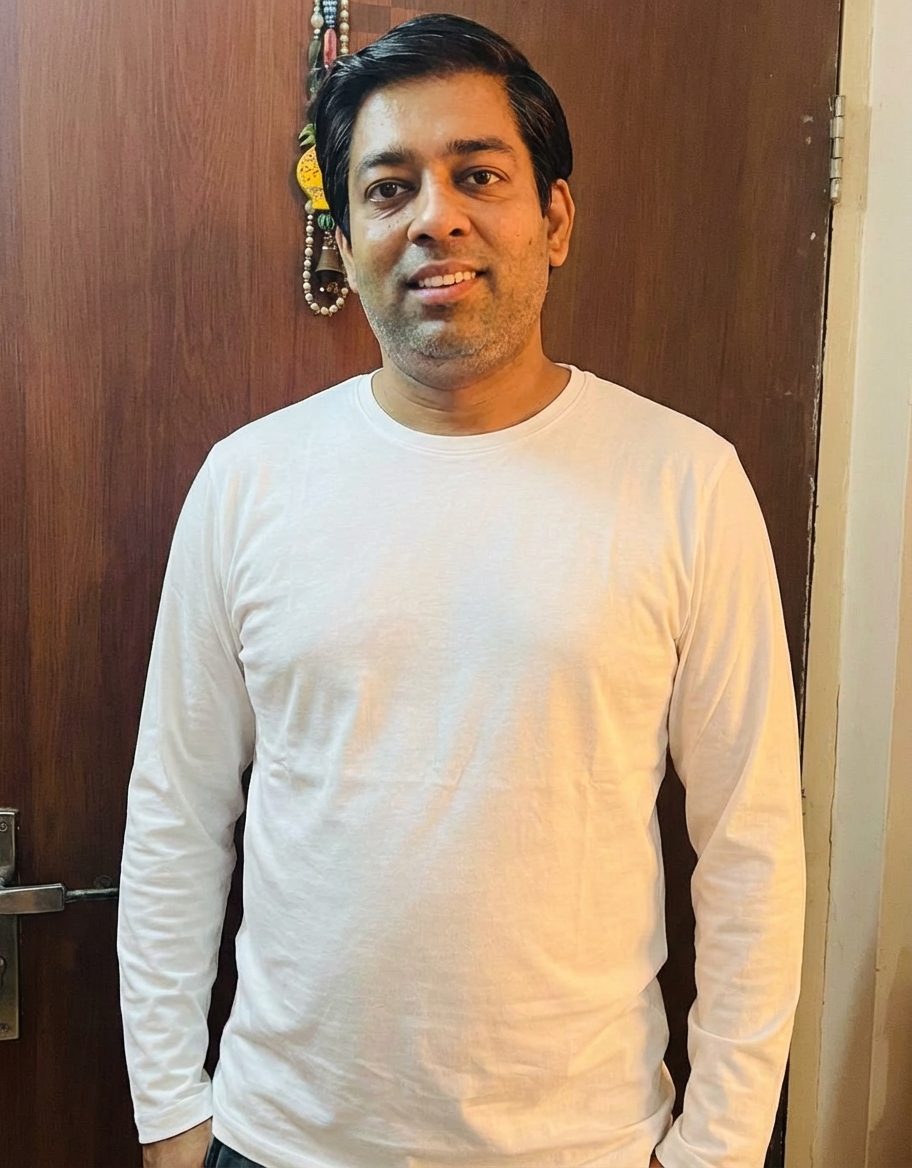
- **Body Mapping:** The garment must transition from a structured fit (current blue shirt) to a relaxed fit. The shoulder seams of the white tee should drop slightly lower than the current stiff shoulder pads/seams. The fabric must drape vertically from the chest apex, smoothing out the button-placket protrusions of the original image. At the elbows, since the arms are straight, there will be minimal bunching, but soft horizontal micro-folds should appear near the armpit and elbow pit due to tension. **Crucial:** The new neckline is lower than the current collar; the simulation must generate realistic skin texture for the exposed neck area currently hidden by the blue collar.
- **Occlusion Handling:** The user's hair is short and does not overlap the shoulders, simplifying the upper mask. However, the wrist area where the sleeves end must strictly respect the hand boundaries if visible at the bottom of the frame. The background door decoration is behind the subject and must not interfere with the shoulder silhouette.
PHASE 3: ENVIRONMENT & LIGHTING
- **Light Match:** The user image features warm, indoor overhead lighting (likely incandescent), casting soft shadows downward and slightly to the viewer's right. The source white garment is currently lit by cool, flat studio strobes. The white fabric must be color-graded to absorb the warm, yellowish ambient tone of the room to avoid looking like a "sticker." Shadows on the white fabric must be soft grey-brown, not pure black.
- **Color Calibration:** Reduce the exposure of the source cloth slightly to match the dynamic range of the user photo. The "white" point of the shirt must be shifted towards the warm white/beige spectrum to integrate with the wooden door background reflections.
PHASE 4: IDENTITY PROTECTION
- **Facial Lock:** The region from the chin upwards, including the jawline, ears, and entire hairstyle, must be frozen pixel-perfect. No alteration to skin tone on the face.
- **Body Integrity:** Strictly prohibit any warping of the user's torso width or shoulder breadth. The new garment must expand to accommodate the user's existing BMI and posture. The natural gap between the user's arms and torso must be preserved; do not fill this negative space with fabric artifacts.