Thinking Process
PHASE 1: VISUAL DECONSTRUCTION
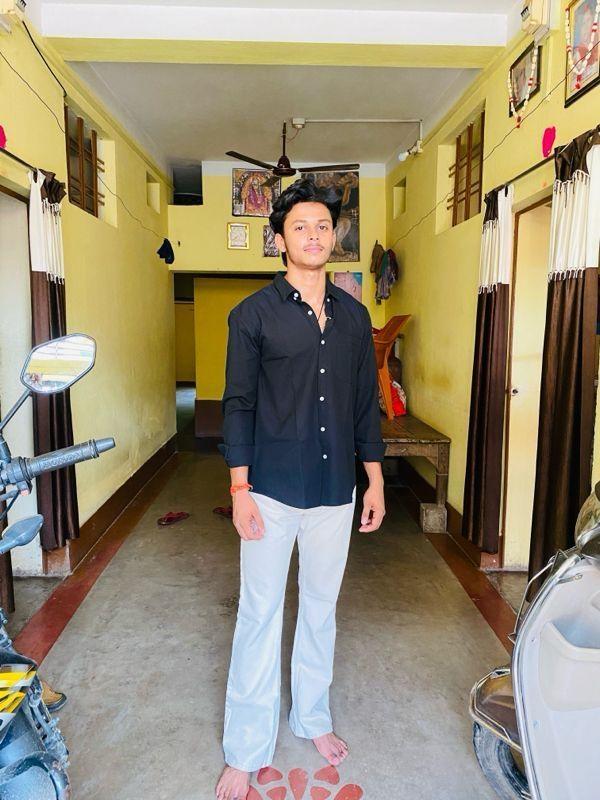
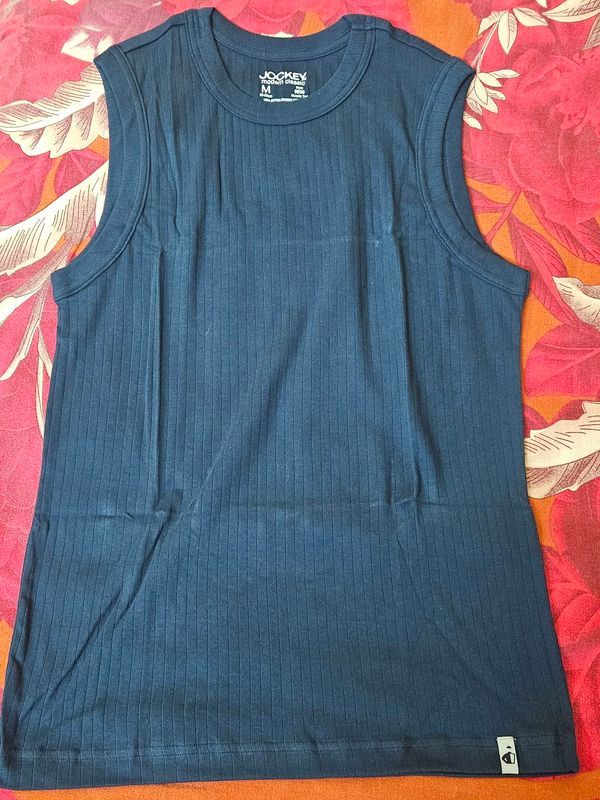
- **Fabric Physics:** The source garment is a ribbed knit cotton blend (vest/undershirt). Physically, this material has high elasticity and tension recovery. Unlike the user's current loose woven shirt, this fabric behaves as a "second skin," conforming tightly to the torso's topology. It should have a matte finish, with very subtle specular highlights only along the raised ridges of the vertical ribbing texture.
- **Key Features:** The vertical rib texture is the defining visual characteristic and must not be blurred. The thick ribbed binding around the neck and armholes must be preserved to maintain structural realism. The small white logo tag on the bottom left hem must be retained. The "U" neckline shape must replace the current collared structure.
PHASE 2: FIT & DRAPE SIMULATION
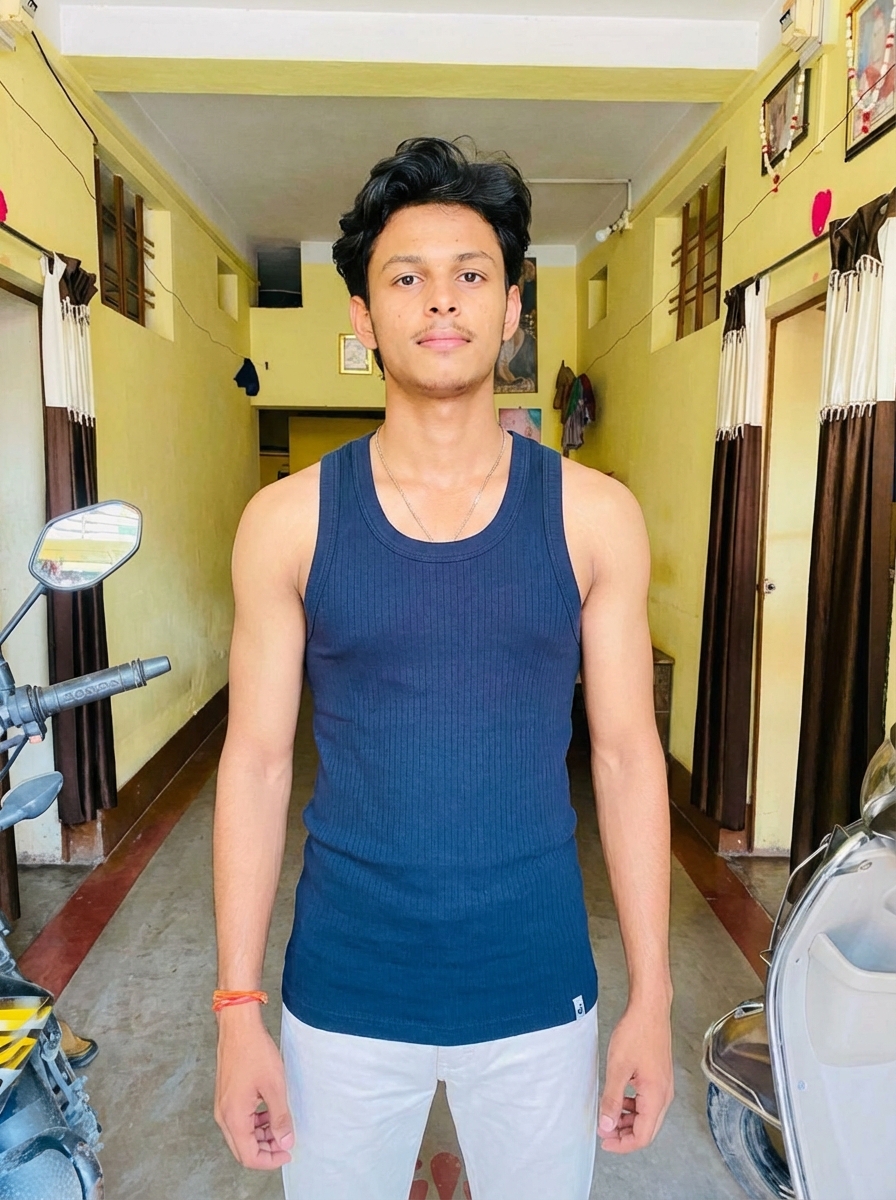
- **Body Mapping:** This is a silhouette-changing transformation (Long-sleeve loose shirt -> Sleeveless tight vest). The simulation must ignore the volume of the current black shirt and map the vest directly to the user's estimated skin surface. The garment will hang straight down from the pectorals to the waist due to gravity but will cling to the chest and shoulders. **Crucial:** Since the target is wearing long sleeves and the source is sleeveless, the simulation requires generative inpainting to reconstruct the user's bare arms and shoulders with anatomically correct skin texture and muscle definition.
- **Occlusion Handling:** The thin chain/necklace currently worn by the user is a critical occlusion layer. It must be segmented and composited *over* the new vest's neckline. The user's hair is short and does not obscure the shoulders, simplifying the upper drape. Hands are at the sides and do not occlude the torso.
PHASE 3: ENVIRONMENT & LIGHTING
- **Light Match:** The user is standing in a hallway with overhead, slightly warm (yellow-cast) artificial lighting. Shadows fall downwards (under the chin and nose). The new garment is currently lit by flat, cool light. The render must apply a warm ambient occlusion to the vest and generate a drop shadow beneath the new neckline and armholes to match the depth of the user's chin shadow.
- **Color Calibration:** The source image has a red/pink color bleed from the floral background. This needs to be aggressively "de-spilled" to restore the true deep teal/blue color. Finally, the blue tone must be color-graded with the yellow tint of the hallway walls to ensure it looks integrated into the scene rather than pasted on.
PHASE 4: IDENTITY PROTECTION
- **Facial Lock:** The user's entire head region—specifically the hair volume, jawline, eyes, and skin tone of the face—must be frozen and masked out of the generation process.
- **Body Integrity:** While the *clothing* volume will decrease (going from loose to tight), the user's underlying biological shoulder width, waist width, and arm thickness must remain unaltered. Do not artificially slim the user's physique to fit the vest; the vest must stretch to fit the user.