Thinking Process
PHASE 1: VISUAL DECONSTRUCTION
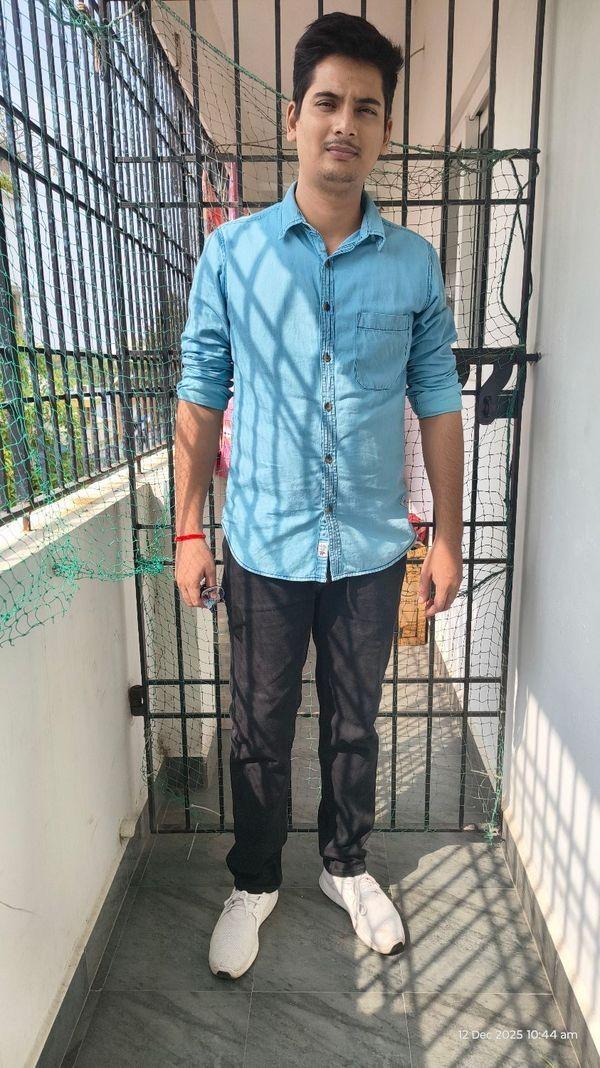
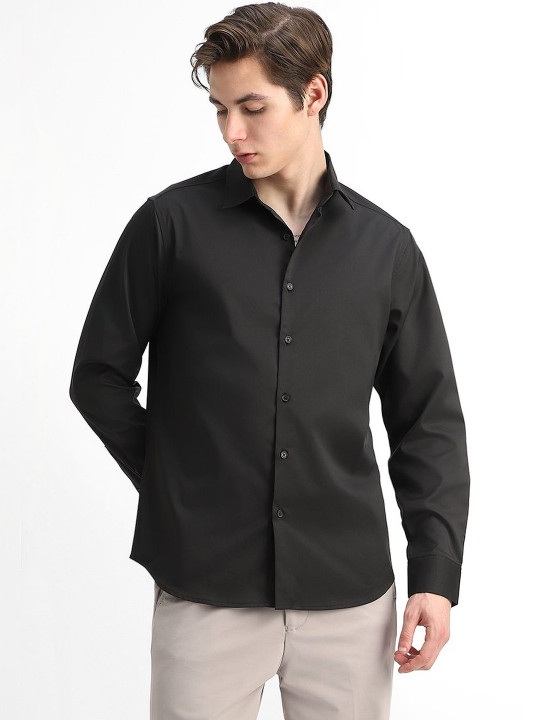
- **Fabric Physics:** The source garment is a black button-down dress shirt, likely made of cotton poplin or a cotton-poly blend. Unlike the user's current denim shirt, this material has a finer weave, is lighter weight, and has a semi-matte finish with subtle specular highlights on the folds. It should not appear rugged or thick; it must behave like a crisp, ironed dress shirt that is susceptible to sharper, smaller creases than denim.
- **Key Features:** The sharp, stiff pointed collar must be preserved and correctly positioned around the neck. The distinct black-on-black button placket, the curved hemline at the bottom, and the structured cuffs at the wrists must be retained. The smooth, solid black texture must replace the textured blue denim weave entirely.
PHASE 2: FIT & DRAPE SIMULATION
- **Body Mapping:** The garment should follow the user's standing posture. The shoulders must align precisely with the user's acromion processes. As the user is standing with arms relaxed, the sleeves should drape straight down with minimal bunching at the elbows, terminating right at the wrist bone. The shirt should hang untucked (matching the user's current style and the source's hem shape), maintaining a relaxed fit around the waist without clinging too tightly to the midsection.
- **Occlusion Handling:**
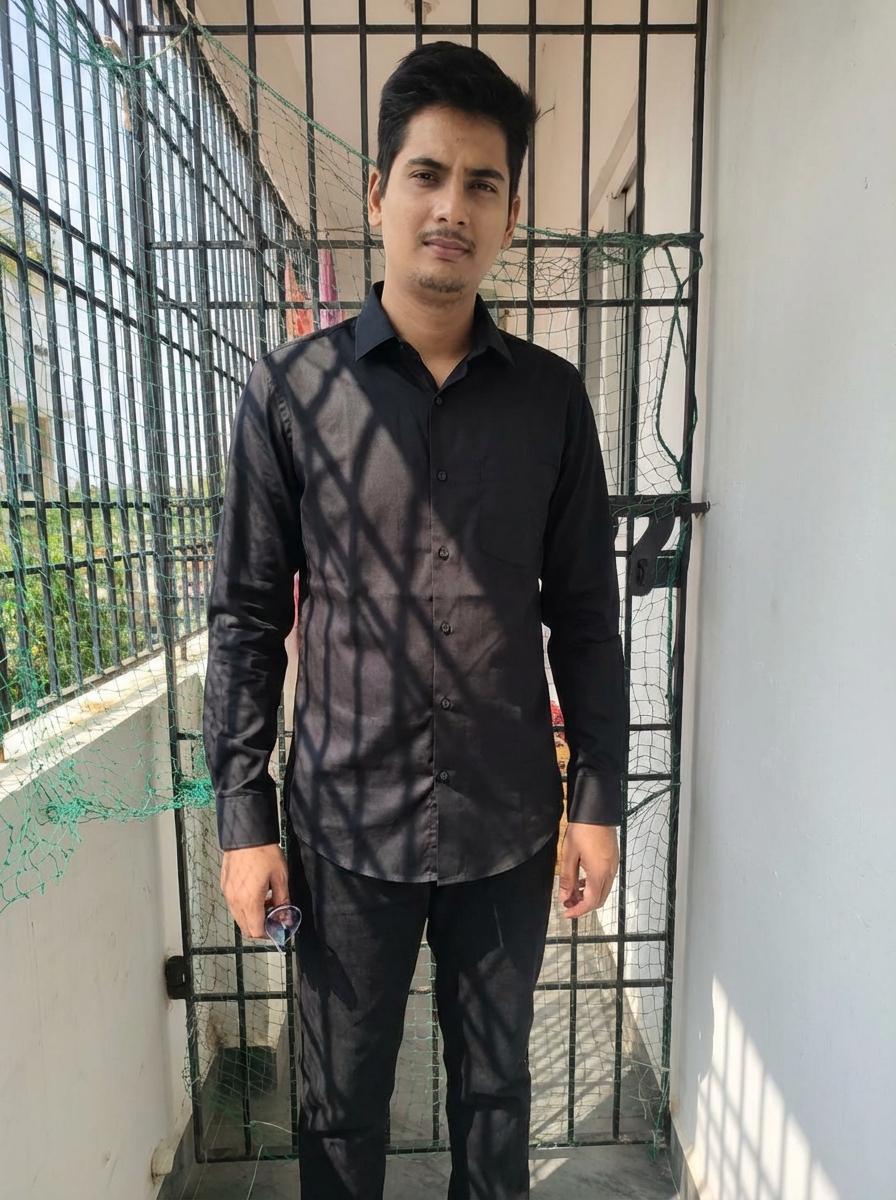
1. **Right Hand:** The user is holding sunglasses in the right hand. The sleeve cuff must end before the hand, ensuring the hand and the sunglasses remain the top-most layer.
2. **Neck/Chin:** The new collar must sit naturally around the neck, completely obscuring the original blue collar.
3. **Background Mesh:** The shirt edges must be cleanly segmented from the green/black wire mesh behind the user.
PHASE 3: ENVIRONMENT & LIGHTING
- **Light Match:** The scene is illuminated by harsh, direct sunlight coming from the viewer's right, casting distinct, high-contrast shadows. Crucially, the **grid pattern shadows from the security grille** (visible on the current blue shirt) must be projected onto the new black shirt. While shadows are less visible on black, the illuminated areas must be bright enough to show fabric contour, and the shadowed areas must dip into deep blacks.
- **Color Calibration:** The source black is studio-neutral. In the target environment, the illuminated parts of the black shirt should pick up a slight warmth from the sunlight, while the shadowed areas should remain neutral to cool. The black levels must be lifted slightly to ensure the "grid shadow" effect remains visible on the dark fabric, preventing the shirt from looking like a flat black silhouette.
PHASE 4: IDENTITY PROTECTION
- **Facial Lock:** The user's entire head region—including hair, forehead, eyes, nose, mouth, ears, and neck skin above the Adam's apple—must be frozen and masked pixel-perfectly.
- **Body Integrity:** The simulation is strictly forbidden from altering the user's biometric volume. The shoulder width, chest breadth, and arm thickness must match the user's original physique. Do not slim the user down to match the source model's slimmer build.