Thinking Process
PHASE 1: VISUAL DECONSTRUCTION
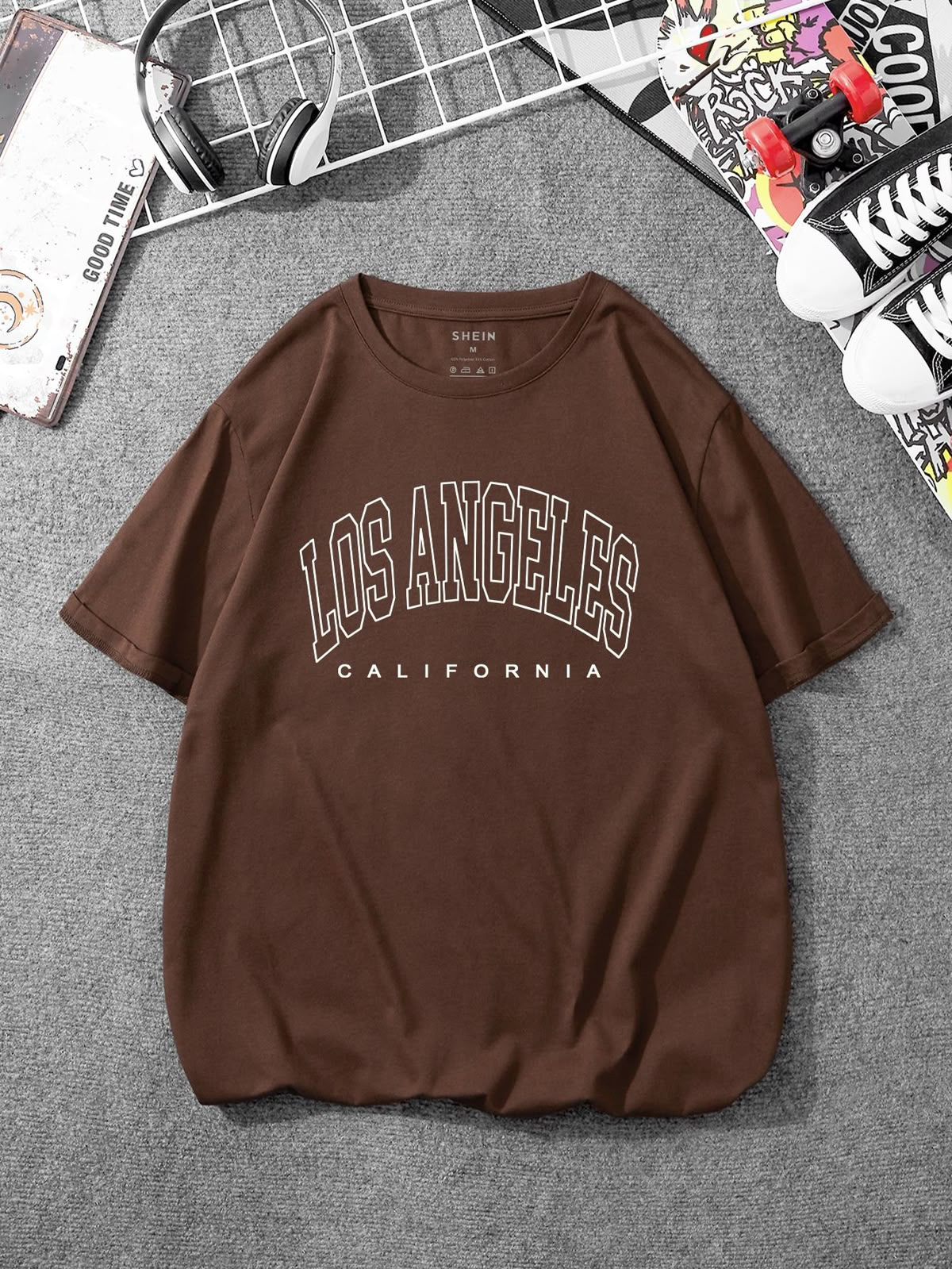
- **Fabric Physics:** The source garment is a standard mid-weight cotton jersey. It possesses low specular reflection (matte finish) and moderate structural stiffness. Unlike the user's current thin/clingy knit, this cotton material will exhibit semi-rigid folds rather than draping like a second skin. It absorbs light rather than reflecting it.
- **Key Features:**
- The large, arched white "LOS ANGELES" text with the "CALIFORNIA" sub-text must remain centered on the chest, unaffected by excessive warping.
- The rolled/cuffed hem on the short sleeves is a critical geometry detail that must be rendered in 3D.
- The crew neckline ribbing must be distinct from the main body fabric.
- The color is a deep chocolate brown (#4A3B32 approx) which must maintain contrast against the white text.
PHASE 2: FIT & DRAPE SIMULATION
- **Body Mapping:**
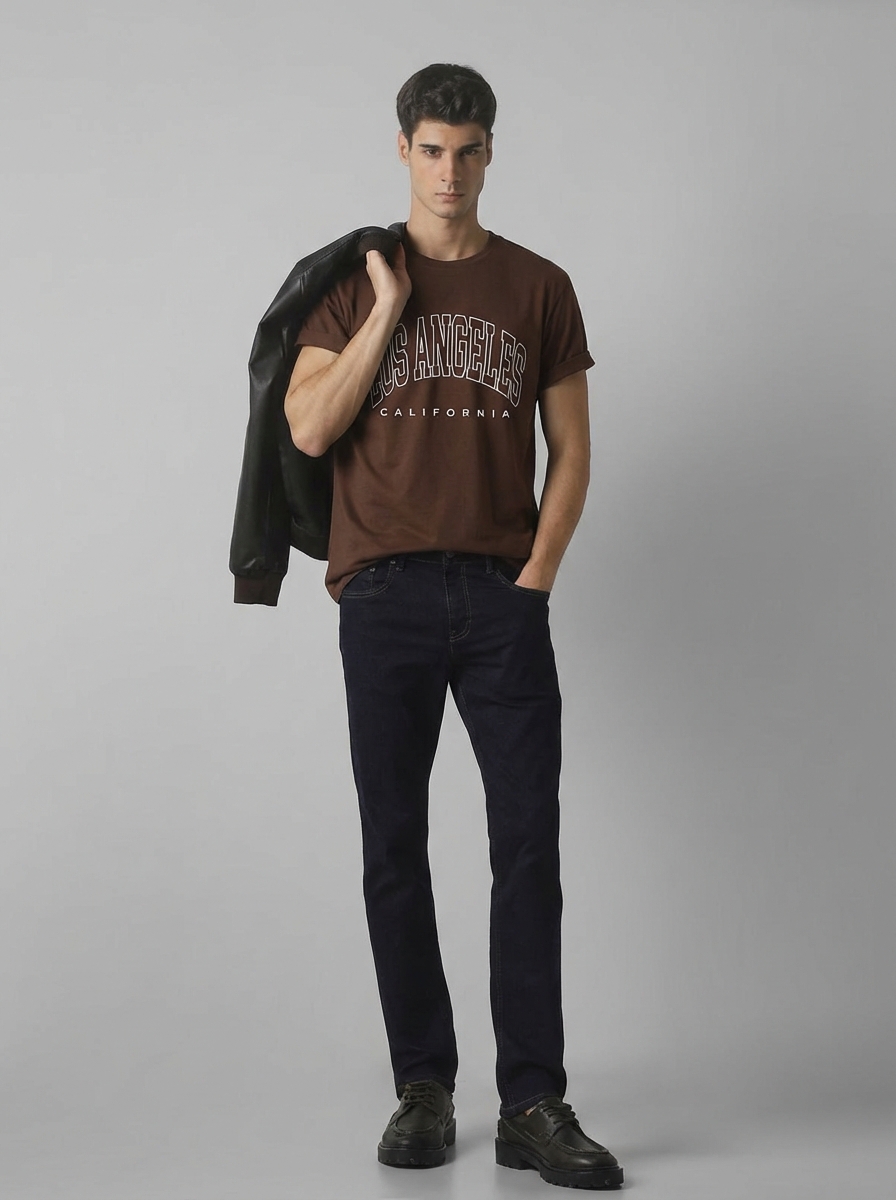
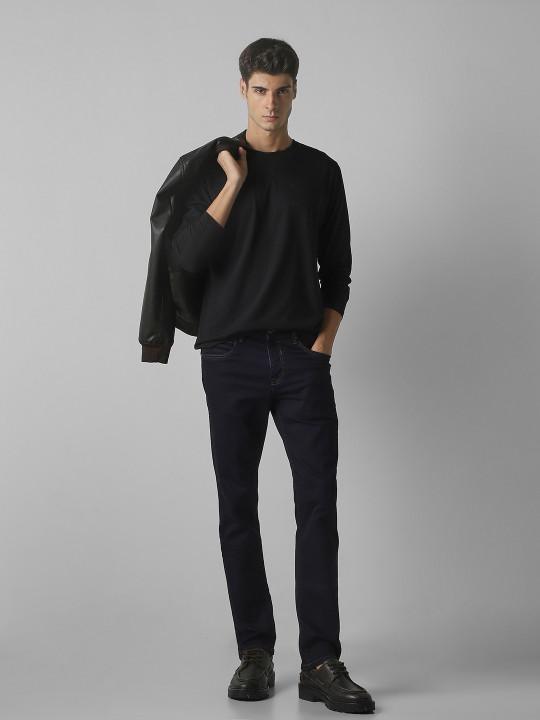
- **Sleeve Transition:** The user is currently wearing a long-sleeve garment; the target is short-sleeve. The system must generate realistic skin texture for the user's forearms where the black fabric is removed, or the render must strictly mask the torso area only.
- **Shoulder Interaction:** The user is holding a leather jacket over his right shoulder. The new brown t-shirt must appear to sit *underneath* the weight of this jacket. The fabric on the right shoulder should compress slightly due to the jacket's contact.
- **Torso Drape:** The source shirt is a "Regular/Relaxed Fit." It should hang straighter than the user's current fitted shirt, creating a small air gap at the lower back and sides rather than clinging to the ribcage.
- **Occlusion Handling:**
- **The Leather Jacket:** This is the primary occlusion layer. The jacket (held by the right hand/shoulder) must overlay the new t-shirt entirely. No brown fabric should bleed onto the black leather.
- **Left Hand:** The left hand is in the pocket; the hemline of the new shirt must drape naturally over the wrist/forearm entry into the pocket, bunching slightly at the hip.
- **Neck/Jaw:** The new crew neck must sit at the base of the neck without clipping into the throat.
PHASE 3: ENVIRONMENT & LIGHTING
- **Light Match:**
- The user scene has soft, diffused studio lighting coming primarily from the front-left. The new shirt must cast self-shadows (folds) to the right side of the torso.
- Shadows cast by the leather jacket onto the right shoulder/chest area of the new shirt must be rendered to ground the object in the scene.
- **Color Calibration:**
- The source image has a slightly cooler, flat-lay flash lighting. The brown tone needs to be warmed slightly to match the ambient temperature of the user's studio shot.
- The white text should not be pure #FFFFFF; it must be graded down to a light grey/off-white to match the exposure of the user's face highlights.
PHASE 4: IDENTITY PROTECTION
- **Facial Lock:** The user's entire head (from the neckline up), hair, and facial expression must remain pixel-perfectly frozen.
- **Body Integrity:**
- Do not alter the user's shoulder width or lean physique.
- The user's legs, denim jeans, and boots are outside the region of interest and must not be retouched or warped.
- The leather jacket prop must retain its current texture and shine; strictly prohibit "texture bleeding" from the cotton shirt onto the leather.