Thinking Process
PHASE 1: VISUAL DECONSTRUCTION
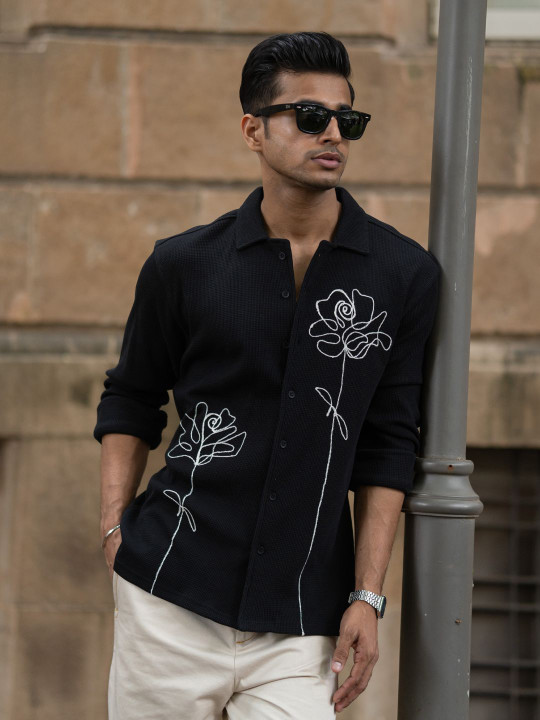
- **Fabric Physics:** The source garment is a textured, waffle-knit or heavy pique cotton blend in matte black. It has low specular highlights (does not shine) and high light absorption. The physics simulation must account for medium-weight fabric that holds its structure better than a jersey t-shirt but is softer than denim. The micro-texture (grid pattern) is essential for realism and must not be smoothed out.
- **Key Features:** The two large, white line-art floral embroidery designs (one on the left chest/shoulder, one rising from the bottom right hem) are the critical visual anchors and must not be distorted beyond recognition by the folds. The camp-style collar, the front button placket (center line), and the cuffed/rolled sleeve aesthetic from the source image should be maintained if visible.
PHASE 2: FIT & DRAPE SIMULATION
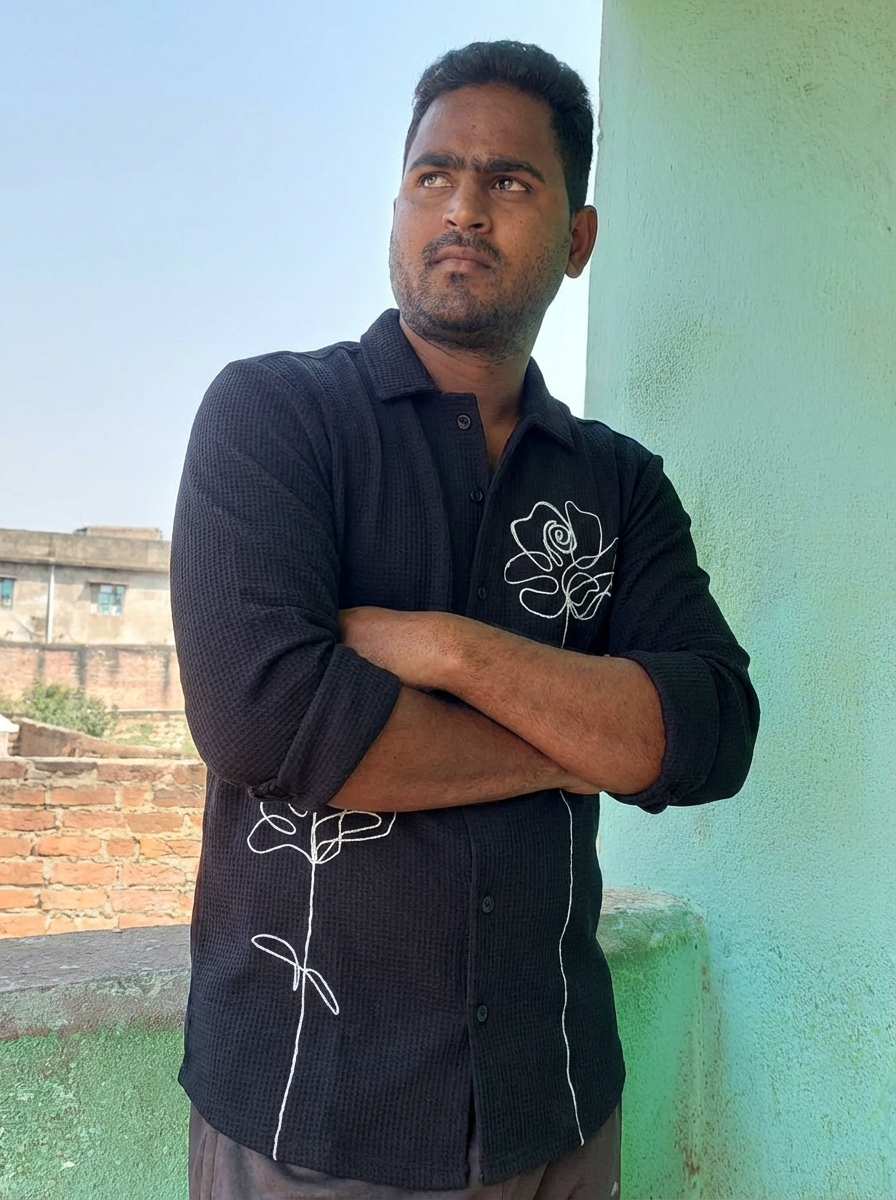
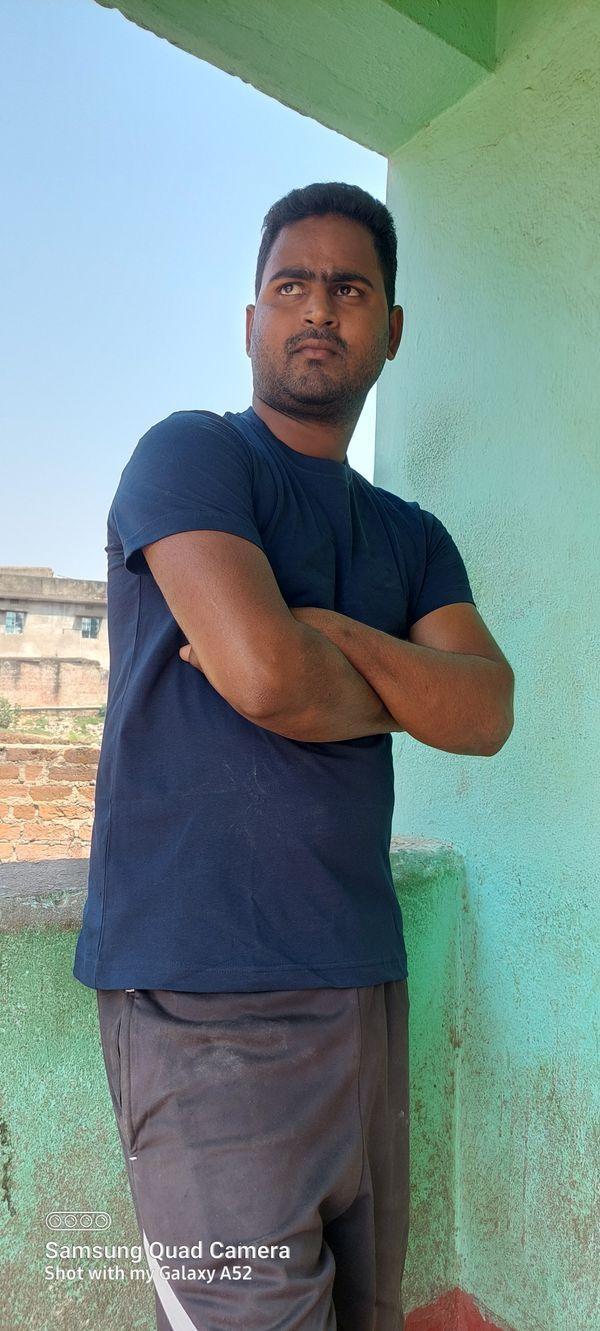
- **Body Mapping:** The user is in a "Crossed Arms" pose. This creates significant tension across the upper back and shoulders. The new garment must exhibit tension wrinkles radiating from the armpits and shoulders toward the elbows. The chest area of the shirt will be compressed; the fabric should not billow out but rather appear pressed against the torso by the forearms. The collar needs to rise slightly higher and wider than the current crew-neck t-shirt to sit naturally on the trapezius muscles.
- **Occlusion Handling:** **CRITICAL:** The user's forearms and hands are the primary occlusion layer. The new shirt must be rendered *behind* the crossed arms. The simulation must calculate the contact pressure where the inner forearms press against the chest, causing the fabric to flatten and bunch slightly at the contact points. The visible skin of the arms must mask out the shirt sleeves where they overlap.
PHASE 3: ENVIRONMENT & LIGHTING
- **Light Match:** The user is in a daylight environment (outdoor balcony) with a strong, soft light source coming from the upper right. The new black garment must not appear "void black" but rather a dark charcoal to reflect the high ambient light exposure. It needs to cast soft drop shadows onto the user's forearms where the chest fabric meets the arms.
- **Color Calibration:** There is a strong green color spill (radiosity) coming from the wall on the user's left (image right). The right side of the black shirt (viewer's right) must reflect subtle greenish tints to integrate the object into the scene physically. The white embroidery must reflect the cool daylight temperature, avoiding warm/yellow tones.
PHASE 4: IDENTITY PROTECTION
- **Facial Lock:** The user's face, hair, neck, and the specific skin tone of the arms and hands must be frozen and pixel-preserved. The hairline and jawline boundaries must remain untouched by the new collar generation.
- **Body Integrity:** Strictly forbid slimming or "V-tapering" the user. The user has a broad, solid build; the shirt must drape to respect his actual abdominal and shoulder volume. The bulk created by the crossed arms must remain exactly as is to maintain the pose's physics.