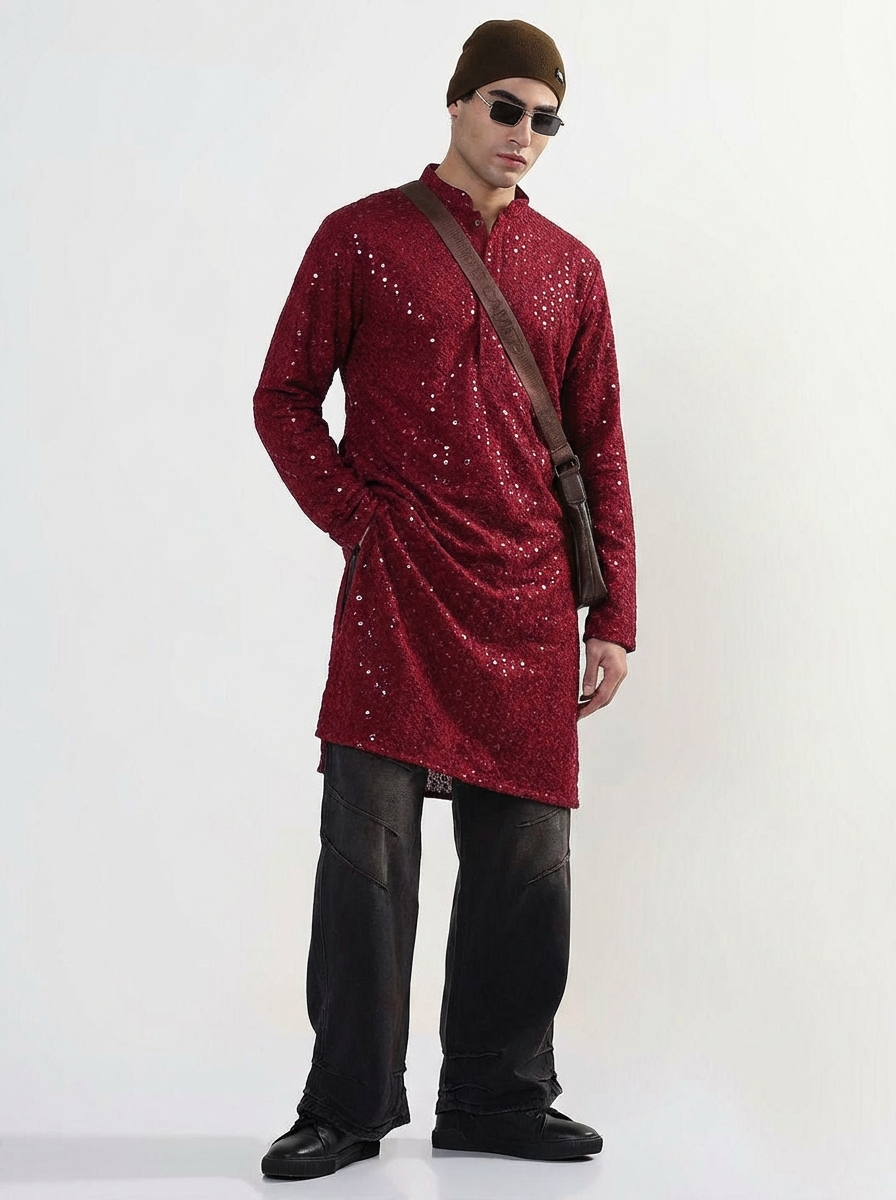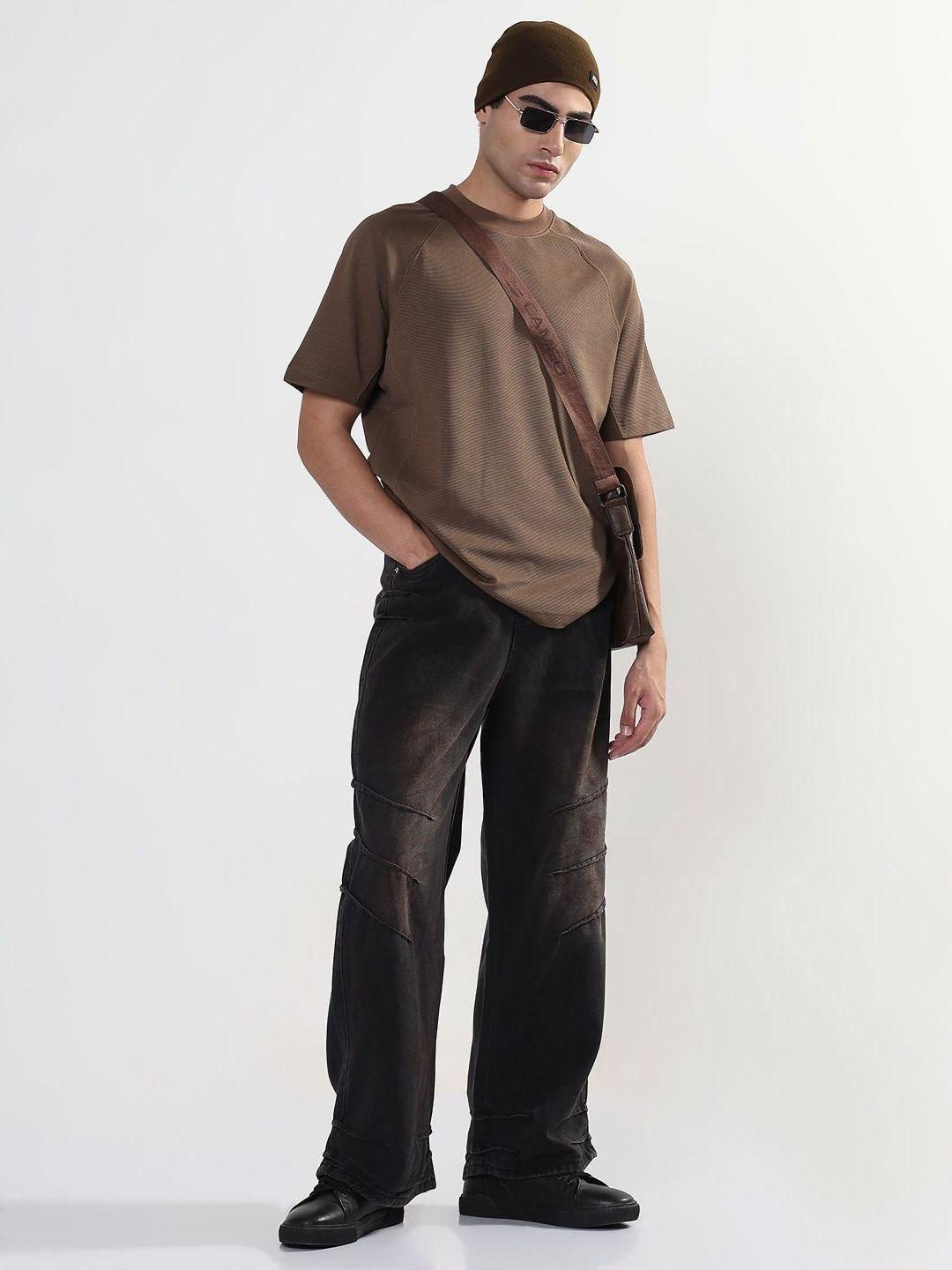
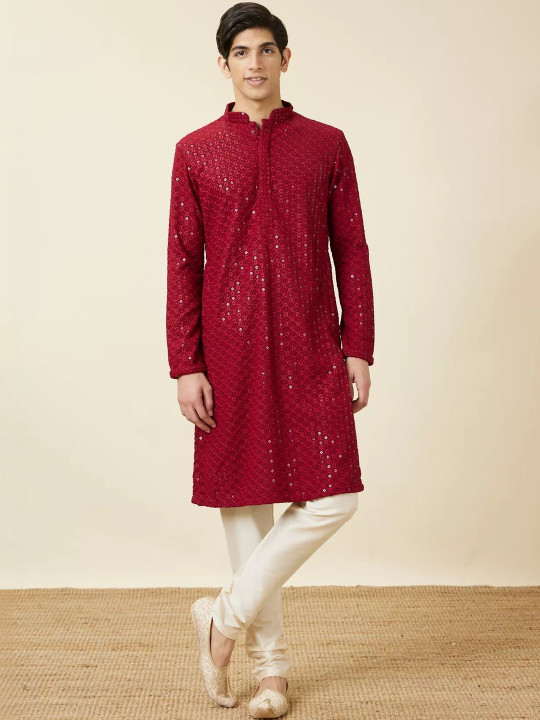
Thinking Process
PHASE 1: VISUAL DECONSTRUCTION
- **Fabric Physics:** The source garment is a heavy, embellished kurta (likely georgette or silk blend with sequin/mirror work). It possesses a medium-weight drape with high friction due to the texture. Unlike the smooth cotton of the source t-shirt, this material will not cling tightly to musculature but will hang vertically with structural rigidity. The sequins must generate specific specular highlights (glint) reacting to the light source, rather than a matte diffuse reflection.
- **Key Features:** The intricate repeating geometric sequin/embroidery pattern must be preserved without blurring. The Mandarin collar and the central button placket are critical structural anchors. The garment is a "Kurta," meaning the hemline extends to mid-thigh/knee, significantly longer than the user's current t-shirt.
PHASE 2: FIT & DRAPE SIMULATION
- **Body Mapping:** The kurta must extend below the user's waist, covering the upper thigh area of the existing jeans. Due to the user's slight backward lean, the fabric should drape cleanly down the front but accumulate slight folds at the lower back. Crucially, the user's right hand is in their pocket; the kurta fabric must bunch naturally at the right wrist and drape *around* the forearm, creating tension lines pulling from the shoulder toward the pocket entry.
- **Occlusion Handling:**
1. **Crossbody Bag Strap:** This is the primary occlusion. The new kurta must appear to be worn *underneath* the brown strap. The strap must compress the sequined fabric against the chest, creating indentations and interrupting the sequin pattern.
2. **Right Hand/Wrist:** The fabric must be masked behind the right hand where it enters the pocket.
3. **Neck/Beanie:** The Mandarin collar must sit high on the neck, replacing the crew neck, without clipping into the user's jawline or chin.
PHASE 3: ENVIRONMENT & LIGHTING
- **Light Match:** The user image utilizes soft, high-key studio lighting, primarily coming from the front-left (viewer's left), indicated by the shadow drop on the right. The sequins on the kurta must reflect this specific light source, creating bright highlights on the left side of the torso and deeper self-shadowing within the embroidery on the right side.
- **Color Calibration:** The user image has a cooler, slightly desaturated commercial tone, while the cloth image is warm/yellow-tinted. The maroon of the kurta must be color-graded to a cooler, deeper crimson to match the white balance of the user's studio environment, ensuring it doesn't look "pasted" from a warm setting.
PHASE 4: IDENTITY PROTECTION
- **Facial Lock:** The user's face, skin tone, jawline, sunglasses, and beanie are absolute freeze zones. No pixels above the neckline should be altered.
- **Body Integrity:** The user's shoulder width and relaxed stance must remain unchanged. Do not slim the user to fit the model's physique. The visible portion of the jeans (below the new kurta hemline) and the shoes must remain untouched.