Thinking Process
PHASE 1: VISUAL DECONSTRUCTION
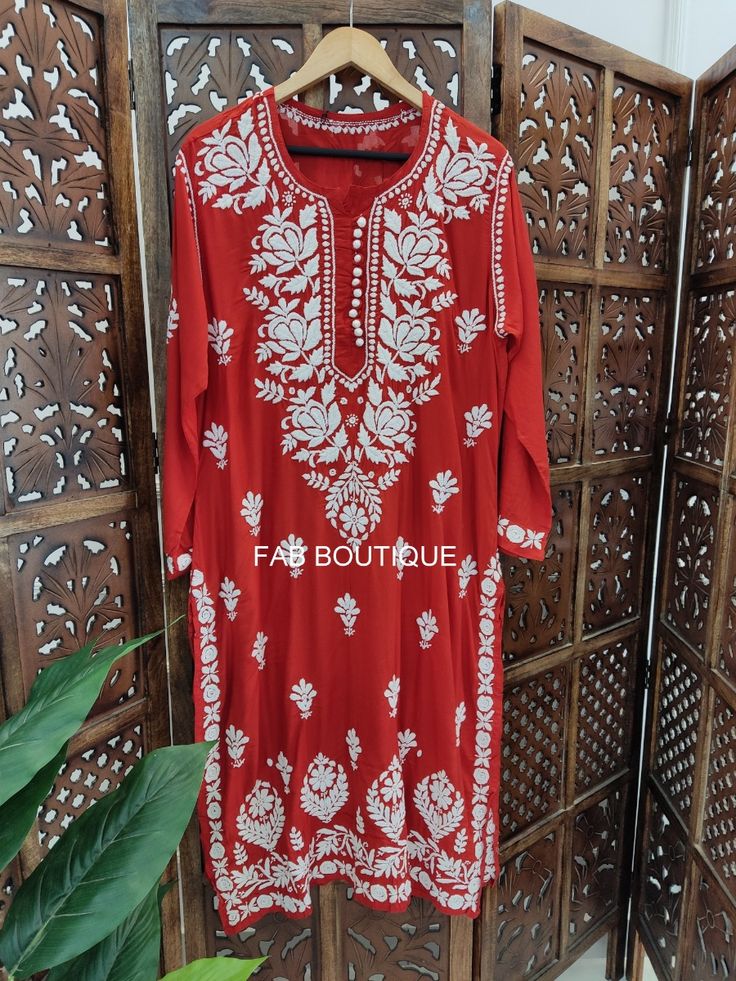
- **Fabric Physics:** The source garment appears to be a soft cotton or georgette blend with heavy thread embroidery (likely Chikankari style). The simulation must treat the red base fabric as flowy and matte (non-reflective), while the white embroidered sections add localized stiffness and weight, preventing the fabric from stretching unnaturally in those areas.
- **Key Features:** The complex white floral embroidery pattern along the neckline, placket, and hemline is critical and must not be distorted. The central button detailing on the chest must be preserved. The "FAB BOUTIQUE" watermark text overlay on the center of the garment must be digitally removed during texture extraction. The side slits (common in Kurtis) should be modeled if the length extends past the hip.
PHASE 2: FIT & DRAPE SIMULATION
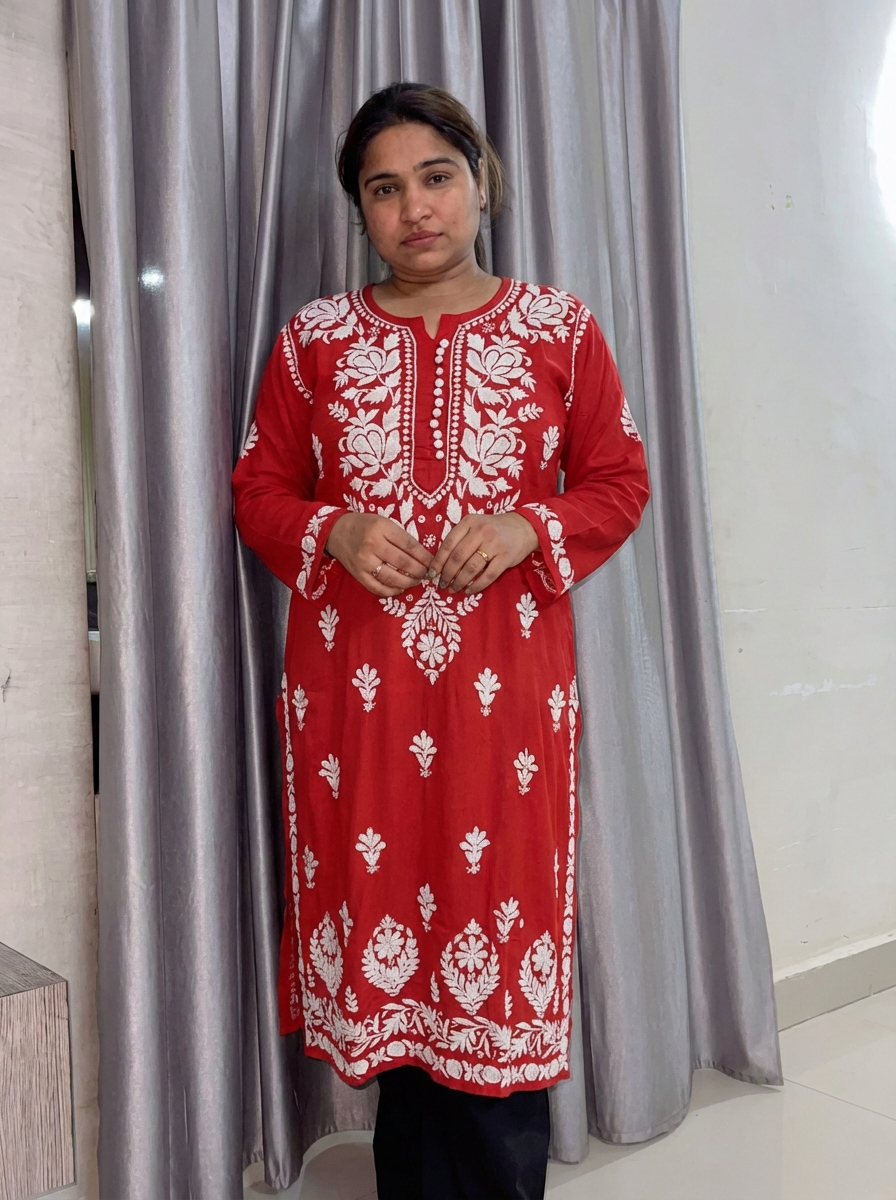
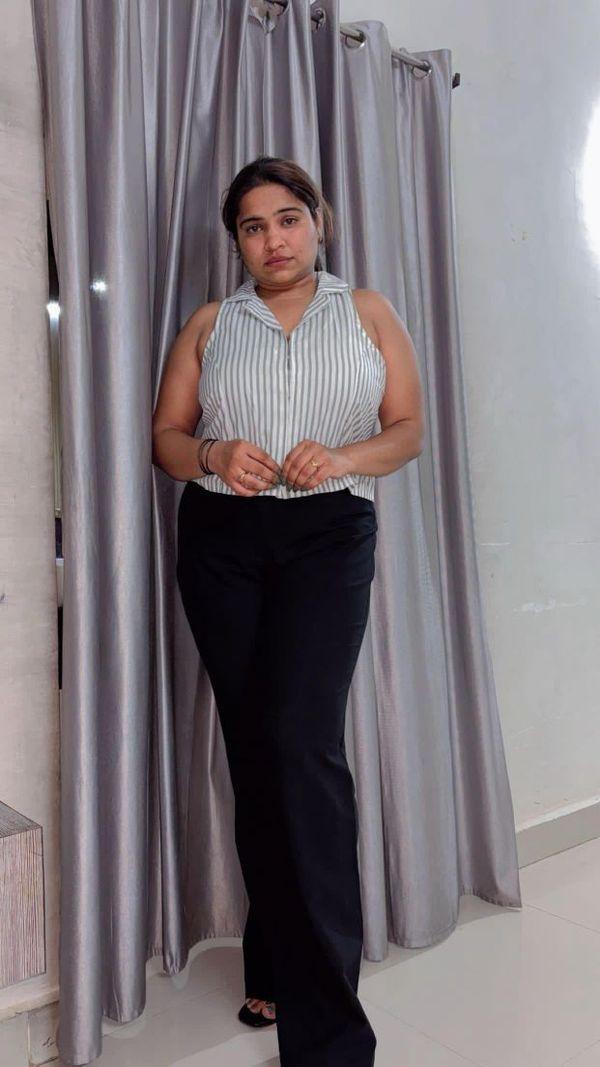
- **Body Mapping:** The garment is a long-sleeved tunic (Kurti) replacing a sleeveless crop top. The new fabric must extend down the arms, creating natural compression folds at the inner elbows where the user's arms are bent. The hemline is significantly longer than the current top; it must drape past the waist and hips, obscuring the waistband of the black trousers, likely falling to mid-thigh level.
- **Occlusion Handling:** CRITICAL: The user's hands are clasped in front of the torso. The simulation must generate a precise mask for the hands and wrists. The red Kurti fabric must be rendered *behind* the hands but *in front* of the torso. There should be slight fabric bunching or collision interaction simulated where the wrists press against the stomach area to simulate depth.
PHASE 3: ENVIRONMENT & LIGHTING
- **Light Match:** The user image has soft, diffuse indoor lighting, likely coming from the front/ceiling, casting soft shadows behind the subject onto the grey curtains. The red garment needs to accept this lighting model, avoiding high-contrast specular highlights. The red fabric must cast a shadow onto the curtains behind the user, matching the density of the user's current shadow.
- **Color Calibration:** The source image is vibrant/high-contrast. The user image is slightly cooler and softer. The red of the Kurti must be slightly desaturated and color-graded to match the ambient room tone (slightly blue/grey tint of the environment) so it integrates naturally rather than looking like a bright superimposed sticker.
PHASE 4: IDENTITY PROTECTION
- **Facial Lock:** The user's entire head, facial structure, skin tone, neck, and hairstyle must remain pixel-perfectly frozen. No beauty filters or smoothing applied to the face.
- **Body Integrity:** Strictly forbid any "slimming" or "tucking" algorithms. The Kurti must fit the user's current silhouette and arm circumference accurately. The volume of the user's bust and shoulders must dictate the fall of the fabric, maintaining her authentic body shape.