Thinking Process
PHASE 1: VISUAL DECONSTRUCTION
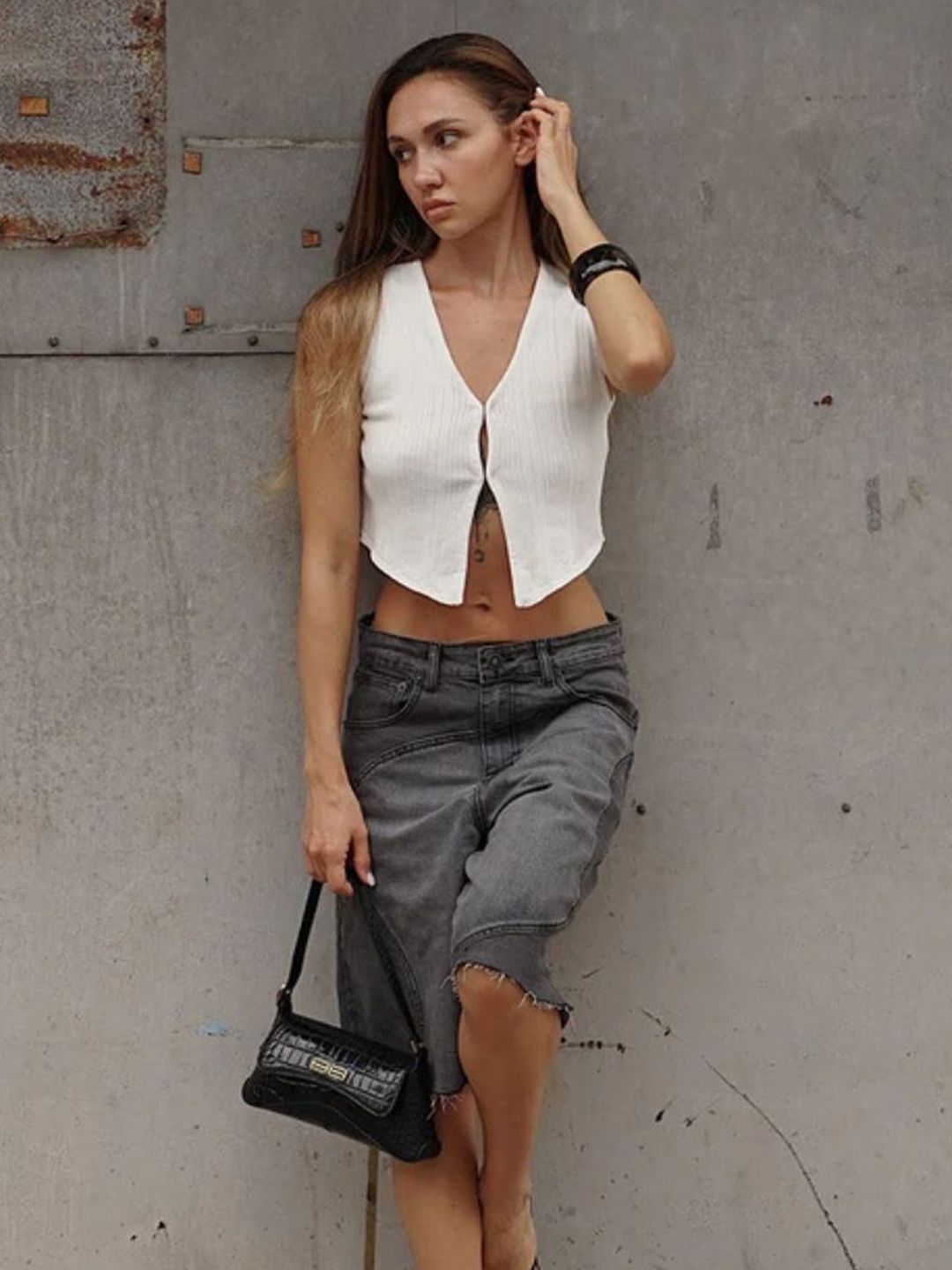
- **Fabric Physics:** The source garment is a white, ribbed knit material (likely cotton-elastane blend). It possesses high elasticity and a matte finish. Unlike the user's current loose cotton shirt, this material behaves with tension; it will cling to the torso rather than hang loosely. Light diffusion should be soft, highlighting the vertical ribbing texture without specular shine.
- **Key Features:** The distinct deep V-neckline and the "split" front hem (inverted V-shape at the navel) are critical structural elements. The vertical ribbing pattern must be preserved and warped correctly around the body's curvature. The central vertical seam/closure point and the sleeveless armhole finishing must be retained.
PHASE 2: FIT & DRAPE SIMULATION
- **Body Mapping:**
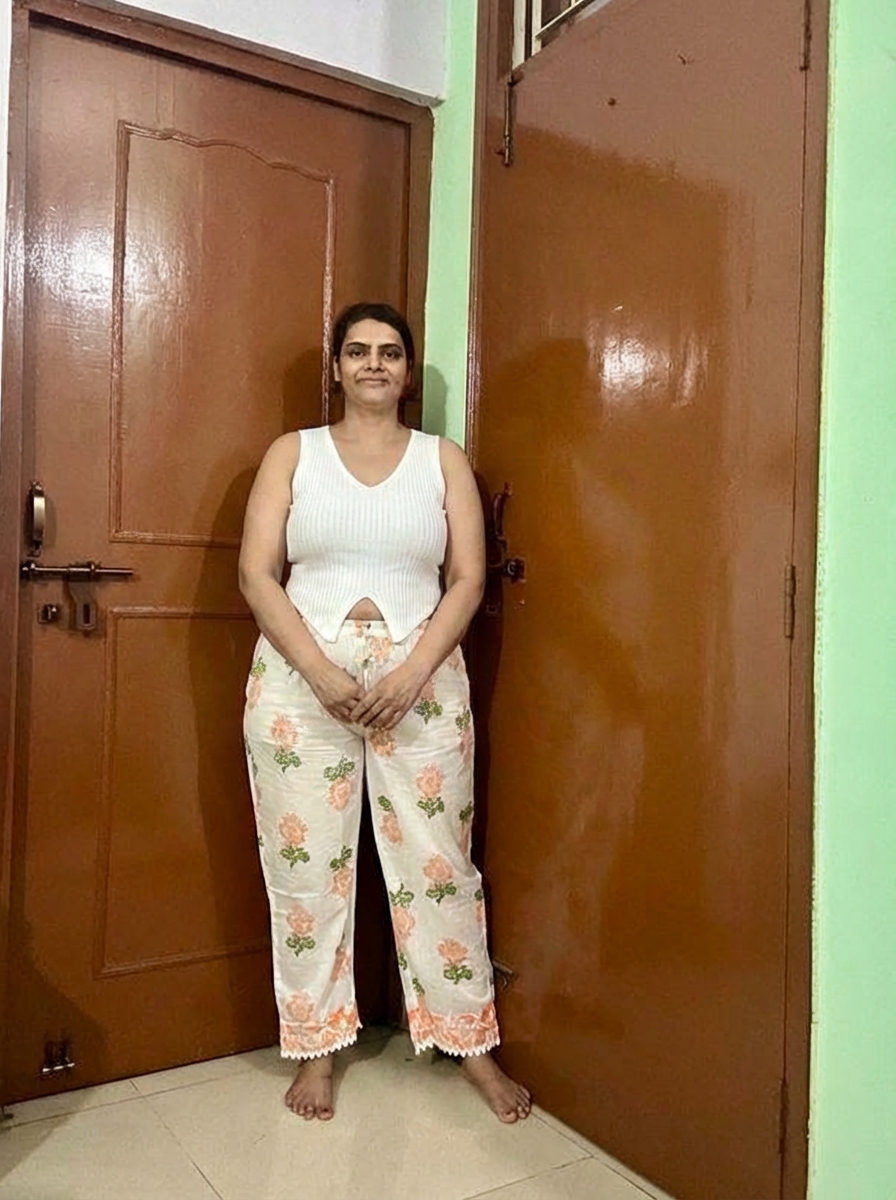
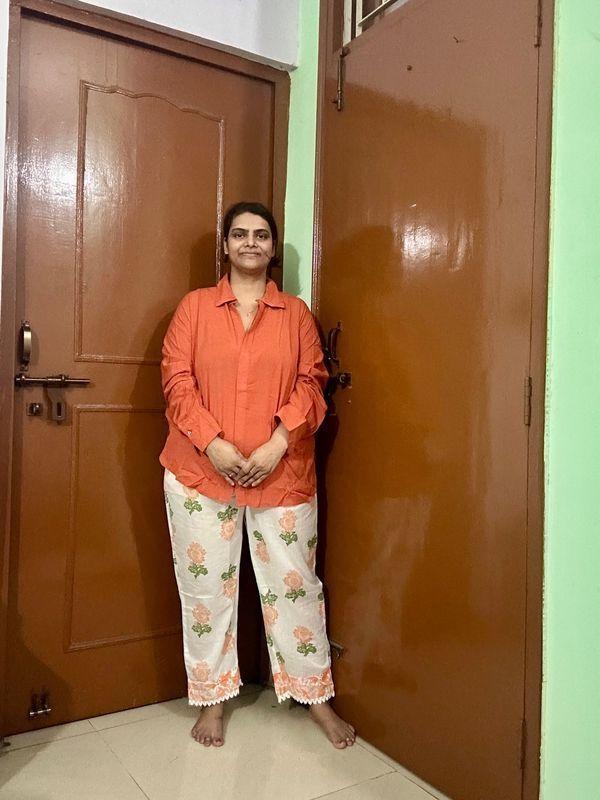
1. **Sleeveless Adaptation:** The user is currently wearing long sleeves. The simulation must generate/inpaint accurate skin texture and tone for the user's full arms and shoulders, replacing the orange fabric.
2. **Torso Fit:** The garment is cropped and fitted. It must sit flush against the user's chest and waist. Gravity will pull the hem down slightly, but the fabric tension will keep the front split slightly open. The hemline will likely sit higher than the user's current shirt, potentially revealing the waistband of the floral trousers or midriff.
- **Occlusion Handling:** The user's hands are clasped at the lower waist/crotch area. Depending on the final length of the crop top on this specific user, the hands may fall *below* the garment. However, if the garment length extends to the hands, the hands must be segmented and layered *over* the fabric. The user's hair is tied back, minimizing upper-body occlusion issues.
PHASE 3: ENVIRONMENT & LIGHTING
- **Light Match:** The user is in an indoor environment with overhead, somewhat harsh artificial lighting (casting distinct shadows on the floor and door). The source garment (currently in soft, diffuse daylight) must be relit to reflect a top-down light source. This means casting shadows under the bust and creating deeper ambient occlusion where the fabric meets the skin.
- **Color Calibration:** The white of the source top must be temperature-adjusted. The user's room has a warm/yellow-green cast from the walls and artificial bulb. The bright white top must absorb this ambient tint (shifting slightly towards warm cream/beige) to avoid looking like a "cut-and-paste" sticker.
PHASE 4: IDENTITY PROTECTION
- **Facial Lock:** The user's entire head (face, hair, ears, and neck up to the new garment's neckline) must remain pixel-perfect and frozen.
- **Body Integrity:** DO NOT slim the user's waist or alter her shoulder width to match the source model. The garment must be warped to fit the user's existing geometry. The generative skin infill for the arms must match the user's existing skin tone (visible on feet and face) and retain the natural volume of her arms, inferred from the current sleeve volume.