Thinking Process
PHASE 1: VISUAL DECONSTRUCTION
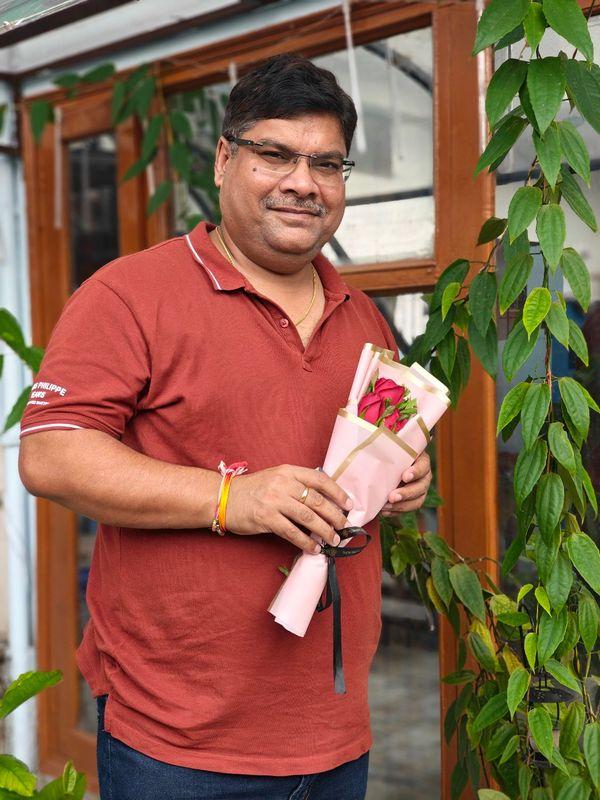
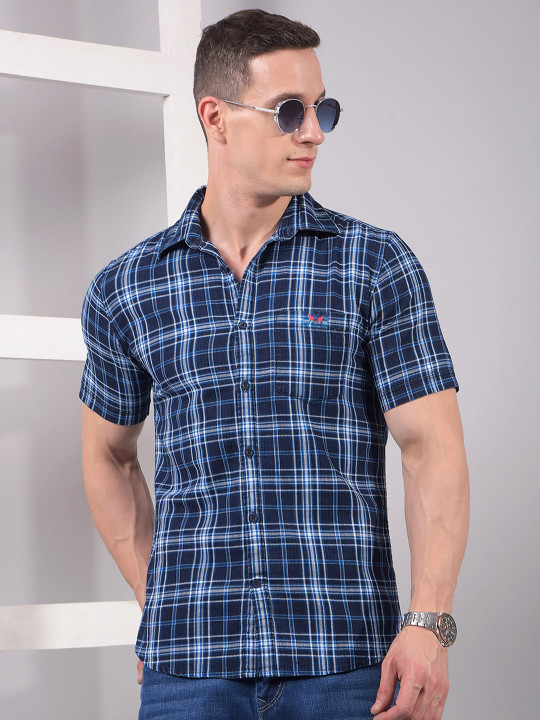
- **Fabric Physics:** The source garment is a woven cotton or cotton-blend short-sleeve shirt. It possesses medium structural rigidity (unlike the current soft knit polo). It has a matte finish with low specularity. The simulation must account for the lack of stretch in woven fabric compared to knits, meaning sharper creases at stress points rather than soft billowing.
- **Key Features:** The complex blue/white plaid pattern must maintain spatial consistency across the torso while deforming for depth. Critical details to preserve include the spread collar structure, the left breast pocket with the small red embroidered logo, the white button placket down the center, and the cuffed/hemmed short sleeves.
PHASE 2: FIT & DRAPE SIMULATION
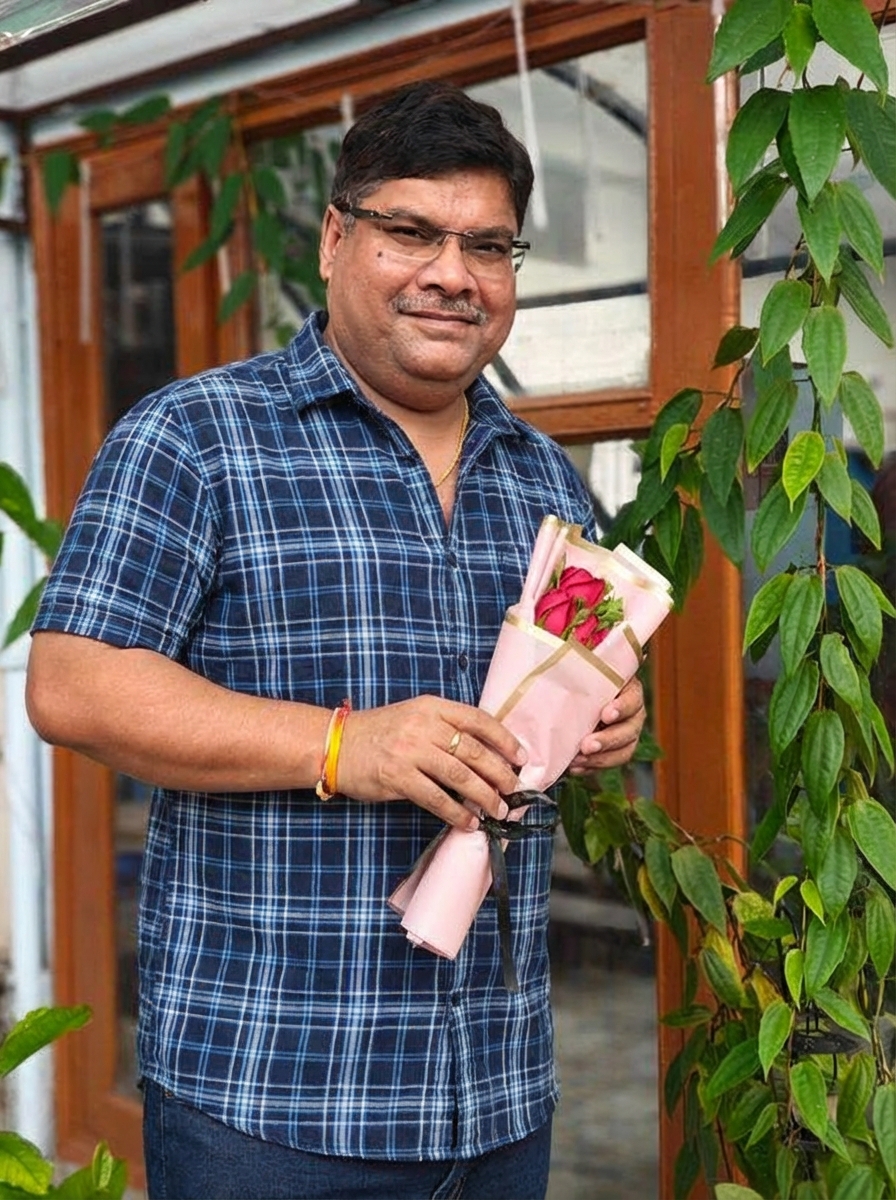
- **Body Mapping:** The source garment (modeled on an athletic build) must be re-meshed to accommodate the target user’s broader torso and abdominal prominence. The button placket will experience horizontal tension across the midsection, potentially causing slight "gaping" between buttons. The hemline will sit higher on the stomach due to the volume, rather than hanging straight down. Fabric will gather and crease significantly at the inner elbows due to the bent-arm pose.
- **Occlusion Handling:** This is a high-complexity occlusion scenario. The entire lower central abdominal region is obstructed. The system must create a segmentation mask that strictly layers the following *over* the generated shirt:
1. Both hands and wrists.
2. The pink bouquet wrapping paper, flowers, and black ribbons.
3. The religious thread (mauli) on the right wrist.
4. The gold chain necklace (unless the new collar sits higher and naturally hides it).
PHASE 3: ENVIRONMENT & LIGHTING
- **Light Match:** The target environment utilizes soft, diffused natural daylight coming primarily from the upper-left (viewer's perspective), evidenced by the highlights on the user's forehead and right arm. The new shirt must shed the harsh, direct studio flash of the source image and adopt soft ambient occlusion shadows, particularly under the collar, inside the elbow folds, and beneath the bouquet.
- **Color Calibration:** The source image has a cool, clinical white balance. The target image is warmer with earth tones (wood, skin, plants). The blue of the plaid shirt must be color-graded slightly warmer to integrate into the outdoor/greenhouse setting, preventing it from looking "cut and pasted."
PHASE 4: IDENTITY PROTECTION
- **Facial Lock:** Absolute freeze required on the user's face, specifically the jawline, glasses, hair, and neck texture up to the collar bone. The transition from the new collar to the neck skin must be blended seamlessly.
- **Body Integrity:** Strict volumetric preservation is required. The simulation must NOT slim the user to match the source model. The user's shoulder width, arm girth, and abdominal curvature must remain exactly as they are in the User Image; the shirt must deform to fit the body, not the reverse.