Thinking Process
PHASE 1: VISUAL DECONSTRUCTION
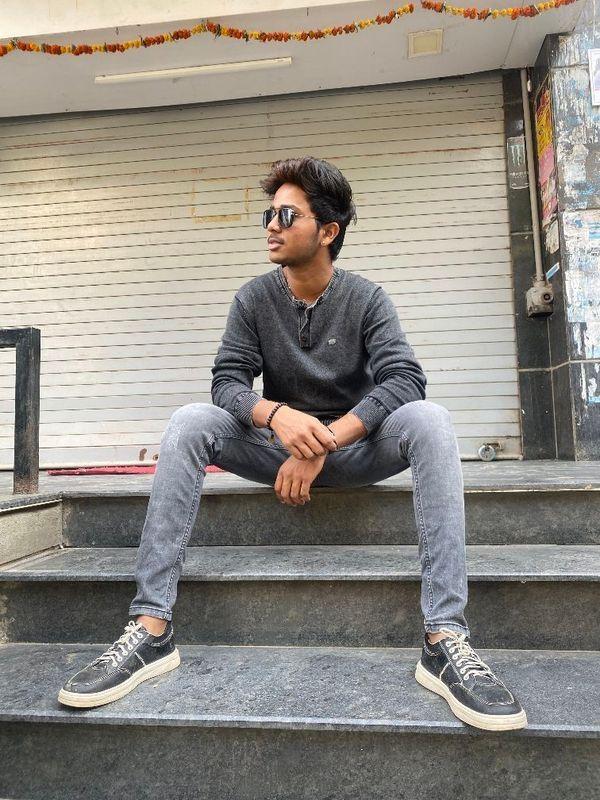
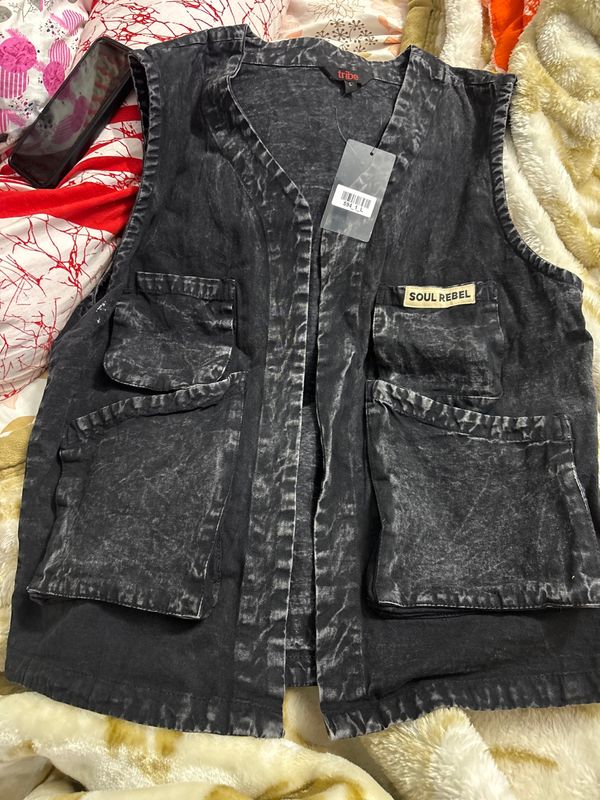
- **Fabric Physics:** The source garment is an acid-wash denim utility vest. It possesses high structural rigidity and thickness compared to the user's current soft knit henley. It should exhibit a matte finish with low specular reflection, absorbing light rather than bouncing it. The texture must convey a coarse, tactile weave.
- **Key Features:**
- **Pockets:** The four large cargo pockets (chest and waist) have significant depth and flaps; these must render with proper 3D volume, not as flat textures.
- **Branding:** The "SOUL REBEL" beige patch on the left chest and the internal red "tribe" tag at the neckline must be preserved and legible.
- **Distress:** The "stone wash" or mottled white/grey pattern on the black denim must be maintained to provide texture scale.
- **Geometry:** The V-neck opening and the sleeveless armholes are distinct boundaries that must replace the current round-neck silhouette.
PHASE 2: FIT & DRAPE SIMULATION
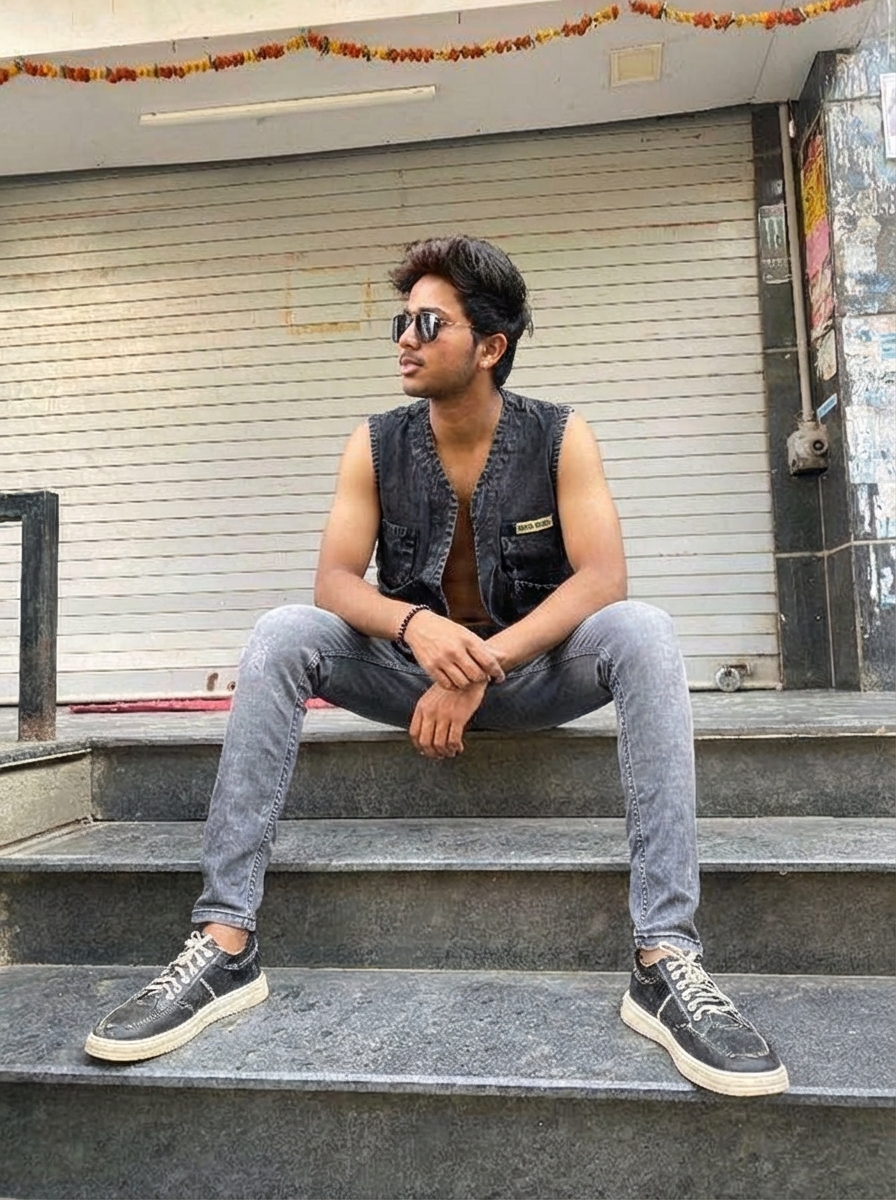
- **Body Mapping:** Due to the user's seated posture (leaning slightly forward with elbows on/near knees), the denim vest must not cling like the current shirt. It requires a "boxier" fit. Expect "tulliping" or bowing outward slightly at the chest due to the stiff fabric resisting the seated compression of the torso. The bottom hem should interact with the upper thighs/hip crease, likely bunching slightly where the torso meets the legs.
- **Occlusion Handling:**
- **Arms:** The user is currently wearing long sleeves; the target is a vest. The simulation must generate realistic skin texture for the arms or layer the vest over the existing grey sleeves if a "layered look" is intended (standard VTO assumes skin generation).
- **Hands & Accessories:** The user's clasped hands and the bracelet on the right wrist are in the foreground. The vest's lower hem must settle *behind* the forearms/wrists, ensuring no texture bleeding covers the hands or the bracelet.
- **Neck:** The vest has a deeper V-neck; the user's upper chest/neck area needs to be exposed or mapped correctly, removing the current henley's button placket.
PHASE 3: ENVIRONMENT & LIGHTING
- **Light Match:** The user is in a shaded outdoor environment with soft, diffuse, top-down lighting (likely overcast or under an awning). Shadows on the vest should be soft-edged (ambient occlusion) rather than harsh. The deepest shadows should form under the pocket flaps and inside the open front of the vest.
- **Color Calibration:** The source image is under warm, indoor artificial light. The vest needs to be color-corrected to match the cooler, desaturated tones of the user's outdoor setting. The "black" of the denim should be lifted to a dark charcoal grey to match the exposure levels of the user's jeans.
PHASE 4: IDENTITY PROTECTION
- **Facial Lock:** Absolute freeze on the user's facial structure, voluminous hair, sunglasses, and the specific jawline shadow.
- **Body Integrity:** The user's lean physical build must be maintained. Do not artificially bulk the shoulders to fit the vest. The distinct vein structure on the visible hands and the position of the legs must remain unaltered. No pixel warping should occur on the stone steps background.