Thinking Process
PHASE 1: VISUAL DECONSTRUCTION
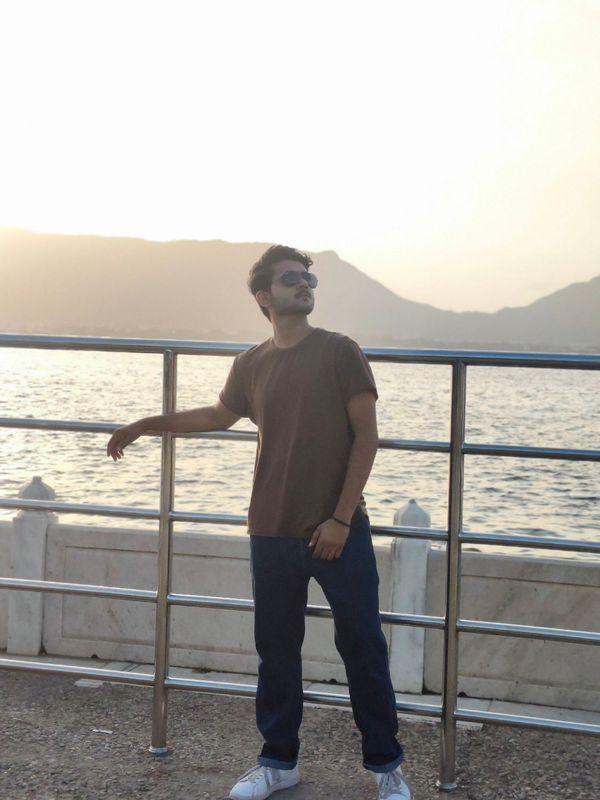
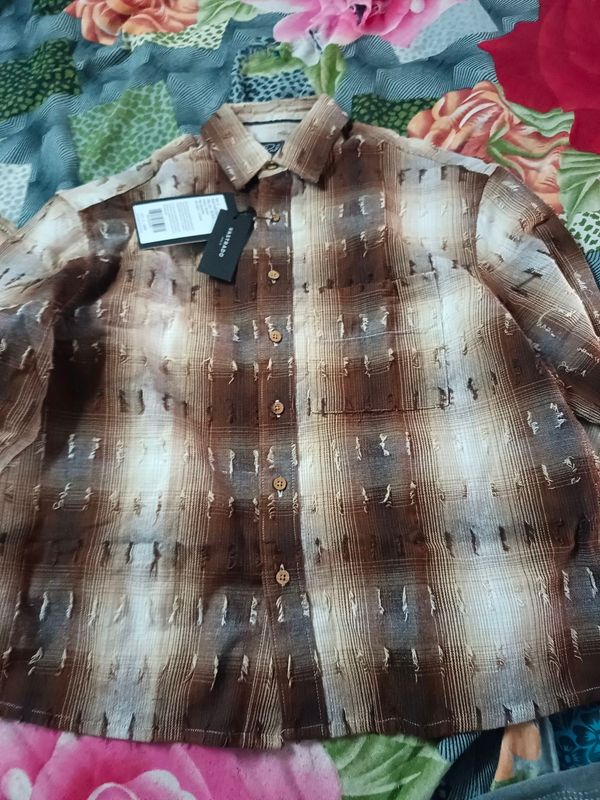
- **Fabric Physics:** The source garment appears to be a textured, medium-weight cotton or flannel blend with a distinct "distressed" or "tufted" weave (loose threads creating vertical texture). It has a matte finish with low reflectivity. It is stiffer than the user's current jersey knit t-shirt and will not cling as tightly to the musculature.
- **Key Features:** The unique vertical fraying/tufting texture throughout the plaid pattern is the primary visual signature and must be preserved. The collar structure (spread collar), the brown wood-tone buttons, and the chest pocket on the left side are essential. The black hang-tag and white price tag must be digitally removed.
PHASE 2: FIT & DRAPE SIMULATION
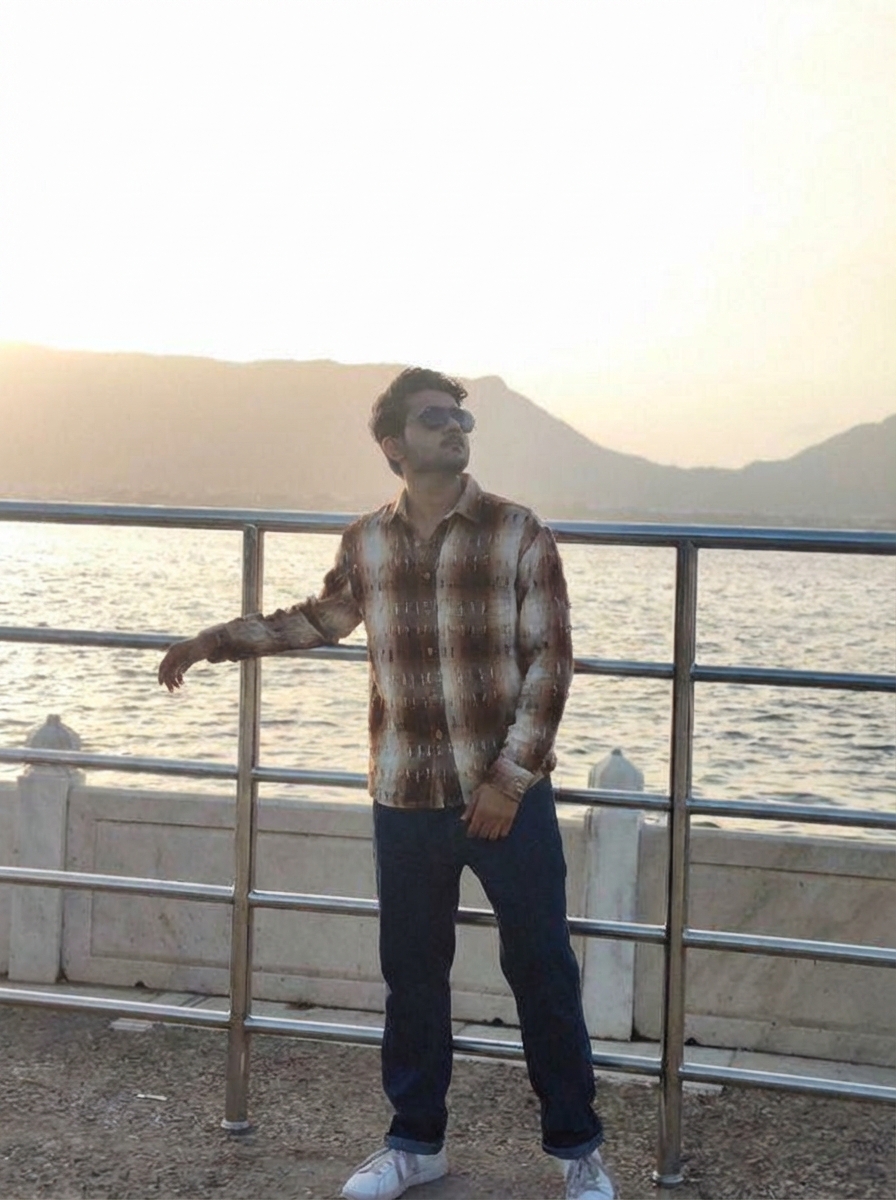
- **Body Mapping:** Due to the user's backward-leaning pose against the railing, the garment should drape closer to the chest and abdomen but hang somewhat vertically from the sternum down, potentially creating a slight gap between the shirt hem and the beltline as gravity pulls the fabric perpendicular to the ground (not following the spinal curve perfectly). The shoulder seam must align with the user's angled posture (right shoulder higher). The sleeves (assuming long sleeves on the source) must drape naturally with the bent left elbow (fabric bunching in the inner elbow) and hang straight on the right arm.
- **Occlusion Handling:** The user's right hand (viewer's right) is positioned near the hip/thigh area; the shirt hem must fall naturally behind or partially over the thumb depending on the shirt length, but strictly avoiding hand fusion. The sunglasses and neck area must remain distinct from the collar. The railing is behind the torso, so no foreground occlusion is required there.
PHASE 3: ENVIRONMENT & LIGHTING
- **Light Match:** The user is in a strong backlit scenario (sunset/golden hour) with the light source coming from behind. Consequently, the front of the new garment must be in shadow/silhouette, similar to the current t-shirt. There should be almost no direct specular highlights on the front. A subtle "rim light" effect should be applied to the shoulders and collar edges to match the ambient bloom.
- **Color Calibration:** The source image is lit with cool/neutral indoor light. The target environment is warm and hazy. The brown tones of the shirt must be color-graded to match the warm, desaturated, and shadowed palette of the user's current torso. The bright whites in the plaid must be dimmed significantly to gray/warm tones to sit correctly in the shadow.
PHASE 4: IDENTITY PROTECTION
- **Facial Lock:** The user's entire head, including the hairline, sunglasses, nose, mouth, and jawline, must be completely frozen and masked. The neck area above the clavicle must remain untouched.
- **Body Integrity:** The user's arm musculature and overall frame width must be preserved. Do not slim the waist or broaden the shoulders artificially. The leg position and the jeans must remain unaltered.