Thinking Process
PHASE 1: VISUAL DECONSTRUCTION
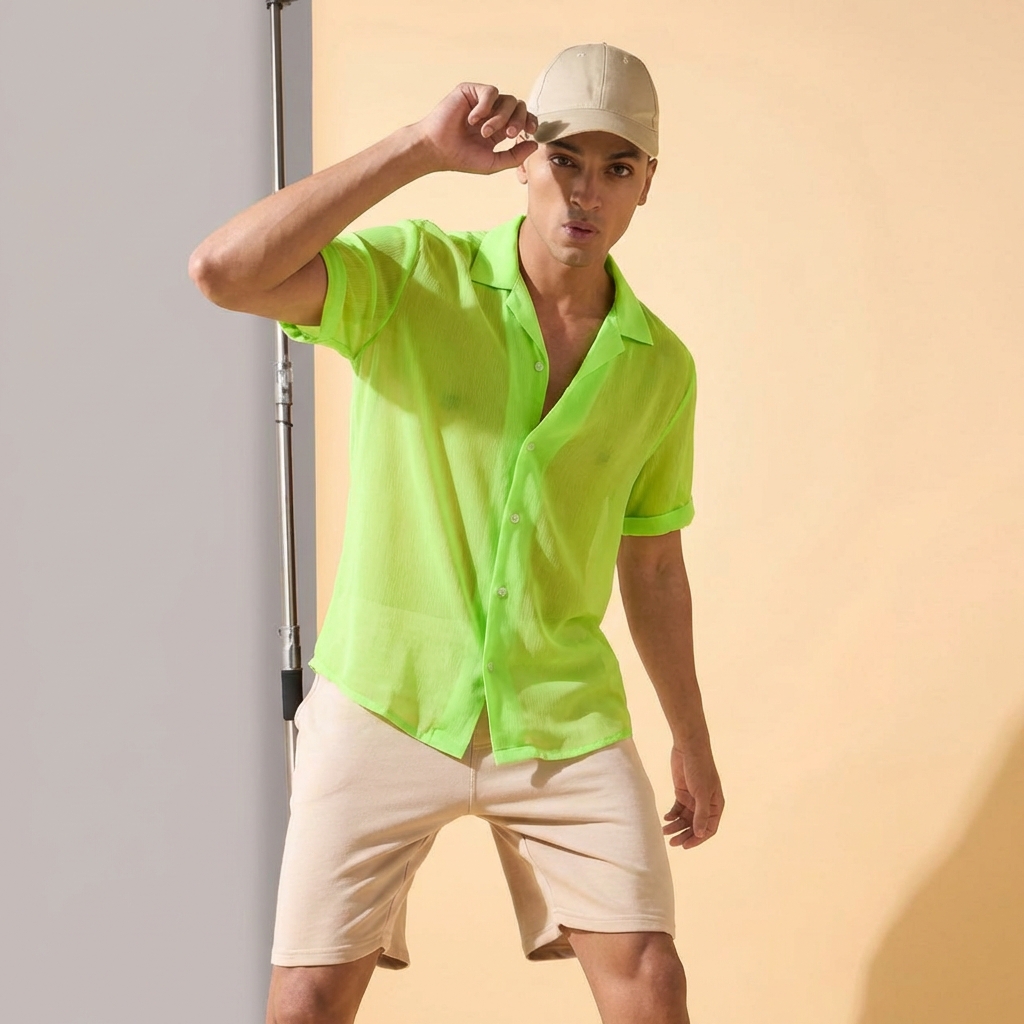
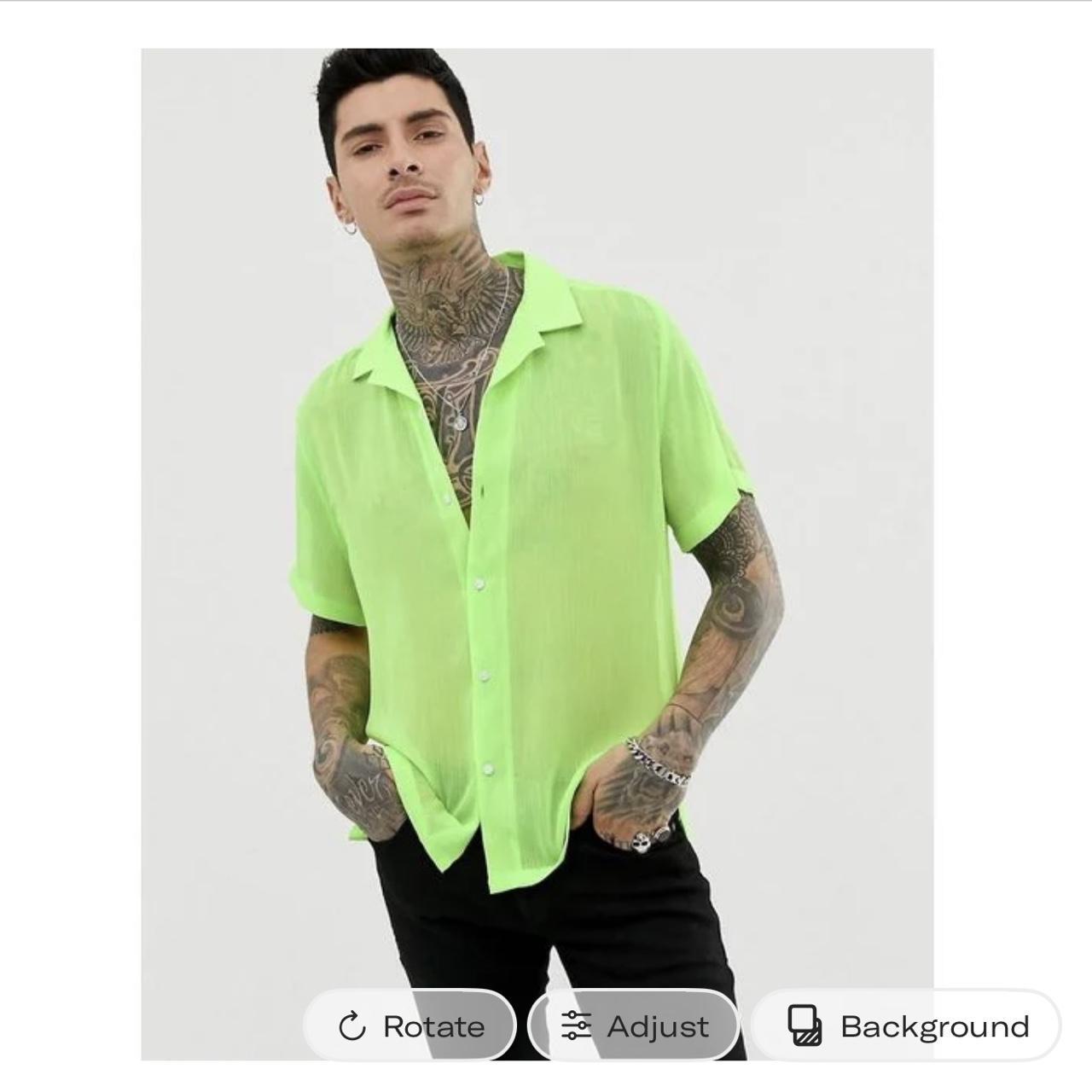
- **Fabric Physics:** The source garment is a lightweight, translucent material (likely sheer cotton, linen blend, or voile). It has high light permeability—skin tone must be partially visible through the fabric. The drape is fluid and non-rigid, prone to micro-wrinkling rather than stiff structural folds.
- **Key Features:**
- **Camp Collar (Revere Collar):** The open V-neck structure must replace the user's current crew neck without distorting the neck anatomy.
- **Sheerness/Transparency:** The fabric is see-through. The user's skin tone and potential torso anatomy must subtly bleed through the neon green, unlike the opaque t-shirt currently worn.
- **Button Placket:** Visible white buttons down the center front.
- **Sleeve Hems:** Rolled/folded cuff detail on the sleeves.
PHASE 2: FIT & DRAPE SIMULATION
- **Body Mapping:**
- **Right Arm (Raised):** This is the critical tension point. Gravity will cause the right sleeve to slide down towards the shoulder, exposing more of the underside of the arm. The fabric must bunch significantly at the right armpit and pull tight diagonally across the upper chest from the right shoulder to the left hip.
- **Left Arm (Relaxed):** The sleeve should hang naturally with gravity, creating a vertical drape.
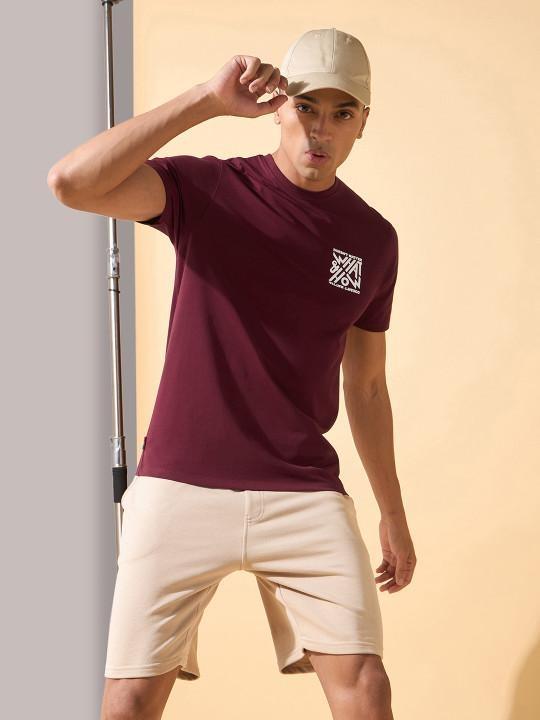
- **Torso Silhouette:** The source shirt is a "Regular/Relaxed Fit," whereas the user's current shirt is "Slim Fit." The simulation must expand the silhouette slightly away from the skin, allowing for air gaps between the fabric and the waist.
- **Occlusion Handling:**
- **Neck/Chin:** The user's jawline and neck are clearly visible; the new open collar must sit lower than the current t-shirt line. The skin currently covered by the burgundy t-shirt collar must be inpainted to match the user's skin tone.
- **Waistband:** If the shirt is rendered untucked (as per source style), it must drape *over* the beige shorts. If tucked, the shorts' waistband constitutes an occlusion layer.
- **Arms:** The user's bare arms must remain the top layer at the sleeve exit points.
PHASE 3: ENVIRONMENT & LIGHTING
- **Light Match:** The user image features a strong, hard directional light source coming from the **Camera Left**.
- **Highlights:** The right side of the shirt (viewer's left) must be highly illuminated.
- **Shadows:** Deep, cast shadows must appear on the left side of the torso (viewer's right) and under the collar folds. The fabric itself must cast a shadow onto the user's right forearm (raised arm) and the upper thighs.
- **Color Calibration:** The source image has cool, studio lighting, while the user image has a warm, yellow/peach background. The neon green must be color-graded to accept a warm tint to match the ambient light reflected from the yellow wall, preventing the "cut-and-paste" sticker look.
PHASE 4: IDENTITY PROTECTION
- **Facial Lock:** The user's face, beige cap, ears, and neck structure are absolutely frozen. The hand touching the cap and the hand by the side must be preserved pixel-perfectly.
- **Body Integrity:**
- **No Slimming:** The user's shoulder width and arm muscularity must be preserved.
- **Tattoo Removal:** The source model's chest/neck tattoos visible through the sheer shirt must be STRIPPED. Only the target user's clean skin should be visible through the translucent fabric.