
Thinking Process
PHASE 1: VISUAL DECONSTRUCTION
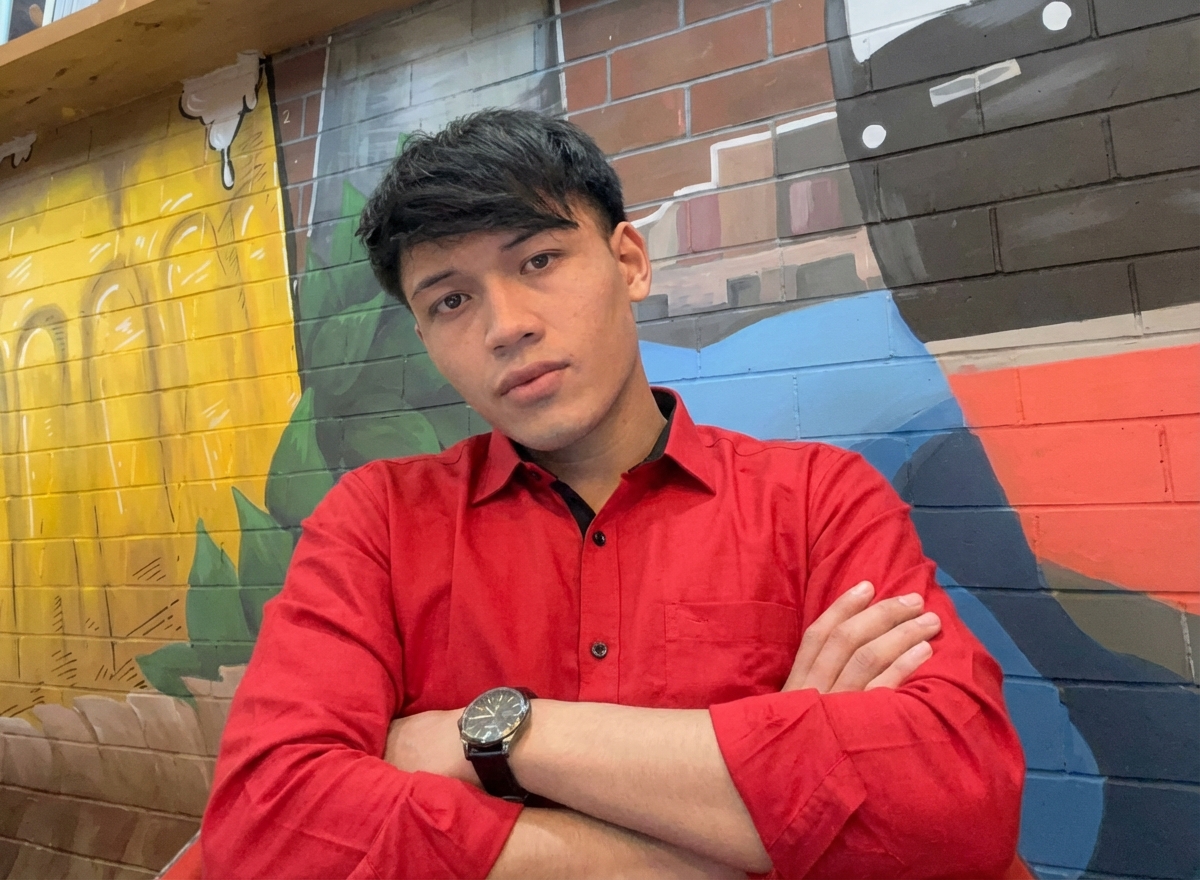
- **Fabric Physics:** The source garment is a medium-weight woven cotton or cotton-blend shirting material. It possesses a matte finish with low specular highlights. The simulation must simulate semi-rigid stiffness at the collar and placket, transitioning to softer, sharper creases in the body compared to the soft, chunky knit of the user's current sweater.
- **Key Features:** The contrast black inner collar lining is a critical visual anchor that must be preserved at the neck. The specific button spacing, the single left-breast pocket, and the "rolled-sleeve" cuff detail are essential. The white tag loop attached to the second button must be digitally removed.
PHASE 2: FIT & DRAPE SIMULATION
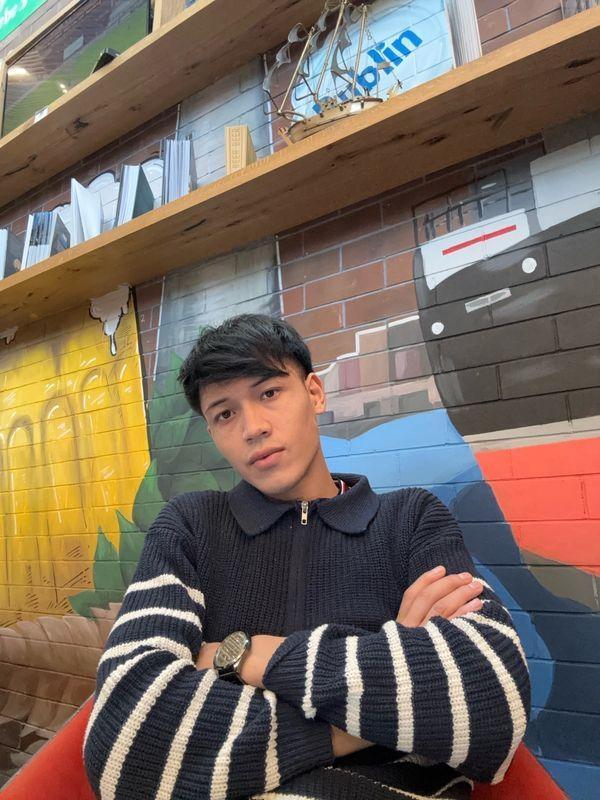
- **Body Mapping:** Due to the user's crossed-arm pose, the red shirt must simulate compression across the chest and bunching around the biceps and armpits. The fabric tension lines must radiate from the underarms toward the elbows. The shirt collar must sit higher and stiffer on the neck than the current relaxed zip-collar. The bottom hem of the shirt should interact naturally with the user's lap/waist area, folding where the torso bends.
- **Occlusion Handling:** This is a high-complexity occlusion scenario. The user's forearms and hands are crossed *over* the chest. The simulation must generate the shirt underneath the arms while strictly masking the arms, hands, and the wrist watch to overlay the new fabric. The shirt sleeves must ideally extend to the wrist to cover the current sweater's sleeves, or generating skin texture for the forearms will be required if preserving the "rolled sleeve" look of the source (extending to wrist is the safer physics calculation here to avoid skin generation artifacts).
PHASE 3: ENVIRONMENT & LIGHTING
- **Light Match:** The target environment has soft, diffuse indoor lighting, likely coming from the upper-left, casting soft shadows on the right side of the face. The red shirt must adopt this shading profile: brighter on the user's right shoulder/chest (viewer's left) and darker/shadowed towards the user's left side and under the crossed arms.
- **Color Calibration:** The source red is flat and high-saturation. It must be desaturated slightly and warmed to match the ambient tungsten/indoor lighting of the café setting. The red tone must interact with the reddish-brown brick tones in the background to ensure the garment doesn't look like a "sticker" but part of the scene.
PHASE 4: IDENTITY PROTECTION
- **Facial Lock:** The user's hair (specifically the bangs), eyes, nose, mouth, and jawline must remain completely frozen. The neck geometry should remain unchanged, only the skin texture blending at the collar line is permitted.
- **Body Integrity:** The volume of the user's torso and arms must be preserved. The red shirt is thinner than the current thick knit sweater, so a slight reduction in bulk is physically accurate, but the skeletal structure and muscular width of the shoulders and crossed arms must not be slimmed or warped.