Thinking Process
PHASE 1: VISUAL DECONSTRUCTION
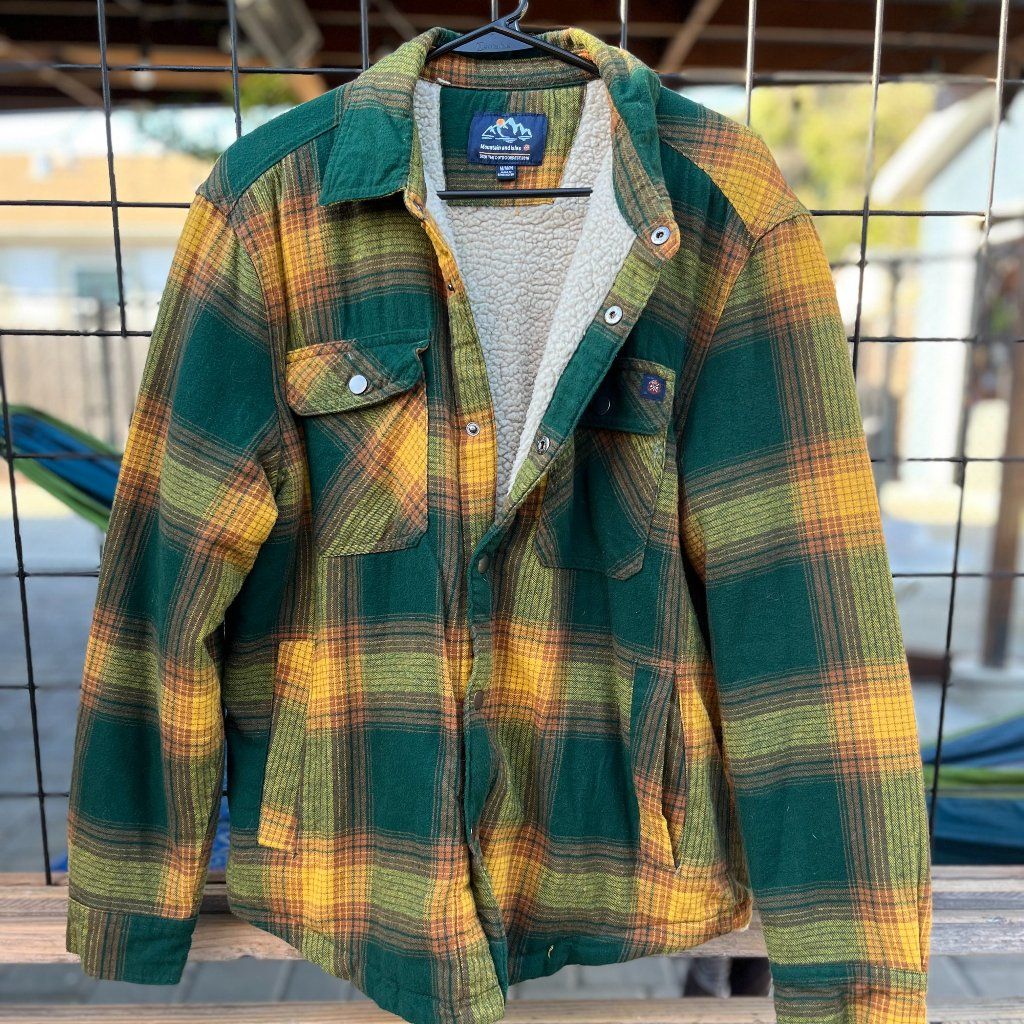
- **Fabric Physics:** The source garment is a heavy-weight flannel shirt-jacket with a thick sherpa (faux shearling) lining. It possesses high structural rigidity and low drape coefficient compared to the user's current thin chambray shirt. Light interaction should be matte and diffusive (high roughness) for the flannel, with sub-surface scattering required for the sherpa collar texture to appear soft and fibrous.
- **Key Features:** The distinct green/yellow/mustard plaid pattern must maintain alignment across seams. Critical geometry includes the thick sherpa-lined collar, the metallic snap buttons (silver/grey), the two chest pockets with snap flaps, and the side welt pockets. The bulk/thickness of the front placket must be rendered to show the multi-layer construction (flannel + lining).
PHASE 2: FIT & DRAPE SIMULATION
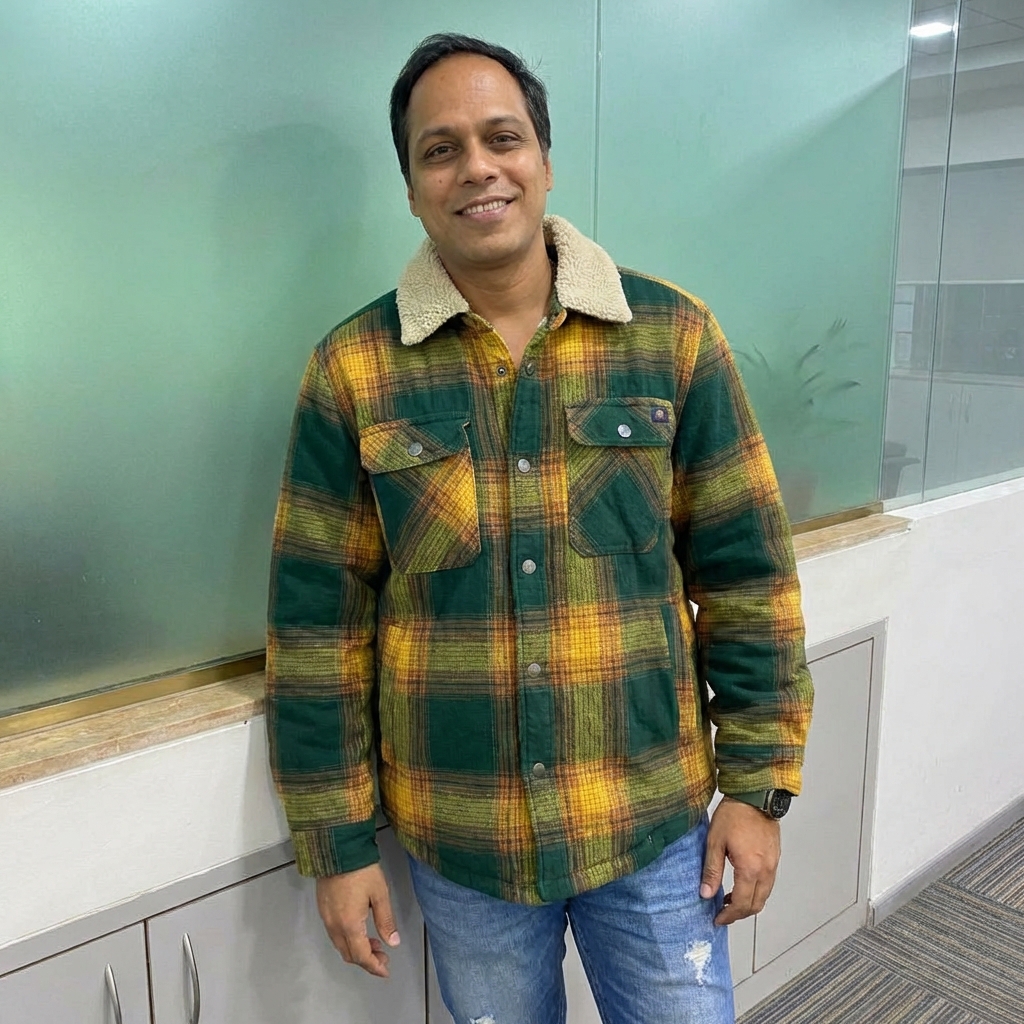
- **Body Mapping:** Due to the user's "leaning back" pose with arms extended, the jacket must not cling to the torso. It needs to hang with volumetric gap between the chest and the fabric to represent the jacket's stiffness. The shoulders of the jacket should sit slightly higher and wider than the current shirt to account for the padding/lining. The sleeves must be digitally extended to the wrist (ignoring the user's current rolled-up sleeves), creating compression wrinkles at the armpits and tension across the chest.
- **Occlusion Handling:** The user's hands are resting on a ledge behind him. The new jacket's cuffs must terminate naturally at the wrist bone, ensuring the hands and fingers remain the top-most layer. The wristwatch on the left arm should ideally be covered by the thick sleeve, or the sleeve must bunch securely above it. The hem of the jacket may interact with the ledge he is leaning against, requiring collision detection to flatten the back of the garment against the surface.
PHASE 3: ENVIRONMENT & LIGHTING
- **Light Match:** The user is in a diffuse, cool-toned indoor office environment (overhead fluorescent). The source image is in high-contrast outdoor sunlight. The source texture must be "de-lit" (albedo extraction) to remove the harsh outdoor shadows, then re-lit with soft, top-down ambient occlusion to match the office room. Shadows should be cast by the thick collar onto the neck and by the jacket onto the jeans.
- **Color Calibration:** The warm yellow/mustard tones of the flannel must be slightly desaturated and color-graded to match the cooler white balance of the target image, ensuring the garment doesn't look artificially vibrant against the muted green wall.
PHASE 4: IDENTITY PROTECTION
- **Facial Lock:** Absolute freeze on the facial region from the hairline down to the Adam's apple. The user's hair silhouette must remain untouched, with the new collar composited *behind* any loose hair strands at the nape of the neck.
- **Body Integrity:** Strictly prohibited to slim or alter the user's underlying skeletal mesh. The final silhouette must actually appear *bulkier* than the original image, accurately reflecting the addition of a thick, winter-weight garment over the user's frame. The lower body (jeans and sneakers) must remain pixel-perfectly unchanged.