Thinking Process
PHASE 1: VISUAL DECONSTRUCTION
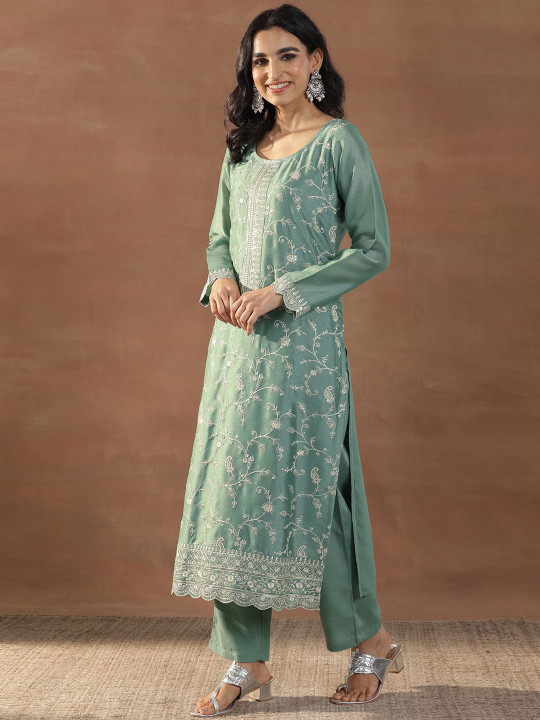
- **Fabric Physics:** The source garment appears to be a Chanderi silk or Viscose blend with a distinct sheen and moderate stiffness. Unlike the user's current soft knit top, this material does not cling tightly to the body; it has a structured drape. The simulation must render anisotropic specular highlights to mimic the silky texture, ensuring the fabric interacts with light rather than appearing matte.
- **Key Features:**
1. **Intricate Embroidery:** The white floral/vine thread work and the vertical central placket design must remain high-resolution.
2. **Scalloped Edges:** The sleeve cuffs have a specific scalloped, embroidered edge that must be preserved.
3. **Sheen/Luster:** The sage green base fabric has a glossy quality that must be maintained to distinguish it from cotton.
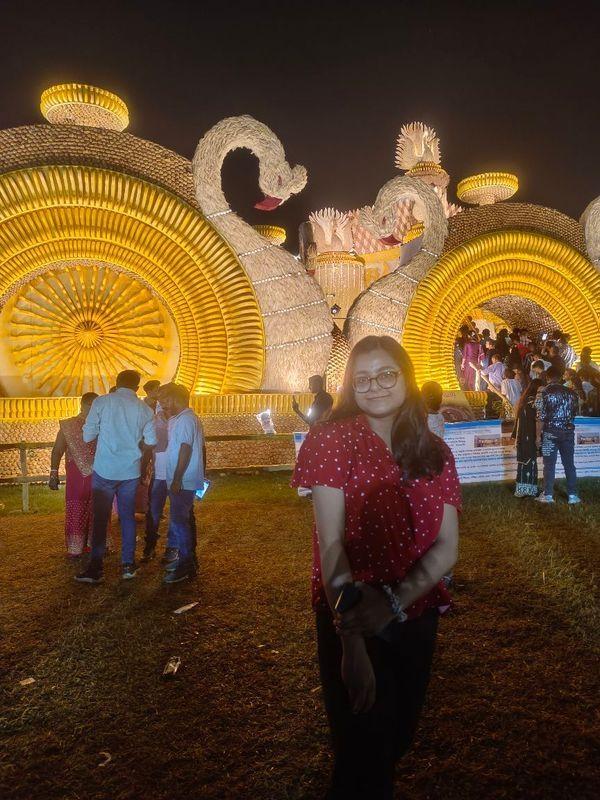
4. **Long Sleeves:** The transition from the user's current short sleeves to the source's long sleeves requires accurate fabric extension down the arm.
PHASE 2: FIT & DRAPE SIMULATION
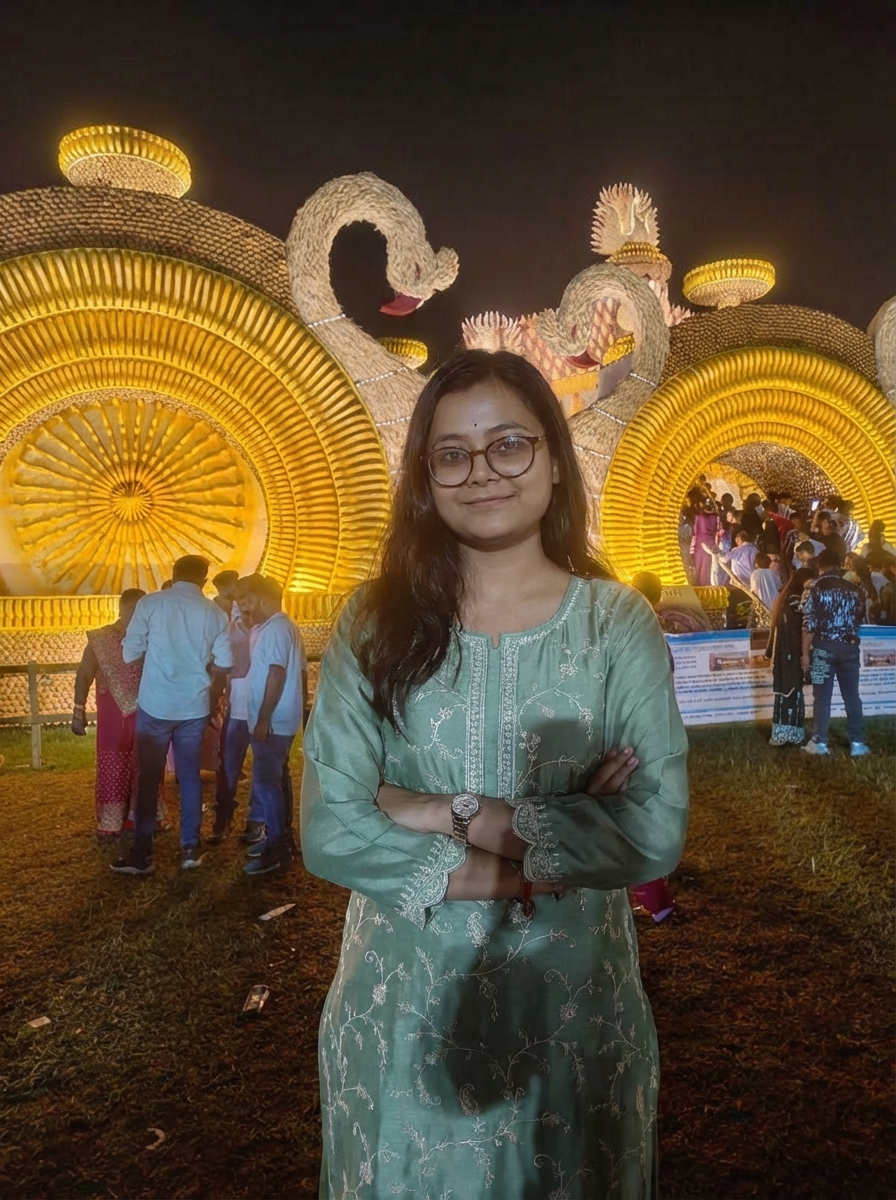
- **Body Mapping:** The garment is a Kurti (tunic), meaning it is designed to hang relatively straight from the shoulders, skimming the bust and flaring slightly at the hips. It should not taper at the waist like the user's current shirt. Tension folds should appear at the inner elbows due to the user's bent arm posture. The fabric must look loose but not oversized.
- **Occlusion Handling:** This is a high-complexity occlusion scenario.
1. **Arms & Hands:** The user's arms are crossed/held in front of the torso. The Kurti must appear *behind* the forearms and hands in the abdominal region, while covering the upper arms and shoulders. The watch on the left wrist must remain visible (masked out).
2. **Hair:** The user's long dark hair drapes over both shoulders and rests on the chest. This hair must be segmented and layered *on top* of the new green fabric, creating soft shadows onto the Kurti.
PHASE 3: ENVIRONMENT & LIGHTING
- **Light Match:** The target environment is a nighttime outdoor festival with strong, warm, artificial backlighting (yellow/gold hues from the decorations) and a diffuse, cooler frontal fill light (likely flash or ambient reflection). The new garment must exhibit "rim lighting" on the edges (shoulders/arms) to match the backlit surroundings.
- **Color Calibration:** The studio-lit sage green of the source must be color-graded to match the target's low-light condition. The green should pick up a warm cast (yellow/orange tint) from the background illumination. Shadow areas on the garment should be deep and slightly noisy to match the ISO grain of the target photo, preventing the "clean sticker" effect.
PHASE 4: IDENTITY PROTECTION
- **Facial Lock:** The user's face (including glasses, eyes, nose, mouth), skin tone, and neck structure must remain pixel-perfectly frozen. No beautification filters or structure changes are permitted.
- **Body Integrity:** The user's shoulder width and arm volume must be preserved. The simulation is strictly forbidden from slimming the torso or altering the user's posture. The Kurti adds volume due to its cut; it should not artificially cinch the waist.