Thinking Process
PHASE 1: VISUAL DECONSTRUCTION
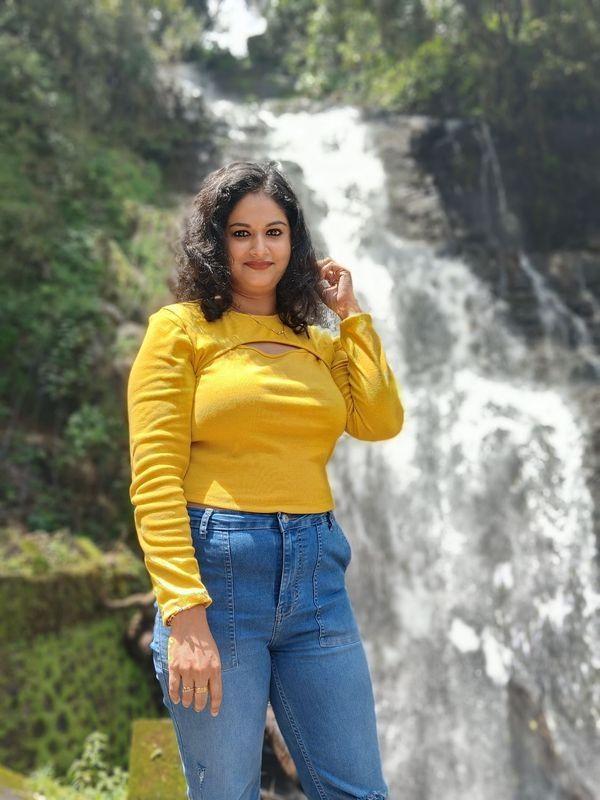
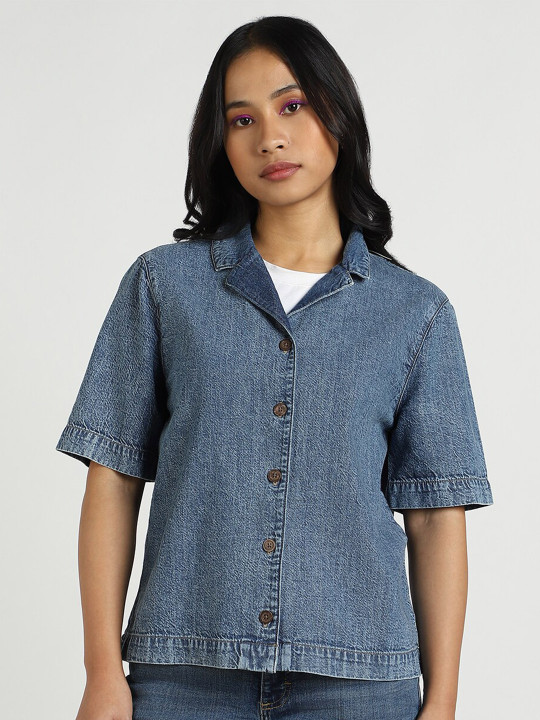
- **Fabric Physics:** The source garment is a medium-weight denim (likely cotton twill). Unlike the user's current clingy knit top, this material is rigid and structured. It has low elasticity and will not conform tightly to the body's curvature. Light interaction should be matte with subtle, diffuse specular highlights on the weave's "high points" to simulate the denim texture.
- **Key Features:** The notched lapel/camp collar is distinct and must be preserved. The five central tortoise-shell buttons, the vertical placket stitching, and the specific cuffed hem on the short sleeves are critical details. The slight "washed" texture of the blue fabric must remain visible.
PHASE 2: FIT & DRAPE SIMULATION
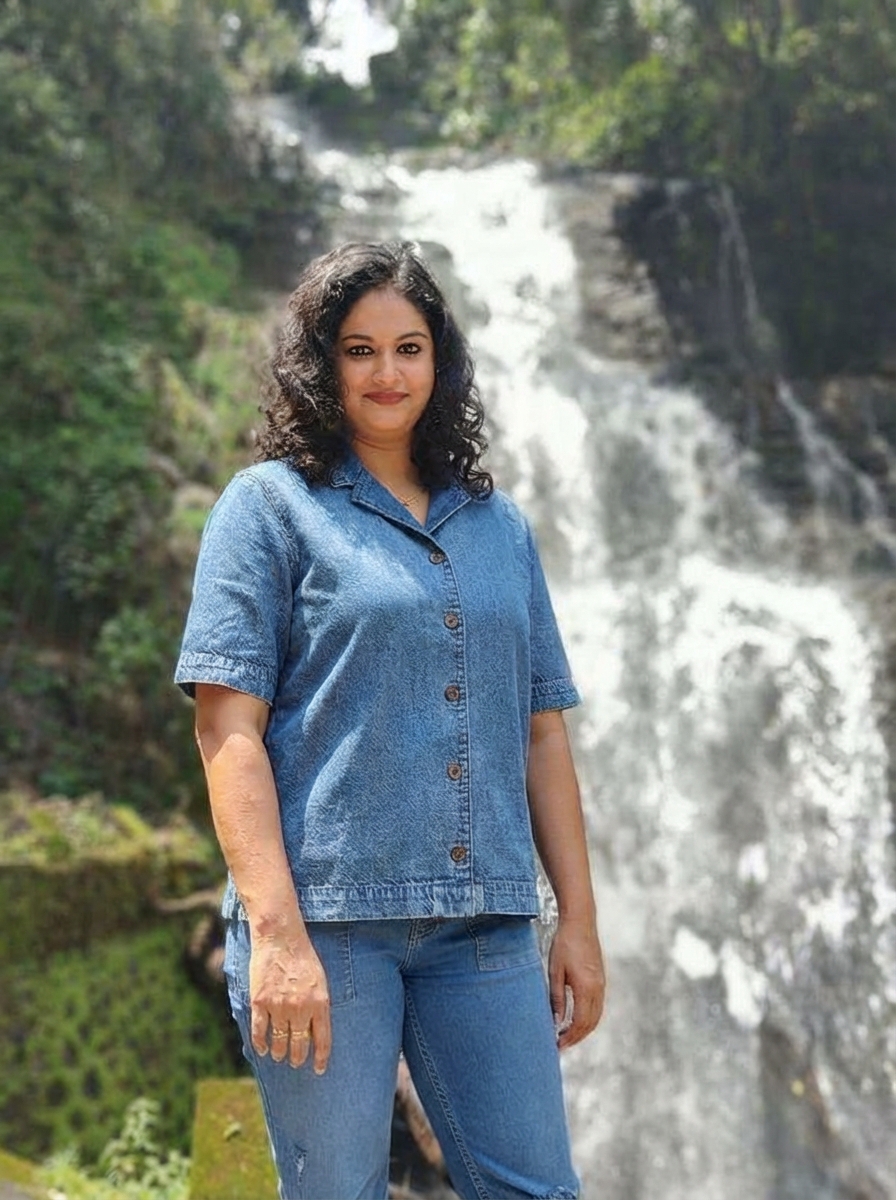
- **Body Mapping:** The garment must transition from the current tight fit to a "boxy" or relaxed silhouette. The denim should bridge the gap between the bust and the waist rather than hugging the midriff. **Critical Generation Task:** Since the user is wearing long sleeves and the source is short-sleeved, the simulation must generatively in-paint realistic skin textures and lighting on the user's forearms and elbows to replace the yellow sleeves.
- **Occlusion Handling:** The user's voluminous curly hair resting on the shoulders is a primary occlusion layer; the denim collar and shoulders must sit *behind* the hair. The user's left hand (raised near the face) must be segmented out to ensure the new sleeve renders behind the forearm/wrist area if overlap occurs.
PHASE 3: ENVIRONMENT & LIGHTING
- **Light Match:** The target environment features soft, diffused natural daylight (likely overcast or shaded by foliage/waterfall), coming from slightly above and in front. The harsh studio lighting on the denim shirt must be neutralized and replaced with this softer, cooler ambient light. Shadows cast by the collar and buttons should be soft-edged, not sharp.
- **Color Calibration:** The denim blue needs to be color-graded to match the outdoor color temperature. It should reflect slight cool tones from the waterfall mist and potentially subtle green bounce-light from the surrounding foliage, desaturating the studio blue slightly to fit the natural scene.
PHASE 4: IDENTITY PROTECTION
- **Facial Lock:** The user's facial structure, skin tone, and specifically the complex geometry of her curly hair must be frozen and masked precisely.
- **Body Integrity:** Strict prohibition on warping the user's torso to match the source model's slimmer frame. The garment mesh must expand to fit the user's bust and waist dimensions naturally without compressing her body shape. The high-waisted jean line of the user should correspond naturally with the hem of the denim shirt (likely requiring a virtual "untucked" drape over the waistband).