Thinking Process
PHASE 1: VISUAL DECONSTRUCTION
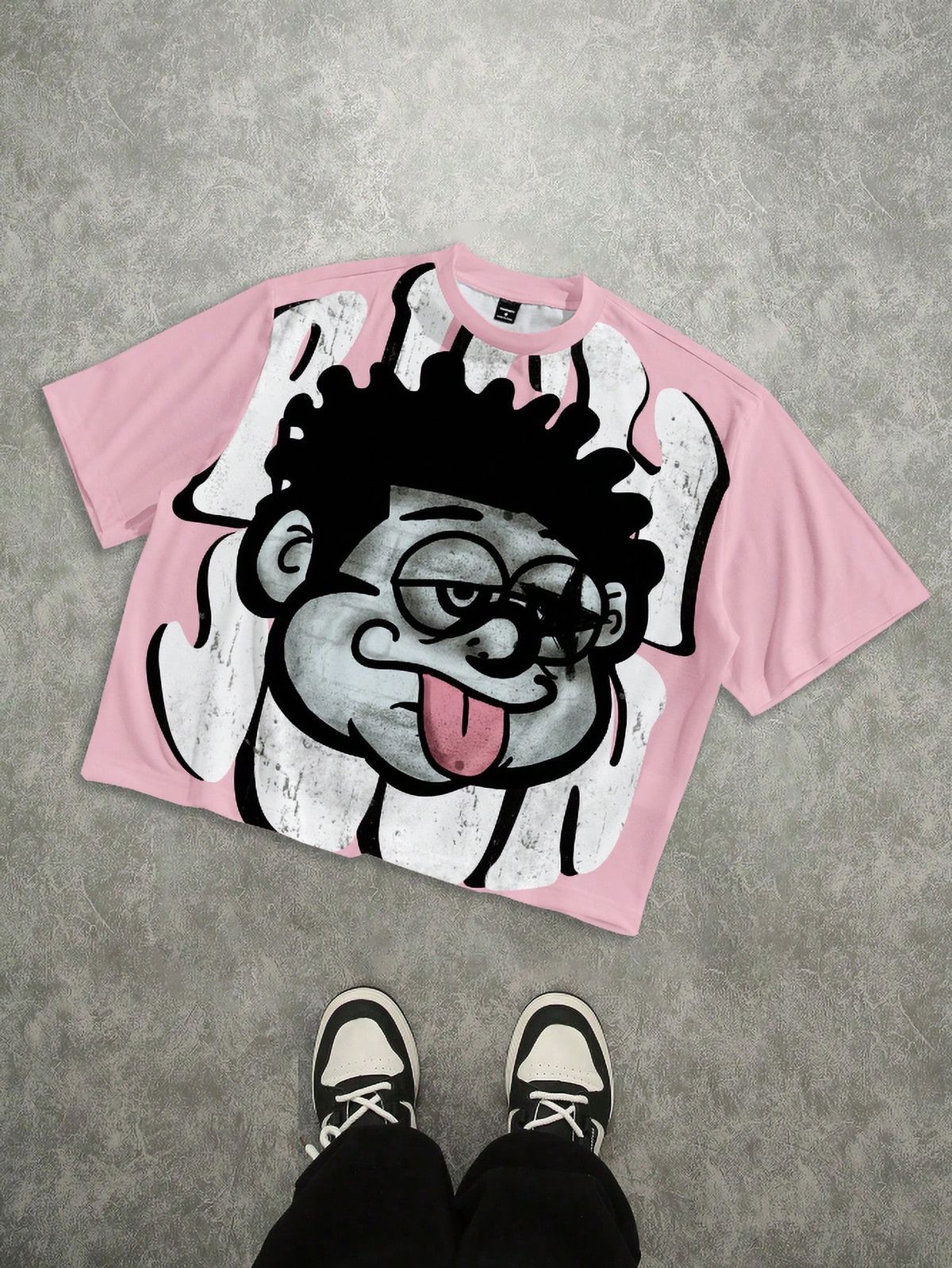
- **Fabric Physics:** The source garment is a standard heavyweight cotton jersey. It possesses a matte finish with diffuse reflection (low specularity). The simulation must treat this as a semi-structured knit that absorbs light rather than reflecting it. It has moderate pliability—it will fold softly rather than creasing sharply like starched linen or appearing fluid like silk.
- **Key Features:** The massive, high-contrast graphic print (cartoon face with glasses and tongue) is critical and must not be distorted beyond recognition by the folds. The ribbed crew neckline and the precise shade of pastel pink must be preserved. The boxy, streetwear cut of the sleeves needs to be maintained during the transfer.
PHASE 2: FIT & DRAPE SIMULATION
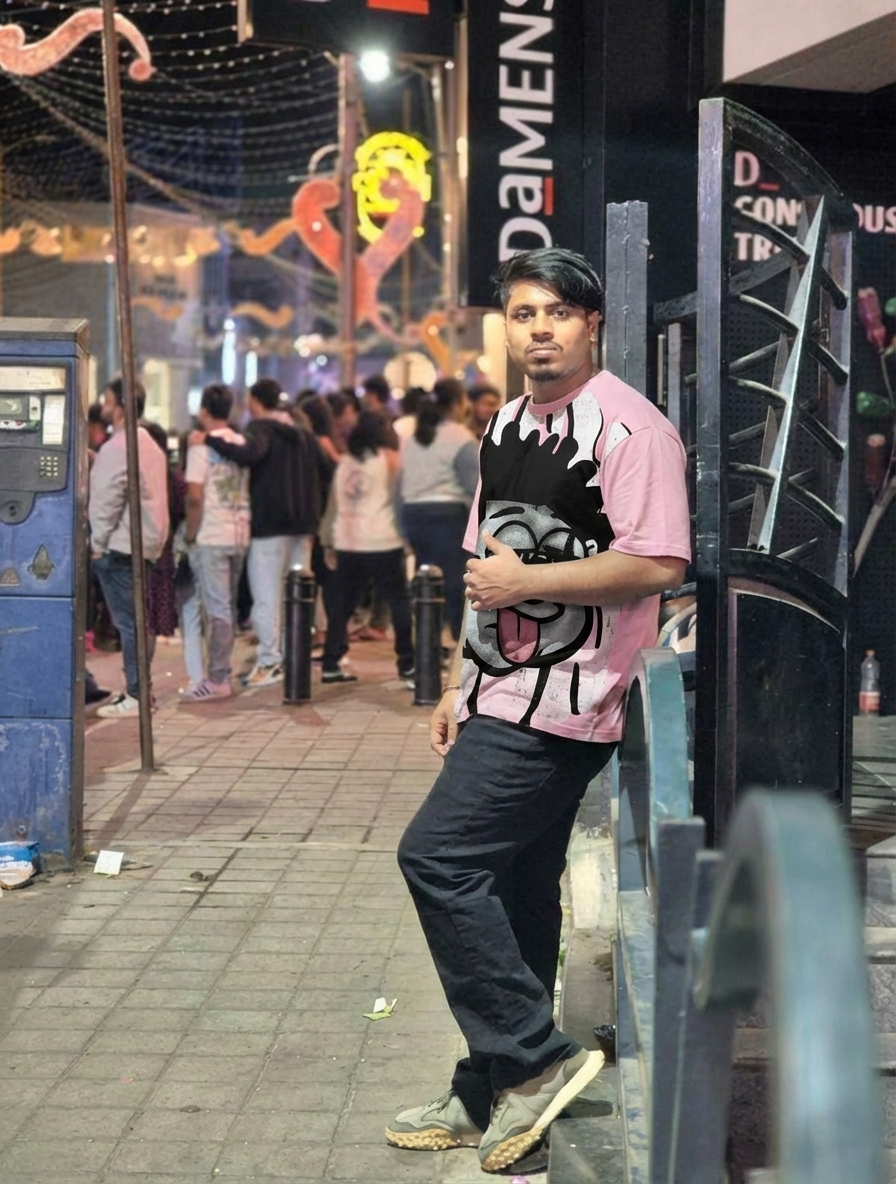
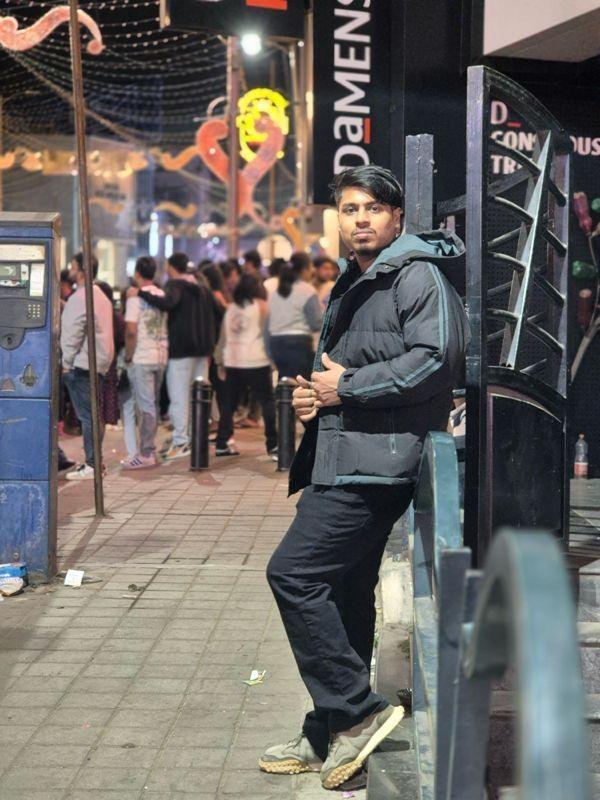
- **Body Mapping:** The user is currently wearing a high-volume puffer jacket. The simulation must perform "volumetric reduction" to estimate the user's actual torso size beneath the jacket, ensuring the t-shirt sits on the skin/undershirt layer, not on the phantom volume of the puffer. Due to the user leaning back against the railing, the t-shirt should drape vertically from the shoulders, likely causing the hemline to hang slightly away from the lower back/waist area due to gravity. The left shoulder is slightly dipped; the fabric must bunch naturally in the armpit area.
- **Occlusion Handling:** The user's left hand is actively gripping the current jacket. This hand MUST be segmented and layered *over* the new t-shirt. However, the tension lines from the grip should be relaxed, as gripping a t-shirt does not produce the same bulk tension as a puffer jacket. The user's chin/jawline must properly occlude the back of the crew neck collar.
PHASE 3: ENVIRONMENT & LIGHTING
- **Light Match:** The scene is a complex nighttime urban environment with mixed lighting. There is a strong, warm (yellow/orange) ambient glow from the streetlights behind the user, and a cooler, possibly white/blue artificial light source illuminating the user's front-left side. The pink t-shirt must accept these mixed light sources: warm rim lighting on the user's right side (viewer's left) and cooler, localized illumination on the chest graphic. Shadows should be soft but directional, cast downward and slightly to the right.
- **Color Calibration:** The bright, flat pink of the source image must be desaturated and darkened to match the low-light exposure of the user image. The white areas of the graphic print should not be pure #FFFFFF; they must reflect the ambient color temperature (leaning slightly yellow/cyan depending on the specific light hit) to avoid looking like a "sticker" placed on top.
PHASE 4: IDENTITY PROTECTION
- **Facial Lock:** Absolute freeze required on the user's eyes, nose, mouth, facial hair (beard/mustache stubble), ears, and hairstyle. The skin tone on the face must remain consistent with the lighting conditions.
- **Body Integrity:** The legs, shoes, and railing must remain untouched. Crucially, while the torso volume is being reduced to remove the puffer jacket, the underlying body estimation must remain proportional to a medium-build male; do not slim the user artificially or create an unnatural "cutout" silhouette where the jacket used to be.