Thinking Process
PHASE 1: VISUAL DECONSTRUCTION
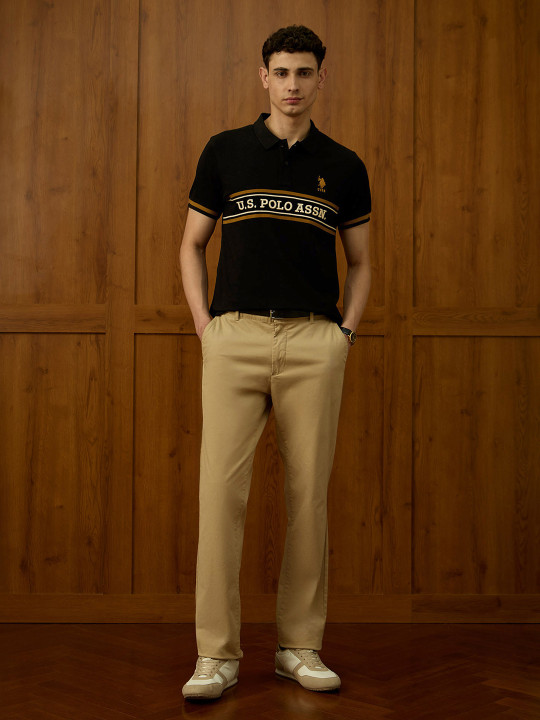
- **Fabric Physics:** The source garment is a cotton pique polo shirt. The material has a micro-waffle texture that is generally matte and light-absorbent, not glossy. It has moderate stiffness, meaning the collar should hold its shape and not lay completely flat like a t-shirt. The sleeve cuffs are ribbed and elasticated, suggesting they should hug the biceps slightly rather than hang loose.
- **Key Features:** The central chest typographic logo ("U.S. POLO ASSN.") and the bounding horizontal stripes (gold/yellow) must remain undistorted across the pectoral muscles. The embroidered horse logo on the upper left chest must be preserved. The contrast tipping on the collar and sleeve edges (gold line) is essential for design integrity.
PHASE 2: FIT & DRAPE SIMULATION
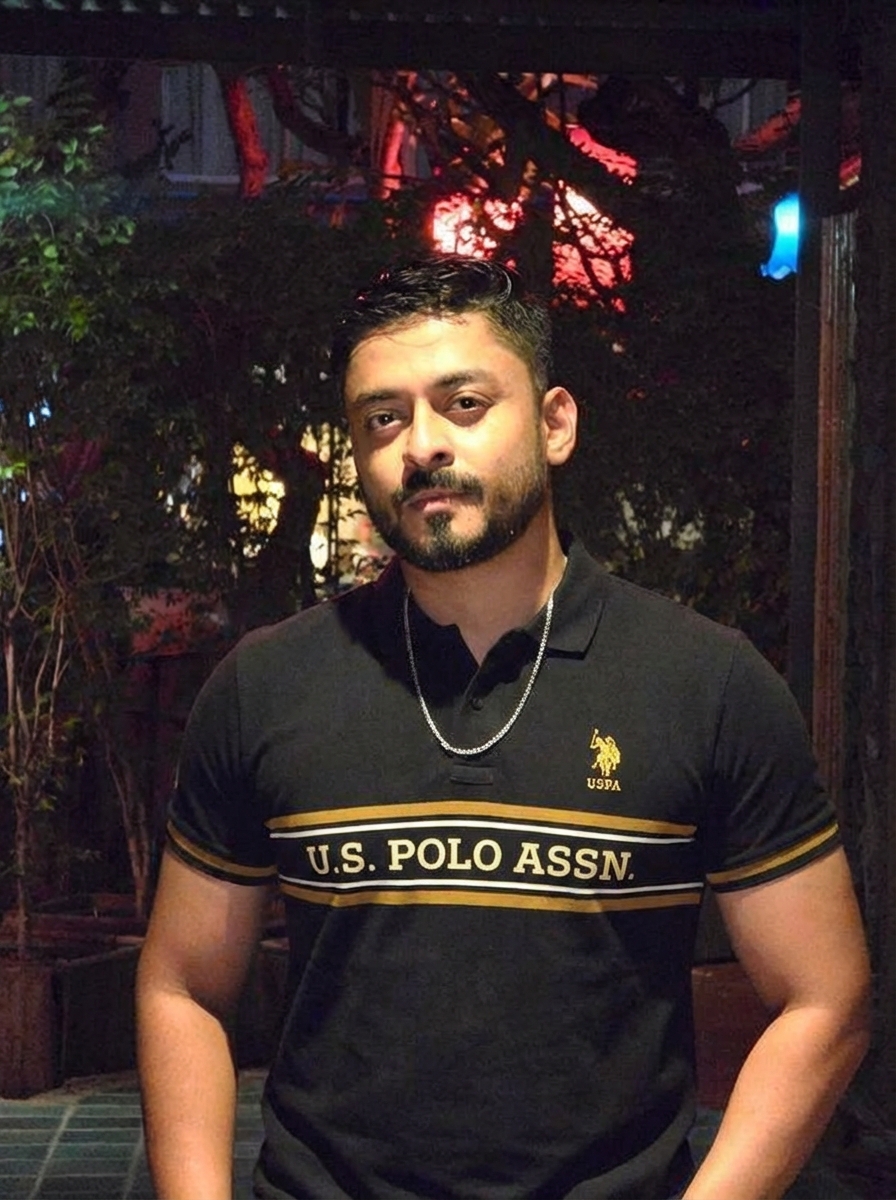
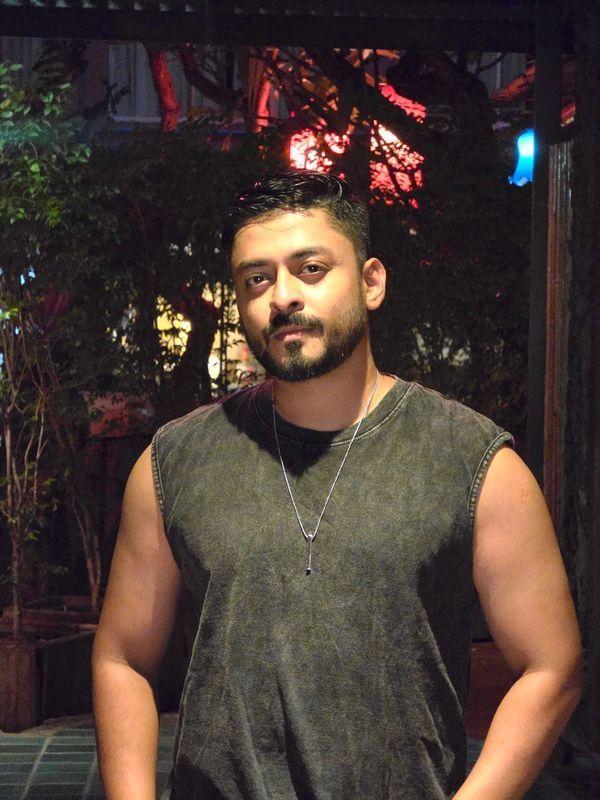
- **Body Mapping:** The target user has a broader, more muscular build (traps and deltoids) than the source model. The simulation must expand the shoulder width of the polo to accommodate the user without stretching the logo text illegibly. The sleeves, which are currently non-existent on the user's tank top, must be generated to wrap around the user's upper biceps, creating a realistic tight fit typical of polo shirts on muscular arms. The neckline must rise significantly from the current deep scoop neck to a buttoned or open-collar polo position high on the traps.
- **Occlusion Handling:** The silver chain necklace and pendant are critical occlusions. They currently lie flat against the tank top. In the simulation, the necklace chain must disappear *under* the new polo collar at the neck, but the pendant and lower chain loop must be layered *over* the black fabric of the new shirt, casting a drop shadow onto the chest area of the polo.
PHASE 3: ENVIRONMENT & LIGHTING
- **Light Match:** The target environment is a high-contrast, low-light night setting. The source image is flat, warm studio lighting. The black polo must be relit to reflect the cool, slightly blue ambient frontal lighting of the user's location. Crucially, the "black" of the shirt must not be absolute black; it must match the black point of the user image (slightly grainy/noisy dark grey). The shoulders and edges of the garment must catch the red rim light coming from the background bokeh to integrate the object into the 3D space.
- **Color Calibration:** The gold/yellow stripes on the shirt must be desaturated and cooled slightly to match the white balance of the user's photo. A significant amount of ISO grain (noise) must be added to the high-resolution source garment to match the textural quality of the user's low-light photo.
PHASE 4: IDENTITY PROTECTION
- **Facial Lock:** The user's entire head, including the specific grooming of the beard, hair texture, and skin tone, is a strict exclusion zone. The neck area above the Adam's apple must remain untouched.
- **Body Integrity:** Strict prohibition on slimming the user. The user's deltoids and biceps are a defining feature; the garment must deform to fit the body mass, not the inverse. The skin tone on the visible arms must remain consistent with the face and not be altered by the compositing of the new sleeves.