Thinking Process
PHASE 1: VISUAL DECONSTRUCTION
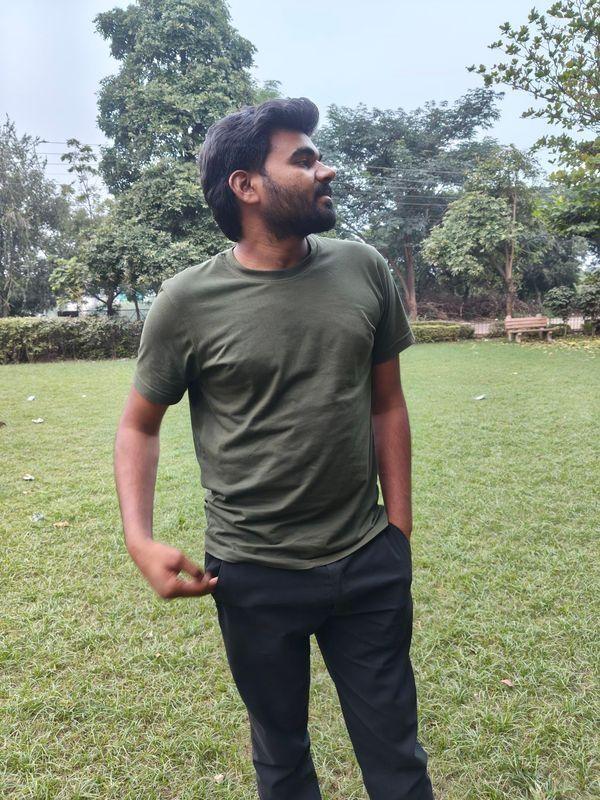
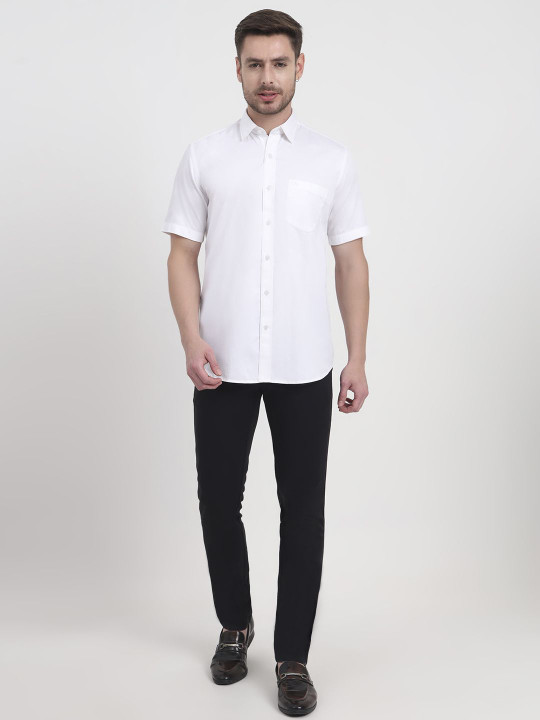
- **Fabric Physics:** The source garment is a white, short-sleeved button-down shirt, likely Cotton Poplin or a blend. Unlike the user's current soft jersey t-shirt, this material has structural rigidity. It should not cling tightly to the musculature but rather bridge across body contours. Light reflection should be matte to semi-matte, with crisp highlight rolloffs on the shoulder seams and collar, typical of starched cotton.
- **Key Features:** The structured spread collar is critical and must maintain its shape without collapsing. The center button placket, the single chest pocket on the left side, and the stitched hems on the sleeves must be preserved. The white opacity must be high enough to ensure the underlying dark trousers do not bleed through the hem area.
PHASE 2: FIT & DRAPE SIMULATION
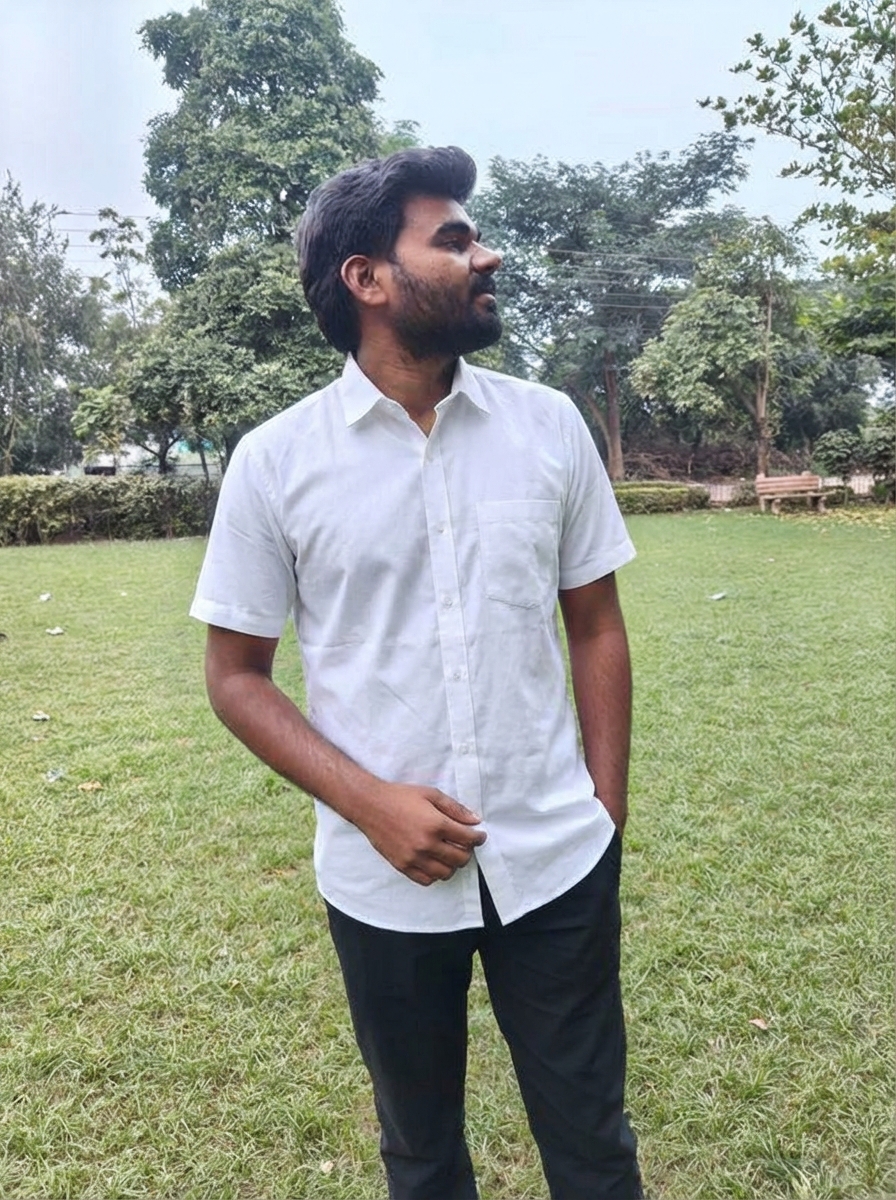
- **Body Mapping:** The user is standing with a slight torso rotation to the right. The shirt must follow this perspective. Due to the user's right arm being bent at the elbow (hand near waist), the right sleeve of the button-down must exhibit horizontal stress folds/creasing at the inner elbow (cubital fossa). The hemline should fall naturally over the waist, likely interacting with the top of the trousers in a relaxed, untucked manner similar to the source image style.
- **Occlusion Handling:**
1. **Beard/Chin:** The user has a full beard that drops below the jawline. The beard must be segmented and layered *over* the new shirt collar to avoid a "cut-out" look.
2. **Right Hand/Wrist:** The user's right hand is positioned near the hip/waist. If the new shirt's hem is long enough to reach this area, the hand must occlude the fabric, or the fabric must drape behind the hand.
PHASE 3: ENVIRONMENT & LIGHTING
- **Light Match:** The user is in an outdoor, overcast environment with soft, diffused lighting coming from the sky (top-down, low contrast). The source image has hard, directional studio lighting. The new shirt's brightness must be lowered to match the exposure of the park scene. Hard shadows from the studio shot (under the collar/arms) must be softened significantly to match the ambient occlusion of the outdoor setting.
- **Color Calibration:** The pristine white of the source shirt must be color-graded to accept "environmental spill." It needs a subtle intake of green/cool tones from the grass and overcast sky to integrate realistically. Avoid a "glowing white" effect; the white point should match the brightest clouds in the user's background.
PHASE 4: IDENTITY PROTECTION
- **Facial Lock:** The user's entire head region, specifically the hair volume, facial structure, eyes, and the beard line, must remain pixel-perfectly frozen. The neck transition needs careful blending where the t-shirt crew neck is replaced by the button-down collar.
- **Body Integrity:** Strictly forbid any warping that alters the user's shoulder width, chest volume, or arm thickness. The shirt must expand to fit the user's physique, not shrink the user to fit the source model's size.