Thinking Process
PHASE 1: VISUAL DECONSTRUCTION
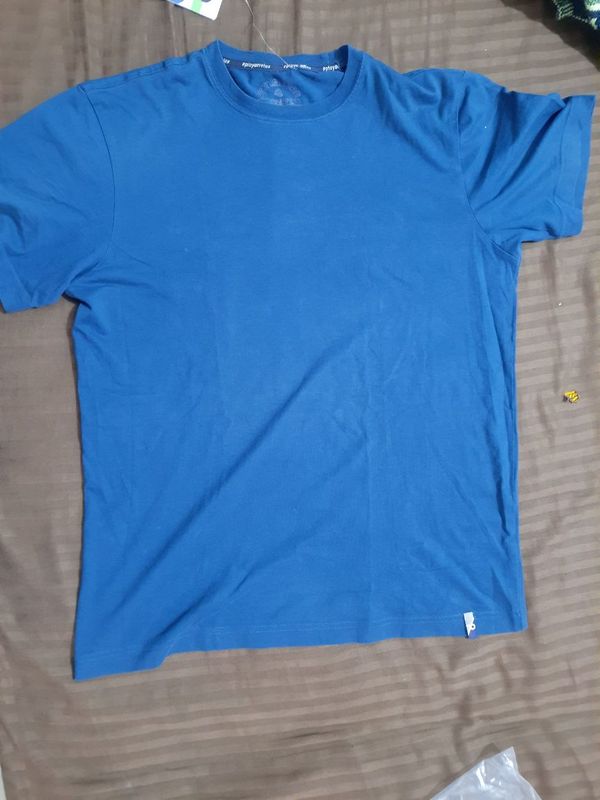
- **Fabric Physics:** The source garment is a cotton jersey knit. It requires a matte finish with high light absorption and low specularity. The simulation must treat the fabric as pliable and soft, distinct from the stiffness of the user's current starched woven shirt. Micro-wrinkles should appear around tension points (armpits) but generally fall smoothly.
- **Key Features:** The reinforced crew-neck ribbing, the hem stitching on the short sleeves, and the small white rectangular tag on the bottom hem must be preserved. The solid royal blue color consistency must be maintained without introducing artificial patterns.
PHASE 2: FIT & DRAPE SIMULATION
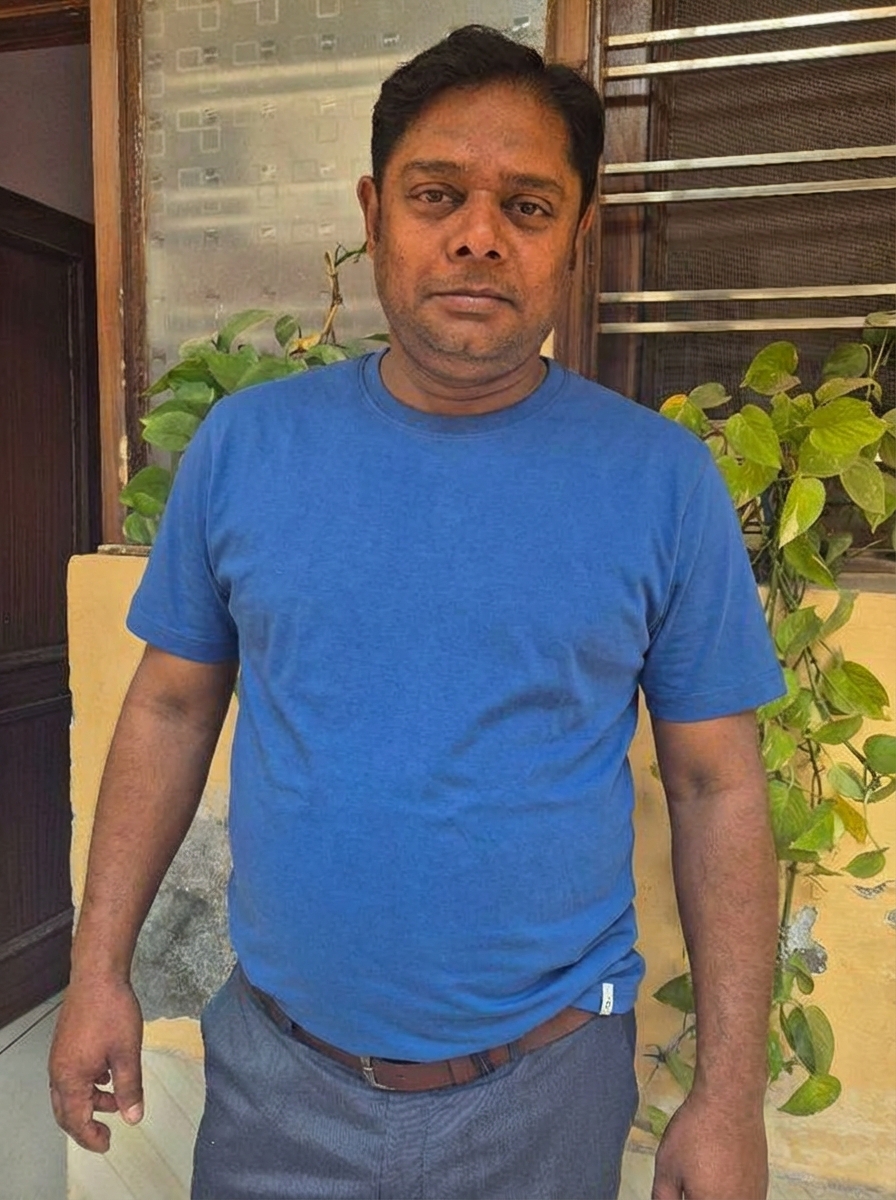
- **Body Mapping:** The t-shirt is a relaxed fit. It must drape naturally over the user's midsection, following the curvature of the stomach without clinging tightly like spandex. Unlike the current tucked-in shirt, the t-shirt should ideally fall *over* the belt line, utilizing a gravity-based simulation to hang straight down from the chest, slightly flaring at the hips. The shoulder seams of the t-shirt must align with the user's acromion (shoulder bone) points.
- **Occlusion Handling:** The user's hands and arms are free from the torso, simplifying occlusion. However, the current garment is long-sleeved, while the source is short-sleeved. The simulation must generate accurate skin texture and lighting for the exposed forearms or mask the transfer strictly to the torso volume if arm generation is outside the scope. The belt area currently visible should be occluded by the t-shirt's hem if simulated as untucked.
PHASE 3: ENVIRONMENT & LIGHTING
- **Light Match:** The user is situated in diffuse natural daylight (likely outdoor shade or overcast), with a soft light source coming from the front-left. The new garment must render with soft, non-directional shadows. Hard highlights must be avoided to match the ambient occlusion of the porch setting.
- **Color Calibration:** The source cloth image was taken under warmer indoor artificial light. The blue of the t-shirt requires a cool-tone shift (white balance adjustment) to match the daylight temperature of the user's environment. The brightness levels must be normalized so the blue does not appear "glowing" or artificially saturated against the natural background.
PHASE 4: IDENTITY PROTECTION
- **Facial Lock:** The user's entire head, including hair, facial structure, skin tone, and expression, must remain pixel-perfectly frozen. The neck transition line must be seamless.
- **Body Integrity:** Strict prohibition on body morphing. The user's torso width, shoulder slope, and abdominal volume must be preserved. The simulation must wrap the cloth around the *existing* body geometry, not warp the body to fit the cloth.