Thinking Process
PHASE 1: VISUAL DECONSTRUCTION
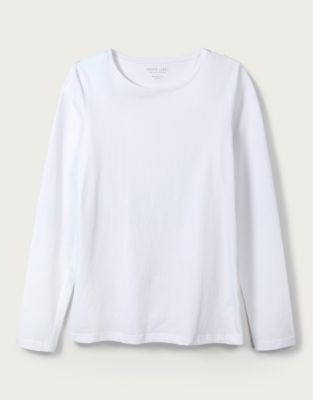
- **Fabric Physics:** The source garment is a light-to-medium weight cotton jersey or modal blend. It exhibits a matte finish with high light absorption and low specularity. The drape simulation must be "soft body," allowing for fluid wrinkling rather than structural stiffness. It requires a friction map that suggests soft friction against the skin/undershirt.
- **Key Features:** The crew neck collar structure (ribbed binding) is critical and must replace the existing polo collar entirely. The hemline is a standard double-stitch which must hang naturally. The "White Label" branding inside the neck will likely be occluded by the user's neck, but the internal shadow depth of the neck opening must be preserved.
PHASE 2: FIT & DRAPE SIMULATION
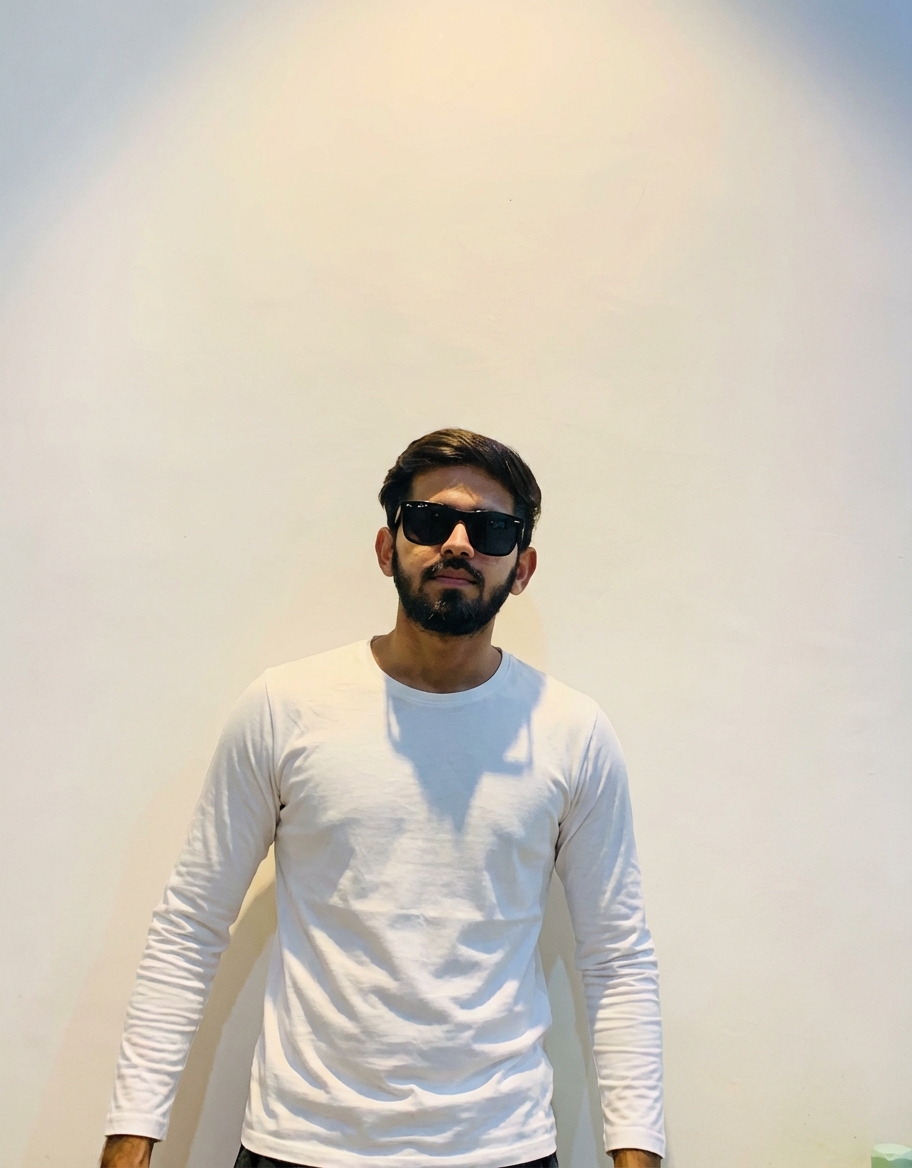
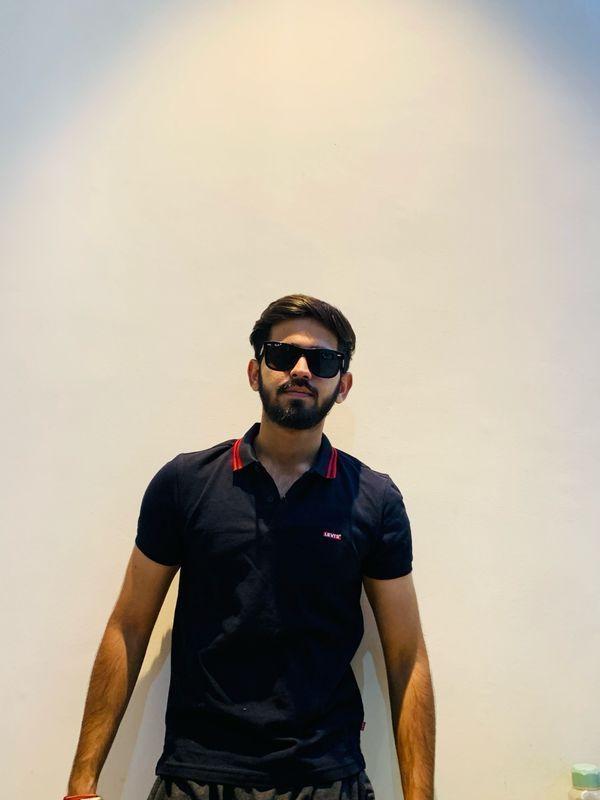
- **Body Mapping:** The target user has a relaxed standing pose with arms slightly abducted (away from torso). The source is a long-sleeve garment replacing a short-sleeve polo.
- *Shoulders:* The shoulder seam must align with the user's acromion, draping vertically without the "peaked" structure of the current polo.
- *Arms:* The simulation must extend the fabric down to the wrists (covering current bare skin). Cloth simulation requires transverse tension folds at the axilla (armpit) and slight compression folds at the inner elbow due to the relaxed arm bend.
- *Torso:* The fit should be "regular," meaning it should skim the chest and hang vertically from the pectorals, ignoring the indents of the waist to maintain the boxy silhouette of the source image.
- **Occlusion Handling:** This is a low-occlusion scenario. There is no long hair or hand overlap. However, the current polo collar sits high on the neck. The new crew neck sits lower. The area of the neck currently covered by the polo collar and button placket requires generative in-painting to reveal "skin" before applying the new lower neckline.
PHASE 3: ENVIRONMENT & LIGHTING
- **Light Match:** The target environment features a strong, warm overhead light source (ceiling fixture), creating hard shadows directly under the chin and nose. The new white garment must render with a high albedo but must accept this warm ambient occlusion. Shadows *on* the shirt (folds, armpits) must match the dark contrast levels of the user's facial shadows.
- **Color Calibration:** The source cloth is "studio white" (cool/neutral). The target scene is "indoor warm" (yellow/tungsten cast). The white shirt must undergo color grading to shift towards a warm cream/ivory tone to match the white balance of the room, ensuring it reflects the environmental light temperature.
PHASE 4: IDENTITY PROTECTION
- **Facial Lock:** The region from the mid-neck upwards is a strict freeze zone. The beard, jawline, ears, hairstyle, and specifically the sunglasses and nose shadows must remain pixel-perfectly untouched.
- **Body Integrity:** The underlying volumetric mesh of the user (shoulder width, chest depth, arm thickness) must be preserved. The simulation acts as a layer *on top* of the user's geometry; absolutely no mesh warping, slimming, or muscular enhancement of the user is permitted. The long sleeves must follow the user's actual arm path, not an idealized mannequin arm.