Thinking Process
PHASE 1: VISUAL DECONSTRUCTION
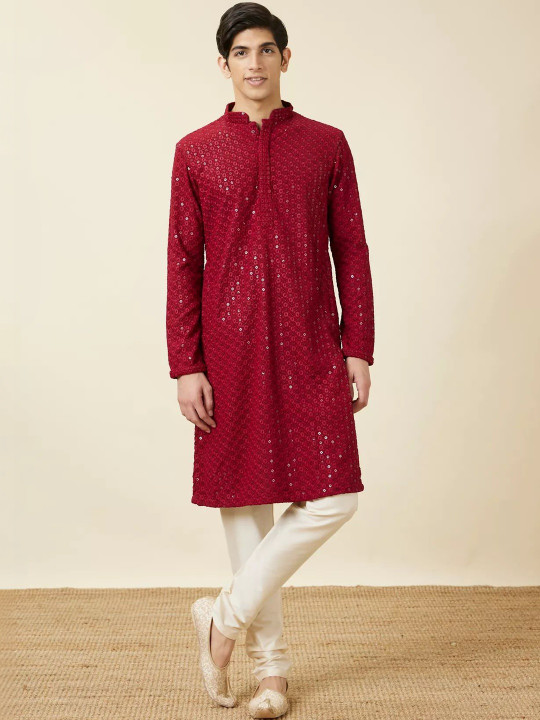
- **Fabric Physics:** The source garment is a traditional Kurta, likely crafted from Georgette or Art Silk with heavy embroidery and sequin/mirror work. The simulation must account for a "medium-weight flow"—it will not cling like the target's current knit sweater but will drape vertically with gravity. The texture requires anisotropic reflection mapping to capture the sheen of the thread work and the sharp specular highlights of the embedded sequins.
- **Key Features:** The Mandarin collar (bandhgala style) is a distinct structural element that must replace the current zip-collar. The intricate geometric/floral embroidery pattern covering the torso must be preserved without distortion. The "mirror" or sequin dots must remain reflective. The garment is long-line (tunic length), so the hemline interaction with the upper thighs/jeans is critical.
PHASE 2: FIT & DRAPE SIMULATION
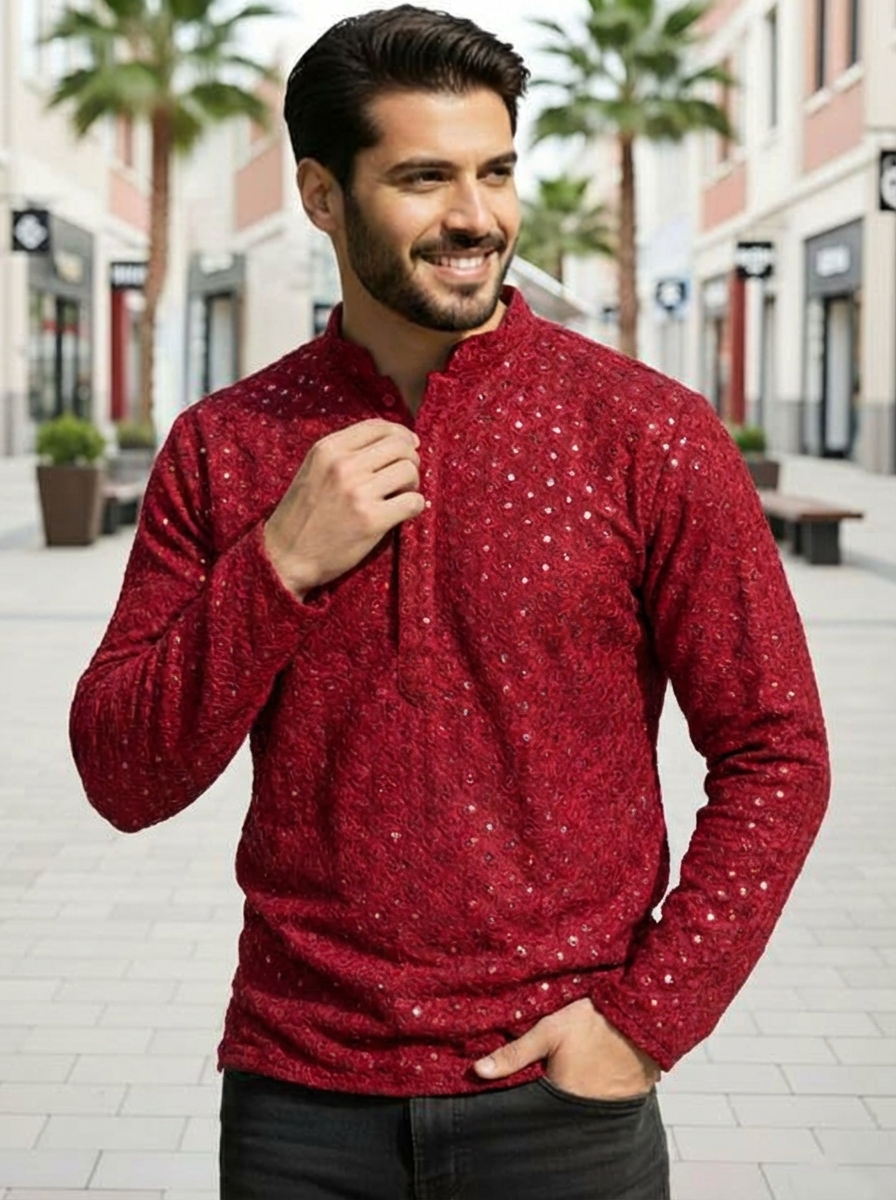
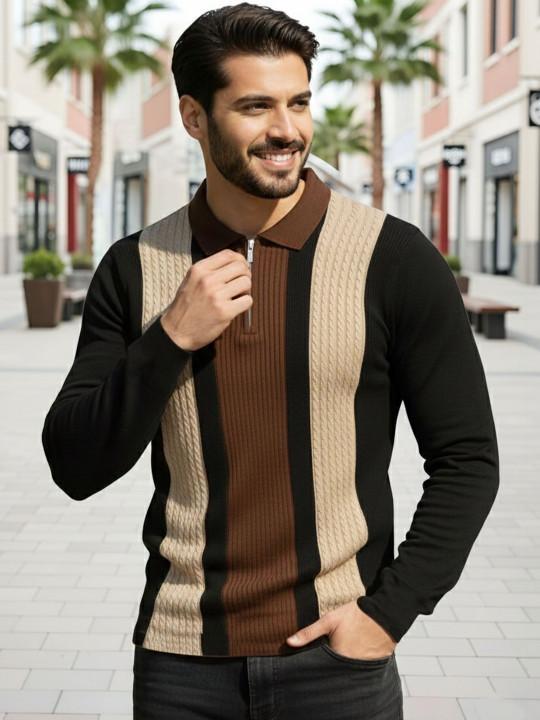
- **Body Mapping:** The target user has a broader, more muscular build than the source model. The Kurta must be expanded at the shoulders and chest to accommodate the target's deltoids and pectorals without stretching the embroidery texture unnaturaly. Unlike the current fitted knitwear, the Kurta should hang somewhat loosely from the chest down, creating vertical fold lines rather than horizontal stretch marks.
- **Occlusion Handling:** **CRITICAL:** The user's right hand is actively interacting with the chest/collar area. The new garment must be generated *behind* this hand. The simulation must account for the volume of the hand; the Kurta fabric should not clip through the fingers. The user's chin beard overlaps the collar zone and must be layered over the new Mandarin collar.
PHASE 3: ENVIRONMENT & LIGHTING
- **Light Match:** The target environment is an outdoor street scene with soft, diffused natural daylight coming primarily from the upper left. The studio-lit brightness of the source Kurta must be toned down. Shadows on the new garment must be soft (ambient occlusion) rather than hard edges. The sequins on the Kurta must reflect the cool ambient light of the outdoor environment, not studio flash.
- **Color Calibration:** The source red is vibrant; it needs desaturation and a slight cool-tone shift to match the color temperature of the outdoor setting. The black levels of the shadows in the embroidery must match the black levels of the target's jeans and hair to ensure the garment looks integrated into the scene.
PHASE 4: IDENTITY PROTECTION
- **Facial Lock:** Absolute freeze on the target's face, beard, hairline, and ear structure. The neck transition area requires precise masking where the new collar meets the skin.
- **Body Integrity:** The target's muscular morphology must be preserved. Do not slim the user to match the source model's slender frame. The garment must adapt to the user's volume, maintaining the silhouette of broad shoulders and a tapered waist only insofar as the garment's cut allows, without altering the underlying body mesh.