Thinking Process
PHASE 1: VISUAL DECONSTRUCTION
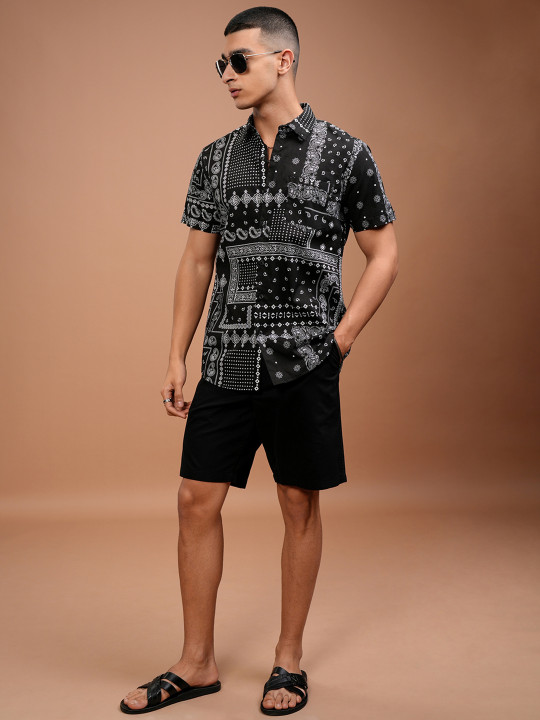
- **Fabric Physics:** The source garment appears to be a lightweight cotton or viscose blend with a matte finish. It possesses a "relaxed structural" drape—meaning it holds shape at the collar and placket but folds softly around movement points. It should not reflect light like synthetic satin; it must absorb light with high-contrast distinctness between the black base and white paisley print.
- **Key Features:** The complex patchwork paisley/bandana print is the primary visual anchor and must not be distorted. The structural integrity of the camp collar (open neck), the visible button placket, the single chest pocket on the wearer's left, and the relaxed short-sleeve hems must be preserved.
PHASE 2: FIT & DRAPE SIMULATION
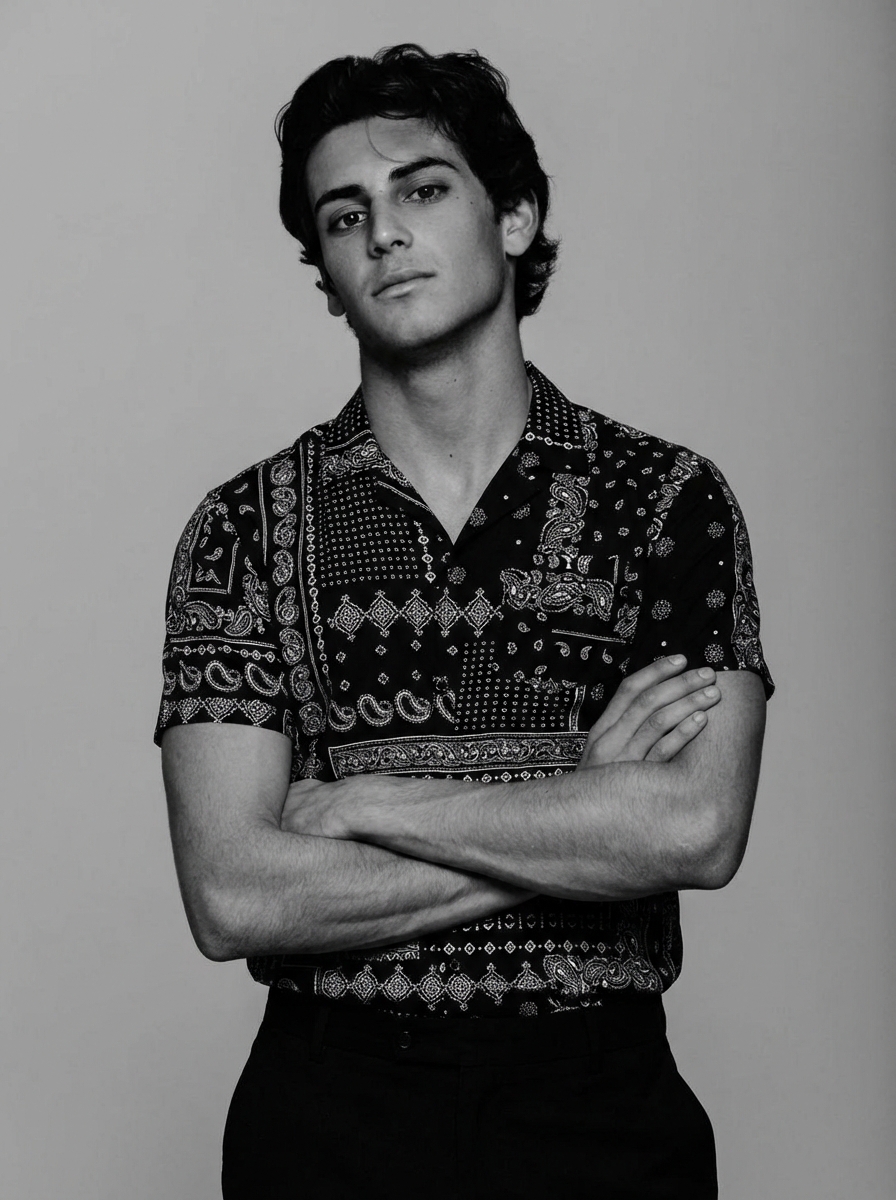
- **Body Mapping:** Due to the user's crossed-arm pose, the simulation must account for significant tensile stress across the upper back and deltoids. The fabric should naturally bunch and crease horizontally at the armpits and vertically alongside the biceps. The shirt body must deform to accommodate the pressure of the crossed arms against the chest, creating compression folds where the forearms press into the torso.
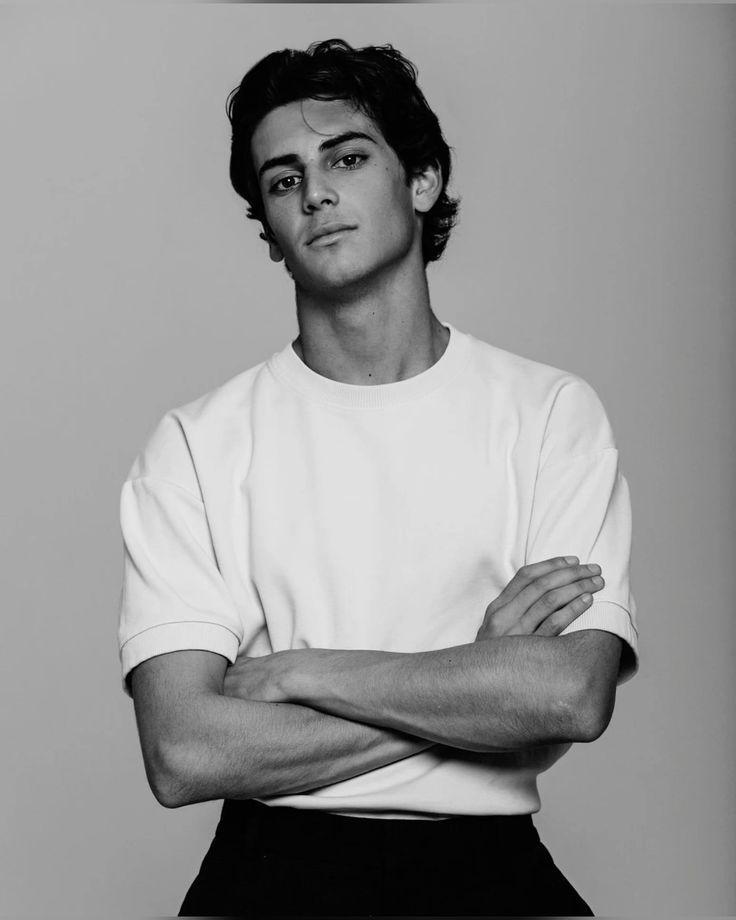
- **Occlusion Handling:** This is a high-complexity occlusion scenario. The user's forearms and hands completely block the mid-section. The virtual garment must be rendered logically *behind* the forearms and hands. The sleeve cuffs of the new shirt must replace the white t-shirt sleeves but stop appropriately before the elbow, respecting the volume of the user's biceps.
PHASE 3: ENVIRONMENT & LIGHTING
- **Light Match:** The target image is a high-contrast Black & White studio shot with soft, diffused frontal lighting (slightly top-right bias). The source garment (color) must be desaturated to grayscale. The black values of the shirt must be deep but retain texture detail, matching the black values of the user's trousers. Deep ambient occlusion shadows must be generated under the user's crossed arms where they contact the new shirt.
- **Color Calibration:** Complete desaturation of the source garment is required. Contrast levels must be adjusted to match the tonal range of the target image (User). The white paisley pattern must match the white point of the user's skin highlights, and the black fabric base must match the black point of the user's hair and trousers.
PHASE 4: IDENTITY PROTECTION
- **Facial Lock:** The user's entire head, including hair texture, jawline definition, and facial expression, must be masked and frozen. The neck area above the collarbone must remain unaltered.
- **Body Integrity:** The user's visible skin (forearms, hands, and exposed neck) must not be smoothed or resized. The muscle definition of the arms and the width of the shoulders must remain constant; the garment must drape over the existing volume, not slimming or bulking the subject.