Thinking Process
PHASE 1: VISUAL DECONSTRUCTION
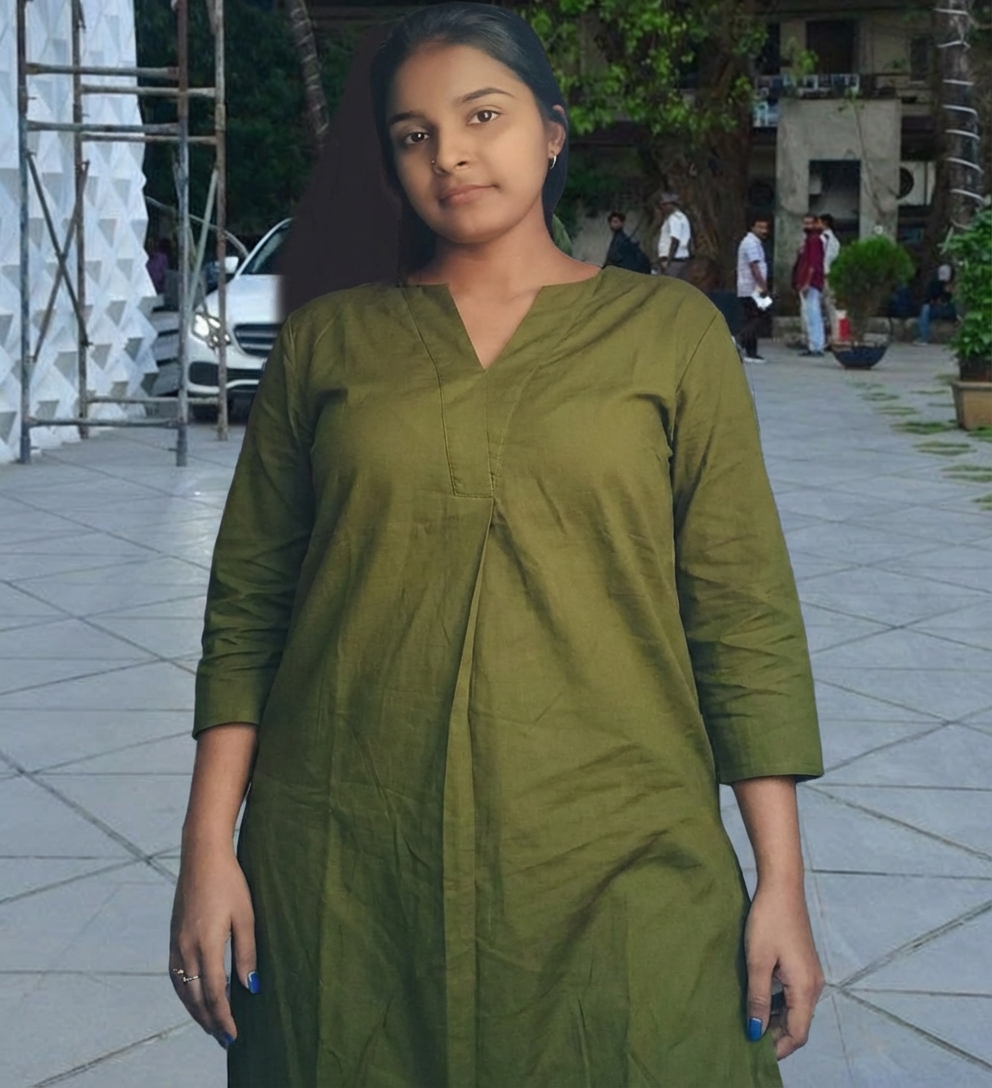
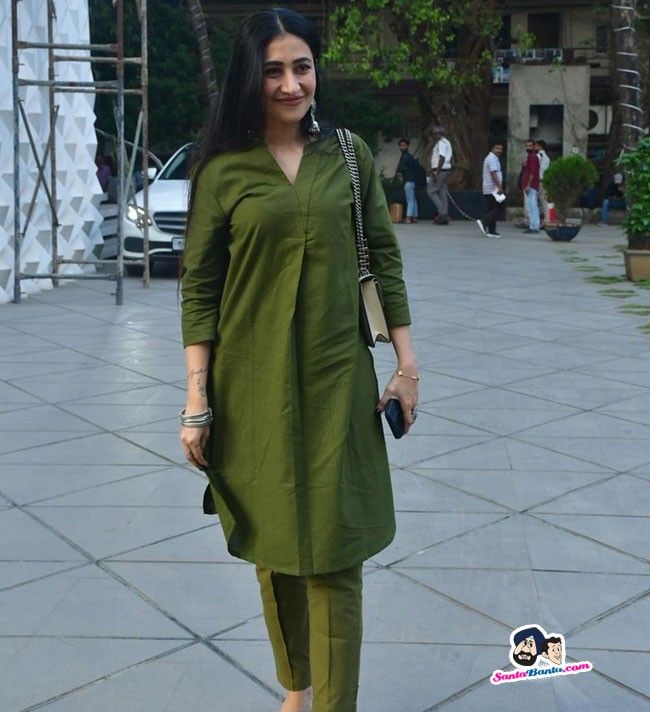
- **Fabric Physics:** The source garment is an olive green kurta, likely crafted from medium-weight cotton or a cotton-linen blend. It possesses a matte finish with low reflectivity (no specular highlights). The structural rigidity is moderate; it holds the shape of the central pleat and collar but allows for vertical draping without clinging to the skin.
- **Key Features:** The central vertical seam/pleat running down the front torso is a critical design element that must be preserved. The V-neck collar structure, the 3/4 length sleeves, and the curved bottom hemline are essential. **Critical Processing:** The cross-body bag strap visible in the source image must be digitally excised and inpainted to restore the underlying fabric texture before transfer.
PHASE 2: FIT & DRAPE SIMULATION
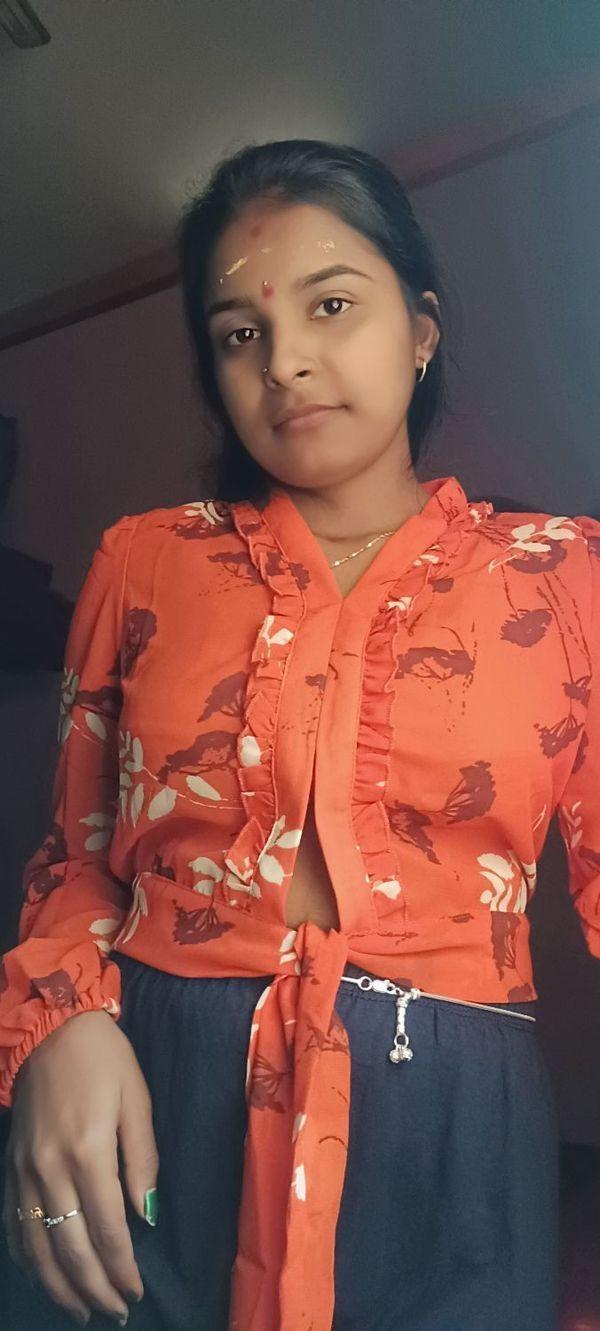
- **Body Mapping:** Unlike the user's current cropped tie-front top, the target kurta is a long-line tunic. The simulation must extend the fabric past the user's waistline, covering the currently exposed midriff and the waistband of the blue skirt. The fit should be relaxed and linear (A-line silhouette), hanging straight down from the bust rather than cinching at the waist. The sleeves should terminate at the forearm, allowing the user's wrist and hands to remain visible.
- **Occlusion Handling:** The user's long dark hair falls over her left shoulder (viewer's right); the new garment must be rendered logically *behind* this hair volume. The silver waist chain (kamarbandh) sits on the hips; given the length of the kurta, the fabric typically hangs *over* this accessory, effectively hiding it, unless styled otherwise. The user's right hand (viewer's left) hangs loosely; the sleeve must drape naturally around the arm without clipping into the thumb area.
PHASE 3: ENVIRONMENT & LIGHTING
- **Light Match:** The user's environment has soft, diffuse indoor lighting with a warm/yellowish undertone, likely from an overhead ceiling bulb. The source garment is lit by cool, outdoor daylight. The simulation must introduce a warm ambient occlusion map to the green fabric and generate soft, downward-casting shadows beneath the bust and along the folds to match the low-contrast lighting of the room.
- **Color Calibration:** The "daylight" olive green of the source must be color-graded to a slightly warmer, darker olive tone to harmonize with the indoor setting. The brightness of the green must be reduced to match the exposure levels of the user's skin and the dark background.
PHASE 4: IDENTITY PROTECTION
- **Facial Lock:** The user's entire facial region, including the bindi, eyebrows, eyes, nose, lips, and jawline, is a strictly protected zone. The neck region above the new V-neckline must remain the user's original skin.
- **Body Integrity:** The user's natural shoulder width and arm volume must be preserved. The simulation is strictly forbidden from warping the user's underlying skeletal structure or slimming the torso to fit the garment; the garment must expand to fit the user's natural dimensions.