Thinking Process
PHASE 1: VISUAL DECONSTRUCTION
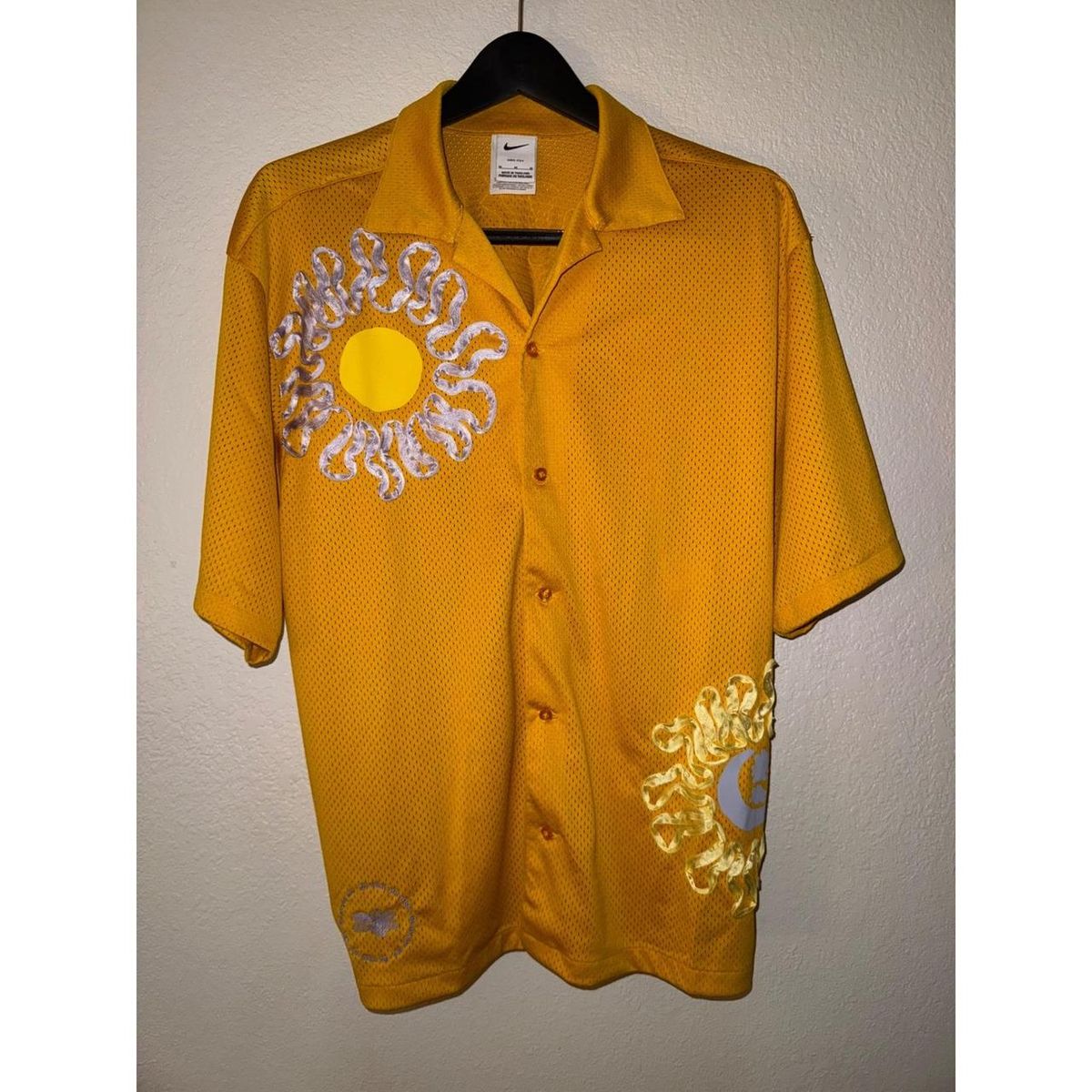
- **Fabric Physics:** The source garment is a synthetic athletic mesh (likely polyester jersey) with a distinct porous texture. Unlike the user's current matte cotton t-shirt, this material has a slight specular sheen and anisotropic reflectivity. The "sunflower" embellishments are not flat prints; they are 3D ruffled ribbon appliques. The simulation must account for the volumetric displacement of these ribbons—they should cast self-shadows and not appear as a flat texture map.
- **Key Features:**
- The open camp-collar structure (must replace the user's current crew neck).
- The dimensional ribbon embroidery on the right chest and lower left flank.
- The visible mesh perforation texture across the entire yellow surface.
- The button placket (center front) which adds vertical rigidity compared to a t-shirt.
- The hemline, which is straight and likely intended to be worn untucked.
PHASE 2: FIT & DRAPE SIMULATION
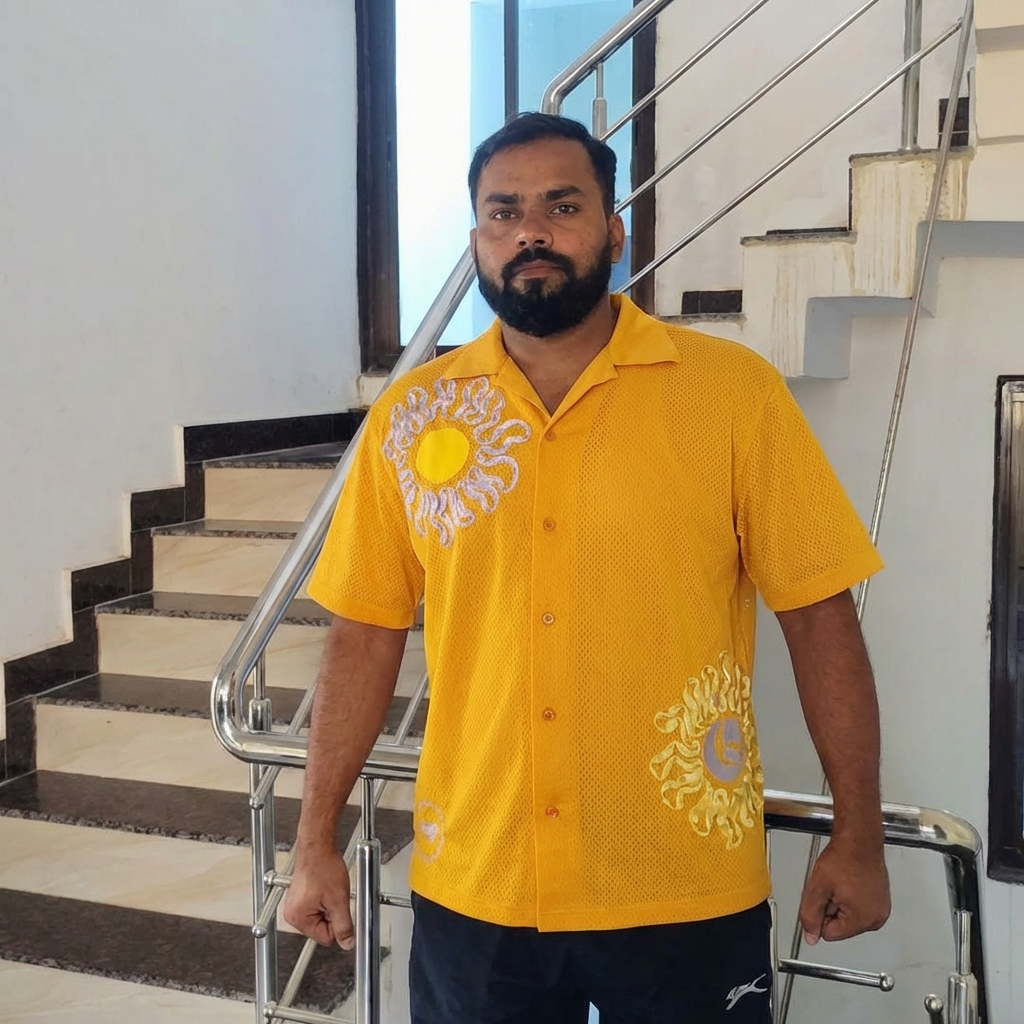
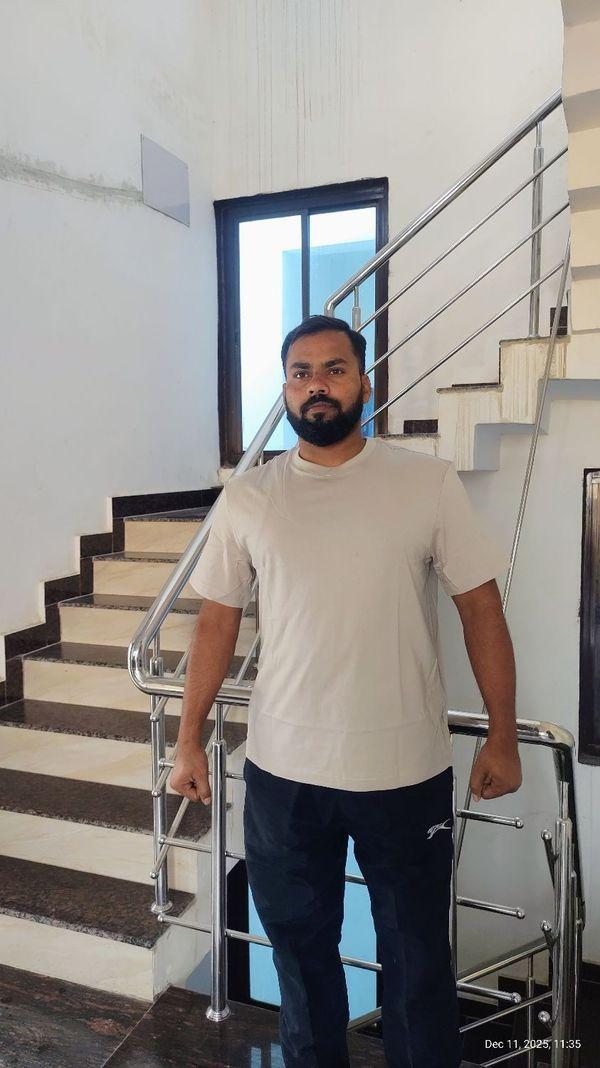
- **Body Mapping:** The target user has a broad chest and shoulder width. The source garment is a button-up shirt and lacks the elasticity of the user's current t-shirt. It must drape vertically from the acromion (shoulder point) rather than hugging the deltoids. The fit should be "relaxed/boxier," creating a gap between the fabric and the user's midsection, replacing the current t-shirt's form-fitting silhouette. The collar must sit naturally at the base of the neck, exposing the upper sternum area currently covered by the beige crew neck.
- **Occlusion Handling:**
- **Beard:** The user's beard extends downward; the new collar and upper button placket must render *behind* the beard tips to maintain depth realism.
- **Arms/Hands:** The arms are held slightly away from the torso, minimizing complex occlusion, but the sleeve cuffs must maintain a cylindrical volume around the biceps without clipping into the arm skin.
- **Waistline:** The new shirt is longer than the current tuck/fold. The simulation must render the hem *over* the top of the navy track pants, negating the current tucked/bunched appearance at the waist.
PHASE 3: ENVIRONMENT & LIGHTING
- **Light Match:** The scene utilizes high-contrast natural daylight, primarily backlighting/side-lighting from the window behind the user, combined with ambient indoor fill. The new yellow garment must exhibit subsurface scattering on the edges (shoulders) due to the backlighting. The front of the shirt needs to be lit by the softer, diffuse fill light of the room, avoiding harsh specular hotspots.
- **Color Calibration:** The source image was taken with direct flash or harsh frontal light (creating high contrast). The target scene has cooler, bluish daylight tones. The "mustard yellow" of the shirt must be desaturated slightly and color-graded to match the cooler white point of the stairwell to prevent it from looking like a pasted sticker. Ambient occlusion shadows must be generated in the folds to match the contrast levels of the user's navy pants.
PHASE 4: IDENTITY PROTECTION
- **Facial Lock:** Absolute freeze on the facial region from the chin up, including the beard density and skin tone. The neck geometry must be preserved where the new open collar reveals skin.
- **Body Integrity:** Strictly forbidden to alter the user's biometrics. The user's shoulder width and chest volume must act as the rigid collision collider for the cloth simulation. Do not slim the waist; the garment should drape over the user's actual mass.