Thinking Process
PHASE 1: VISUAL DECONSTRUCTION
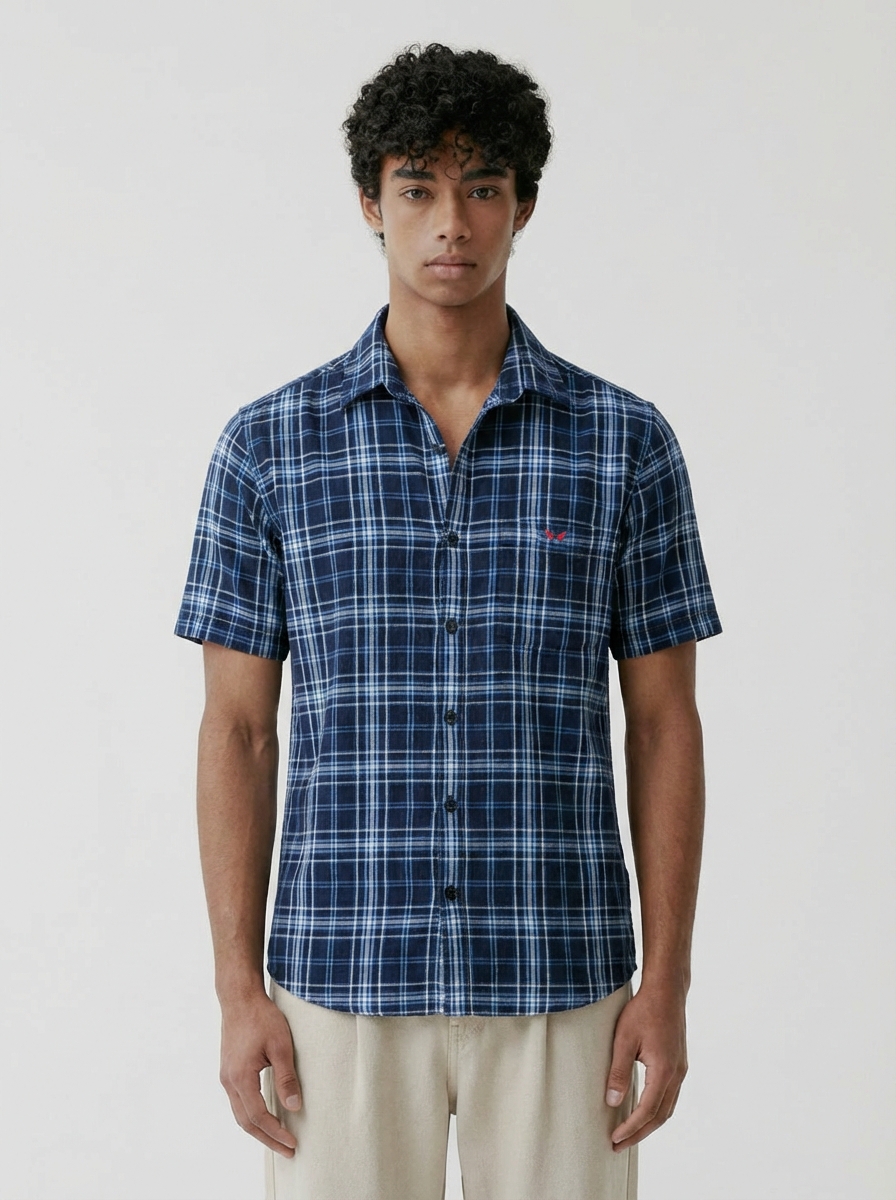
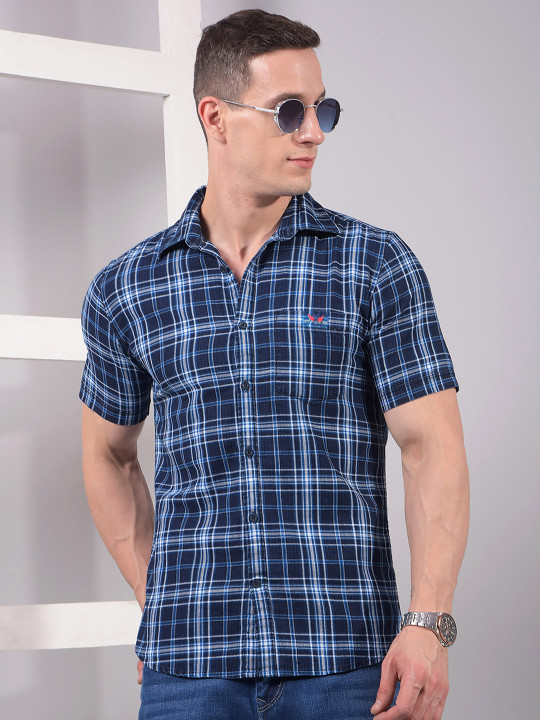
- **Fabric Physics:** The source garment is a woven cotton or cotton-blend shirting material. It possesses a matte finish with medium structural integrity—it is not flowy like silk but holds creases and collar shape. Light reflection should be diffuse with no specular highlights. The drape should be semi-rigid, creating angular folds rather than fluid ripples.
- **Key Features:** The intricate blue and white plaid/check pattern must be preserved without distortion. Critical artifacts include the structured spread collar, the single chest pocket with the small red embroidered logo on the wearer's left, the dark contrast buttons, and the hem stitching. The short-sleeve construction is a defining silhouette change from the user's current long sleeves.
PHASE 2: FIT & DRAPE SIMULATION
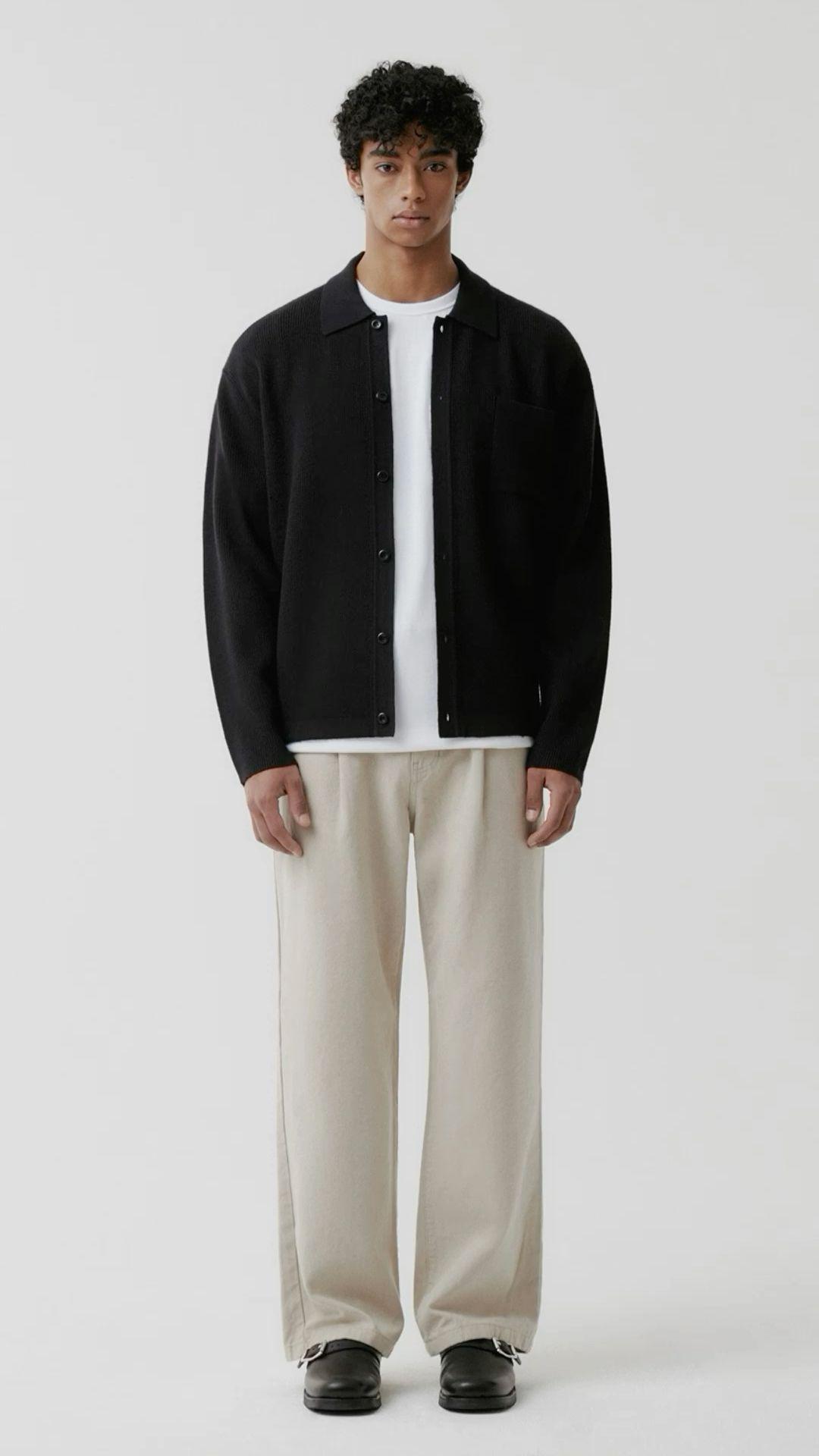
- **Body Mapping:** The target user has a slender/lean build compared to the muscular build of the source model. The simulation must relax the fit; the shirt should not cling to the biceps or pectorals as it does in the source image. It should hang somewhat vertically from the shoulder line, exhibiting a "regular fit" drape with minimal tension across the buttons. The garment effectively replaces both the current white t-shirt and the black cardigan.
- **Occlusion Handling:** The user's neck is fully visible and must layer *under* the new shirt collar. The user's hands are positioned at the thigh level; the shirt's hemline will likely fall just above or slightly touching the thumbs, requiring precise depth sorting so the hands remain in the foreground if the shirt runs long. **Critical:** Since the target is wearing long sleeves and the source is short-sleeved, the simulation must generate/inpaint natural skin texture for the target's forearms where the black cardigan currently exists.
PHASE 3: ENVIRONMENT & LIGHTING
- **Light Match:** The target environment utilizes soft, diffuse, high-key studio lighting with a neutral white background. The source image has higher contrast side-lighting. The source shirt's texture maps must be neutralized (albedo extraction) and re-lit to match the target's flat lighting. Shadows should be soft ambient occlusion (contact shadows) under the collar, inside the sleeves, and at the hem, rather than hard directional cast shadows.
- **Color Calibration:** The deep blue and white of the plaid must be color-graded to match the cool/neutral color temperature of the target image. Ensure the white lines in the plaid do not "bloom" or become overexposed against the light background.
PHASE 4: IDENTITY PROTECTION
- **Facial Lock:** Absolute pixel preservation required for the user's head, including the curly hair volume, facial structure, ears, and neck up to the Adam's apple.
- **Body Integrity:** Strictly forbid morphing the user's torso to match the source model's muscularity. The user's shoulder width and waist circumference must remain constant. The generated skin for the arms must match the user's facial skin tone exactly.