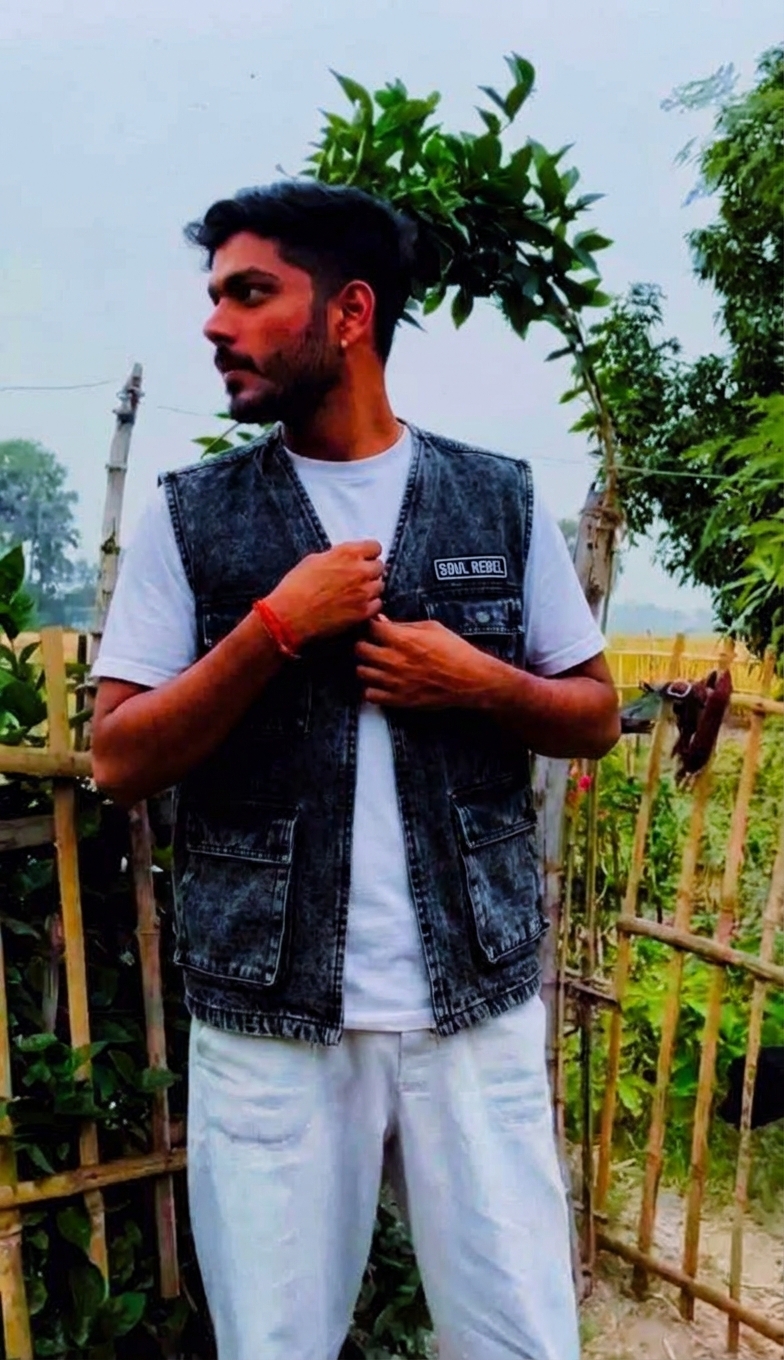
Thinking Process
PHASE 1: VISUAL DECONSTRUCTION
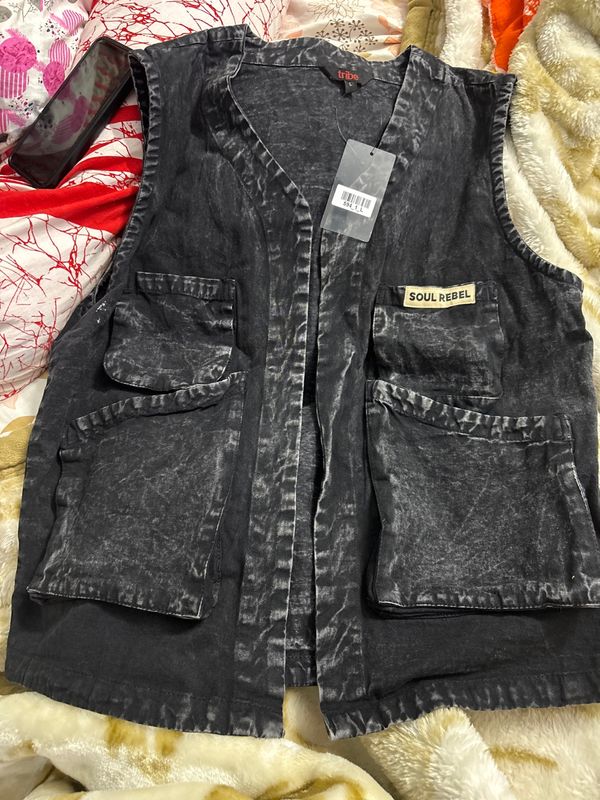
- **Fabric Physics:** The source garment is an acid-wash/stone-wash denim or heavy canvas material. It possesses high structural rigidity (high bending stiffness) and low shear. Unlike the user's current knit sweater, this fabric will not stretch or conform tightly to the musculature. Light reflection must be matte and diffuse, with distinct specular roughness on the lighter, "washed" areas of the denim texture.
- **Key Features:** The "SOUL REBEL" beige patch on the left chest pocket is a critical anchor point and must remain legible. The four-pocket utility layout (two chest, two waist) creates bulk that must be preserved in 3D space. The "tribe" neck tag and the hanging paper price tag must be digitally excised. The deep V-neck cut and the open-front construction (vest style) are essential geometry changes from the current crew-neck sweater.
PHASE 2: FIT & DRAPE SIMULATION
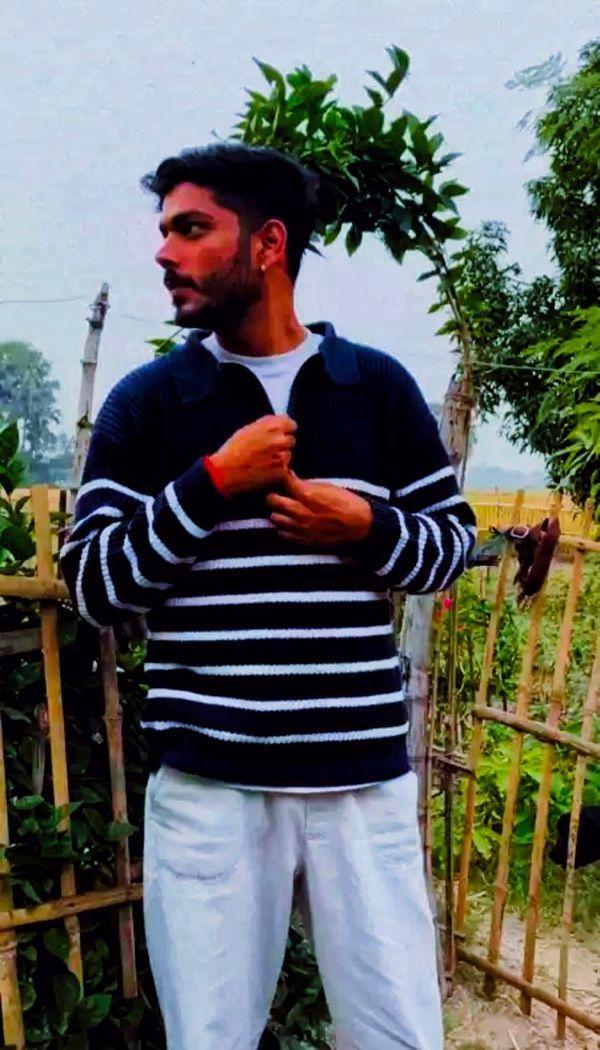
- **Body Mapping:** The target garment is a sleeveless vest, whereas the user is currently wearing a long-sleeved bulky sweater. The simulation must estimate the user's actual torso volume beneath the bulky sweater to ensure the vest fits closer to the body rather than floating on the ghost-volume of the wool. The armholes of the vest must align with the user's shoulder joints. Since the user is in a semi-profile pose, the vest's side seam must track correctly along the torso's rotation.
- **Occlusion Handling:** The user's hands are raised to the sternum level, interacting with the existing collar. This is a High-Complexity Occlusion zone. The vest fabric must be rendered *behind* the fingers and hands. The vest's lapels/neckline should be positioned such that the user's hands appear to be grasping the vest's opening, or the vest must drape open naturally beneath the hands without clipping through the wrists.
PHASE 3: ENVIRONMENT & LIGHTING
- **Light Match:** The target environment features diffuse, overcast natural daylight (cool color temperature, approx 6500K) with no harsh directional shadows. The source cloth image was taken in warm indoor artificial light. The garment's texture must be color-graded to neutralize the yellow/warm tint, shifting the black/grey denim to match the cool ambient light of the outdoor scene. Shadows on the vest must be soft and spread (ambient occlusion), particularly under the pocket flaps and inside the open front.
- **Color Calibration:** Desaturate the "SOUL REBEL" patch slightly to match the outdoor lighting conditions. Ensure the blacks of the denim do not crush; they must remain dark grey to retain the acid-wash texture detail under the flat outdoor lighting.
PHASE 4: IDENTITY PROTECTION
- **Facial Lock:** The user's profile, including the beard line, jaw, ear structure, and the specific volume of the hair, must be strictly frozen. The neck area (above the collar bone) requires precise masking to blend the new lower neckline of the vest with the user's skin.
- **Body Integrity:** While the bulky sweater volume must be reduced to fit the denim vest, the user's underlying skeletal structure (shoulder width, chest depth) must not be narrowed or slimmed. The generated arms (required since the vest is sleeveless and the current image has sleeves) must match the user's skin tone derived from the face and neck.