Thinking Process
PHASE 1: VISUAL DECONSTRUCTION
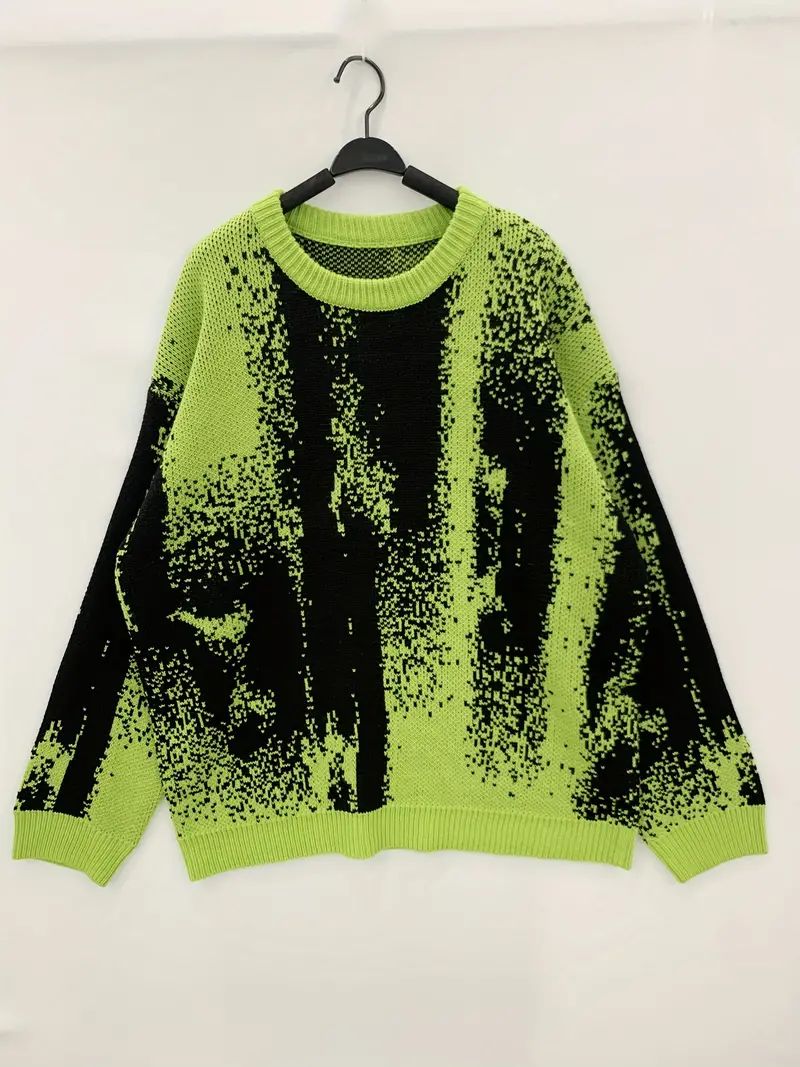
- **Fabric Physics:** The source garment is a medium-weight knit (likely acrylic or wool blend). It requires a matte finish with low specular reflection. The simulation must treat the material as having high internal friction (clinging to itself in folds) and significant thickness, unlike the thin t-shirt currently worn. The surface normal maps must capture the coarse "pixelated" knit texture.
- **Key Features:** The high-contrast neon green and black grunge/distressed vertical patterns are the primary visual anchor and must not be distorted beyond recognition by the folds. The ribbed crew neckline, thick ribbed hem, and ribbed cuffs are structural elements that must retain their elasticity visually. The drop-shoulder seam placement of the source garment must be maintained to reflect the intended oversized fit.
PHASE 2: FIT & DRAPE SIMULATION
- **Body Mapping:**
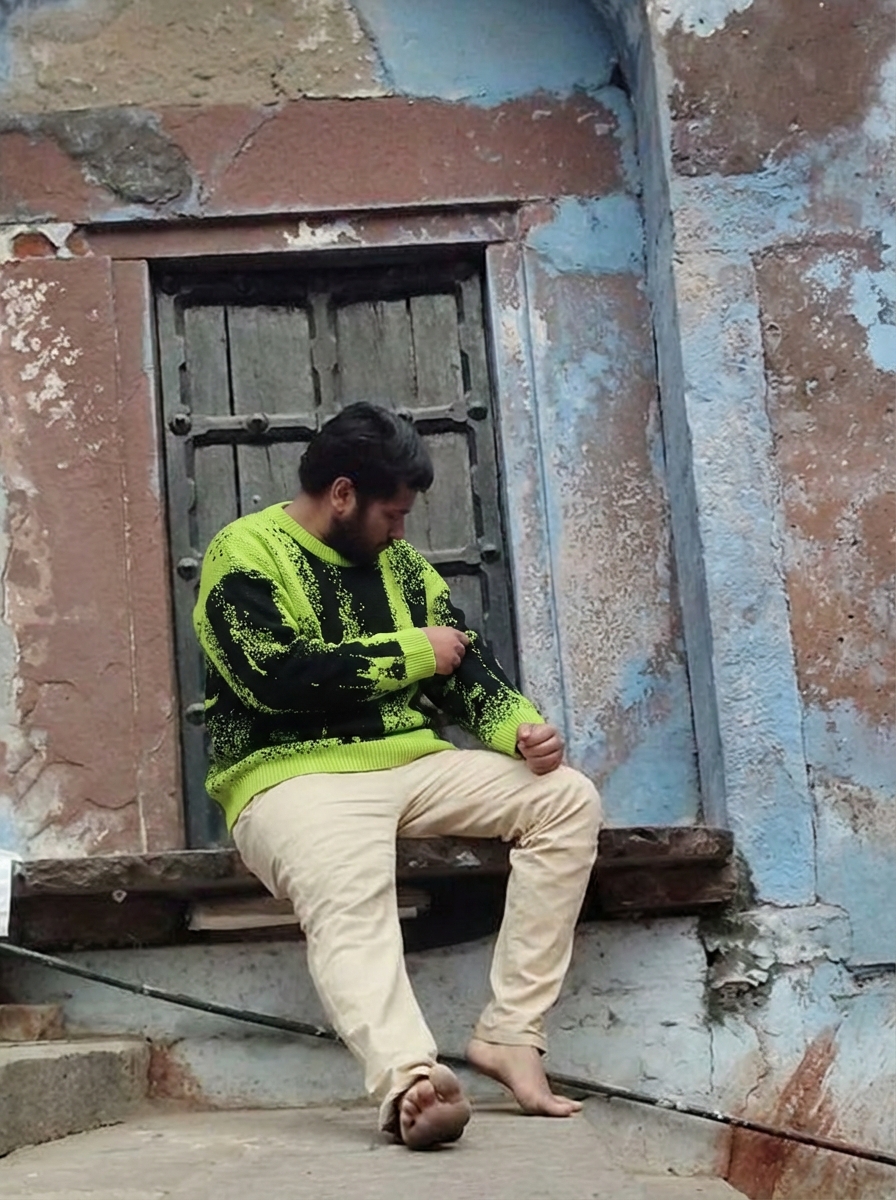
- **Torso:** The user is leaning forward slightly; the garment must balloon slightly at the lower back and gather heavily at the lap/waistline where the torso meets the legs.
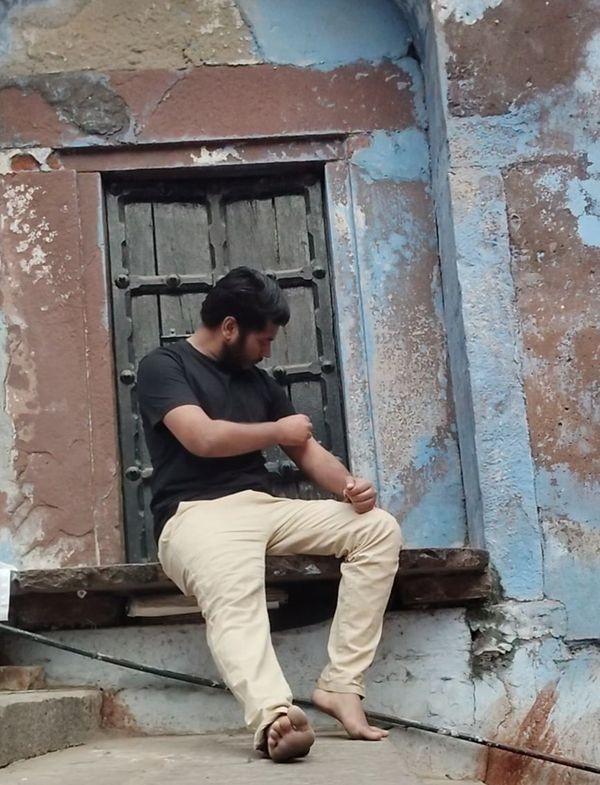
- **Sleeves (Generation):** The user is wearing short sleeves, but the source is long-sleeved. The simulation must generate full-length sleeves covering the currently bare forearms.
- **Arm Interaction:** Due to the right arm crossing the body to grasp the left forearm:
- The fabric across the upper back and right shoulder must stretch tight.
- The right sleeve must wrinkle at the inner elbow (cubital fossa).
- The left sleeve acts as a substrate; the fabric here must look compressed under the pressure of the right hand.
- **Occlusion Handling:**
- **Right Hand:** The fingers and palm of the right hand are currently touching bare skin. In the simulation, the right hand must be masked and layered *over* the new generated left sleeve.
- **Thighs/Lap:** Since the user is seated, the bottom hem of the sweater will not hang freely; it must collide with the beige trousers/thighs and fold appropriately.
- **Chin/Beard:** Ensure the collar sits naturally around the neck, passing under the beard line.
PHASE 3: ENVIRONMENT & LIGHTING
- **Light Match:** The environment utilizes soft, diffuse daylight (likely outdoor shade) with a cool ambient tone derived from the blue walls. Lighting is coming from the top-front. The garment requires soft ambient occlusion shadows, particularly deep shading in the armpit area, the elbow crease, and where the sweater folds over the lap.
- **Color Calibration:** The source garment is neon green. To avoid a "sticker" effect, the saturation of the green must be slightly dampened to match the dusty, lower-contrast aesthetic of the user image. A subtle cool-blue tint should be applied to the shadow areas of the black and green yarn to reflect the bounce light from the blue wall.
PHASE 4: IDENTITY PROTECTION
- **Facial Lock:** The user's face, beard, hair, ear, and neck area above the clavicle must remain completely frozen and pixel-perfect to the original.
- **Body Integrity:** Strictly forbidden to slim the user's physique. The simulation must respect the user's shoulder width and torso volume. The source garment is bulky; the final silhouette should appear slightly larger/puffier than the current image, not smaller. The beige pants and bare feet must remain unaltered.