Thinking Process
PHASE 1: VISUAL DECONSTRUCTION
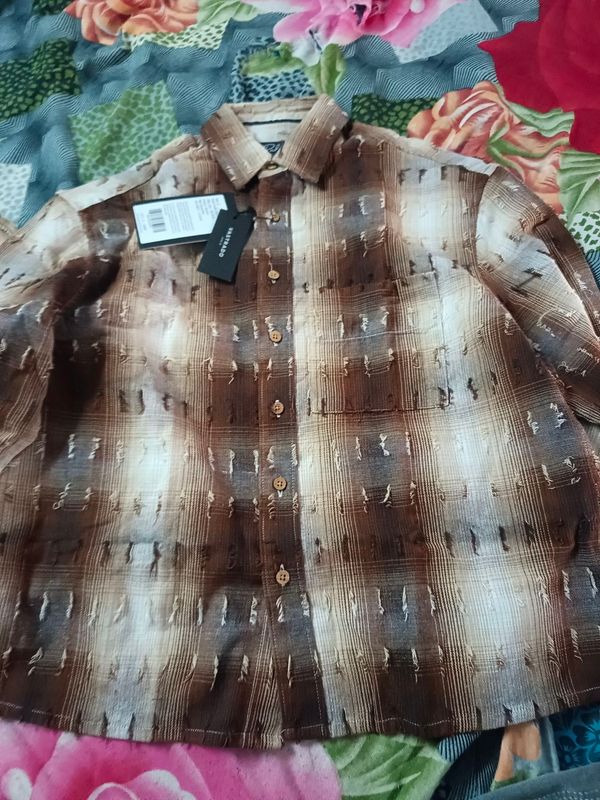
- **Fabric Physics:** The source garment appears to be a medium-weight textured cotton or flannel blend with a significant "distressed" surface finish. It has a matte reflectivity profile. The simulation must render the thousands of loose, frayed threads (surface fuzz) as physical geometry, not just a flat texture, allowing them to catch micro-lights and cast micro-shadows. The fabric has moderate stiffness; it will hold creases but is soft enough to drape over the shoulders.
- **Key Features:**
1. **Surface Texture:** The three-dimensional "hairy" or frayed horizontal/vertical lines are critical.
2. **Pattern:** The ombre-style fade of the brown-to-cream plaid check.
3. **Hardware:** Brown/wooden buttons down the center placket.
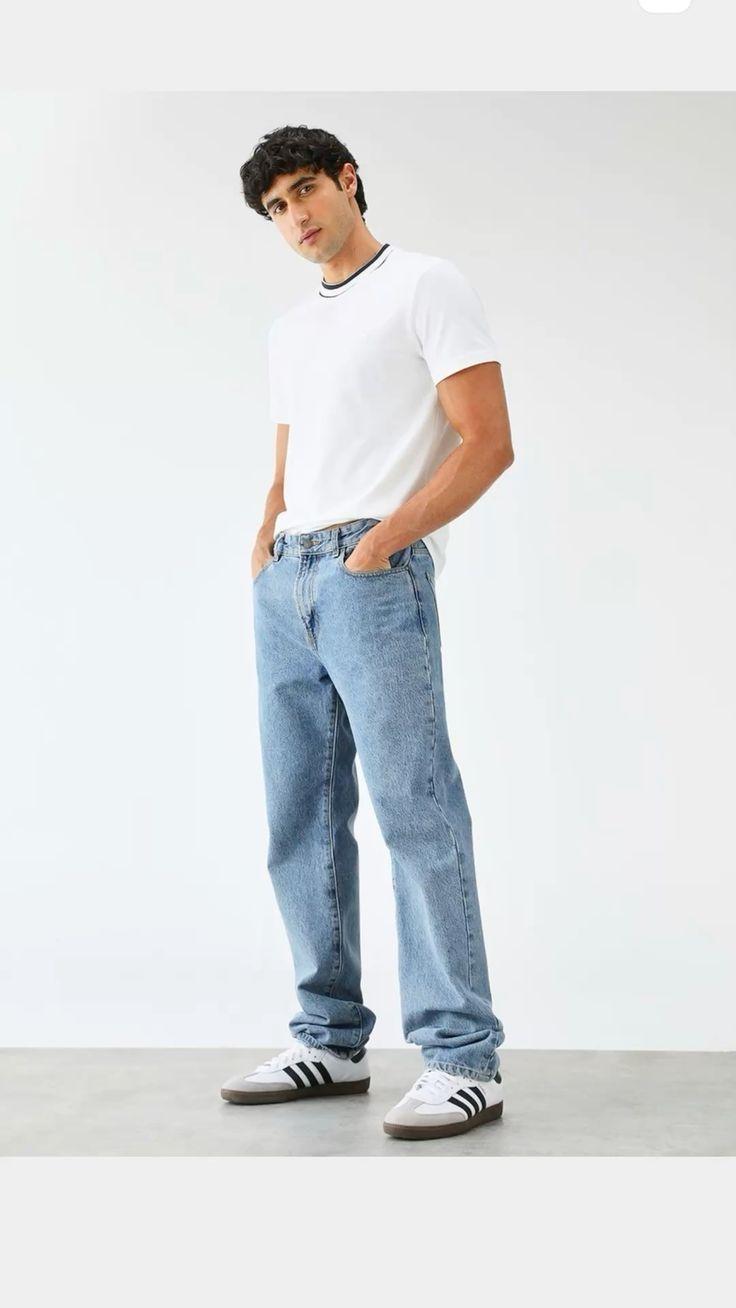
4. **Collar:** Standard point collar structure, which must be generated in 3D to replace the current t-shirt's crew neck.
5. **Exclusions:** The black brand tags hanging from the buttonhole must be digitally removed.
PHASE 2: FIT & DRAPE SIMULATION
- **Body Mapping:**
- **Shoulders:** The shirt must sit squarely on the user's shoulders, slightly wider than the current t-shirt to account for the looser fit of a button-down.
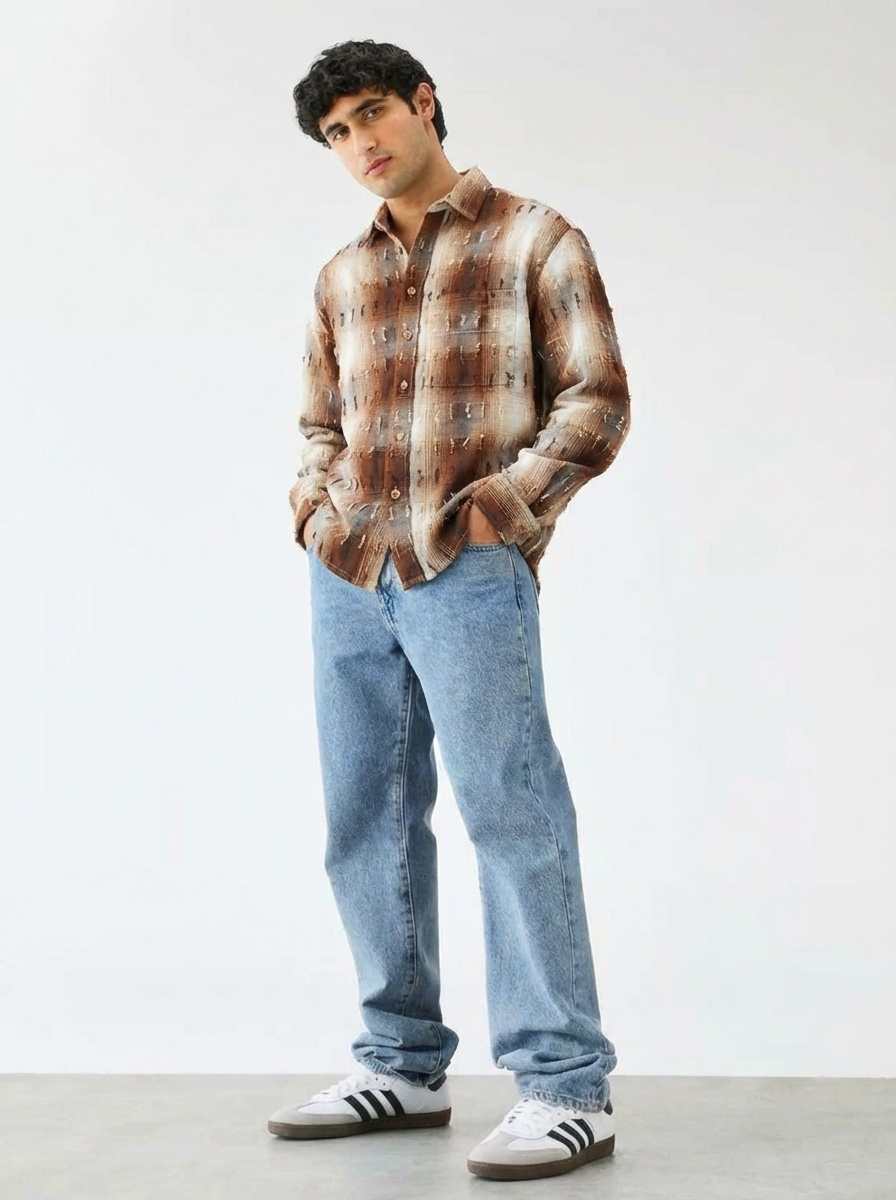
- **Torso & Waist:** The User's torso is slightly twisted to his right. The button placket must follow this centerline curve.
- **Interaction with Pose (Hands in Pockets):** This is the critical physics constraint. The hem of the shirt cannot simply hang straight down. Because the user's hands are in his pockets, the shirt fabric must bunch slightly at the wrist contact points and drape *behind* the forearms, or drape over the hips while being pushed back by the wrists. The simulation should assume an untucked fit that is mechanically displaced by the arms entering the jean pockets.
- **Occlusion Handling:** The user's forearms and wrists (specifically where they enter the denim pockets) act as the primary occlusion layer. The shirt sleeves must end or bunch above the wrist, and the shirt body must not render *over* the hands. The neck area needs precise masking to replace the white crew neck with the open collar of the shirt without obscuring the user's neck skin or jawline.
PHASE 3: ENVIRONMENT & LIGHTING
- **Light Match:** The User Image features high-key, soft studio lighting (diffuse white light) coming primarily from the front/overhead-left, indicated by the soft shadow behind the user's heels. The Source Garment is currently lit by uneven indoor ambient light. The generated shirt texture must be "relit" to match the clean, neutral 5500K studio temperature of the target image, eliminating the warm/yellow cast from the source photo.
- **Color Calibration:** The brown and cream tones of the shirt must be contrast-corrected. The darkest browns in the plaid should match the black point established by the user's hair, and the lightest creams should balance against the studio background, ensuring the shirt doesn't look "pasted on" due to mismatched exposure levels.
PHASE 4: IDENTITY PROTECTION
- **Facial Lock:** Absolute freeze on the user's face (from chin upwards), including the specific curl pattern of the hair and the head tilt. The neck skin texture must be preserved where the new collar reveals it.
- **Body Integrity:** The user's lean-athletic build must be maintained. Do not use the baggy nature of the source shirt to artificially widen the user's torso. The legs (jeans) and sneakers must remain exactly as pixelated in the original image to ground the subject.