Thinking Process
PHASE 1: VISUAL DECONSTRUCTION
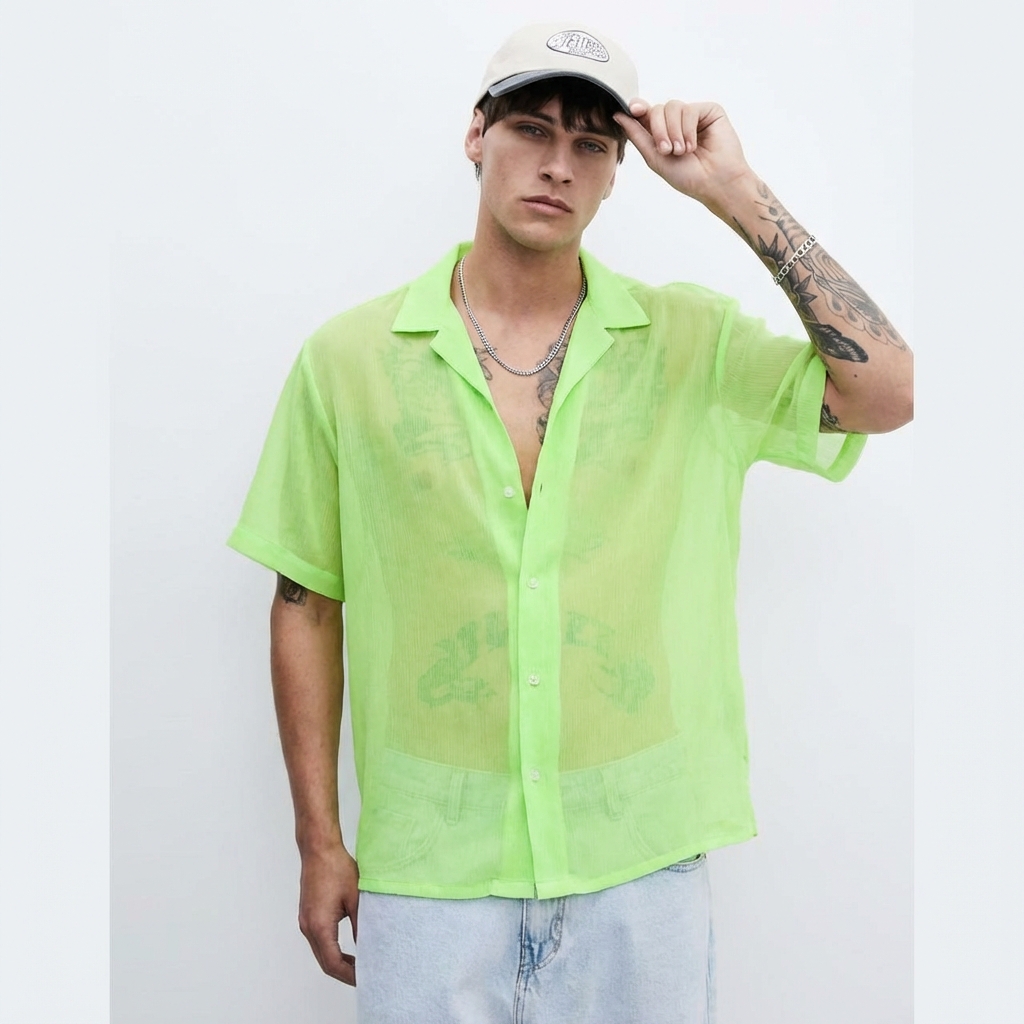
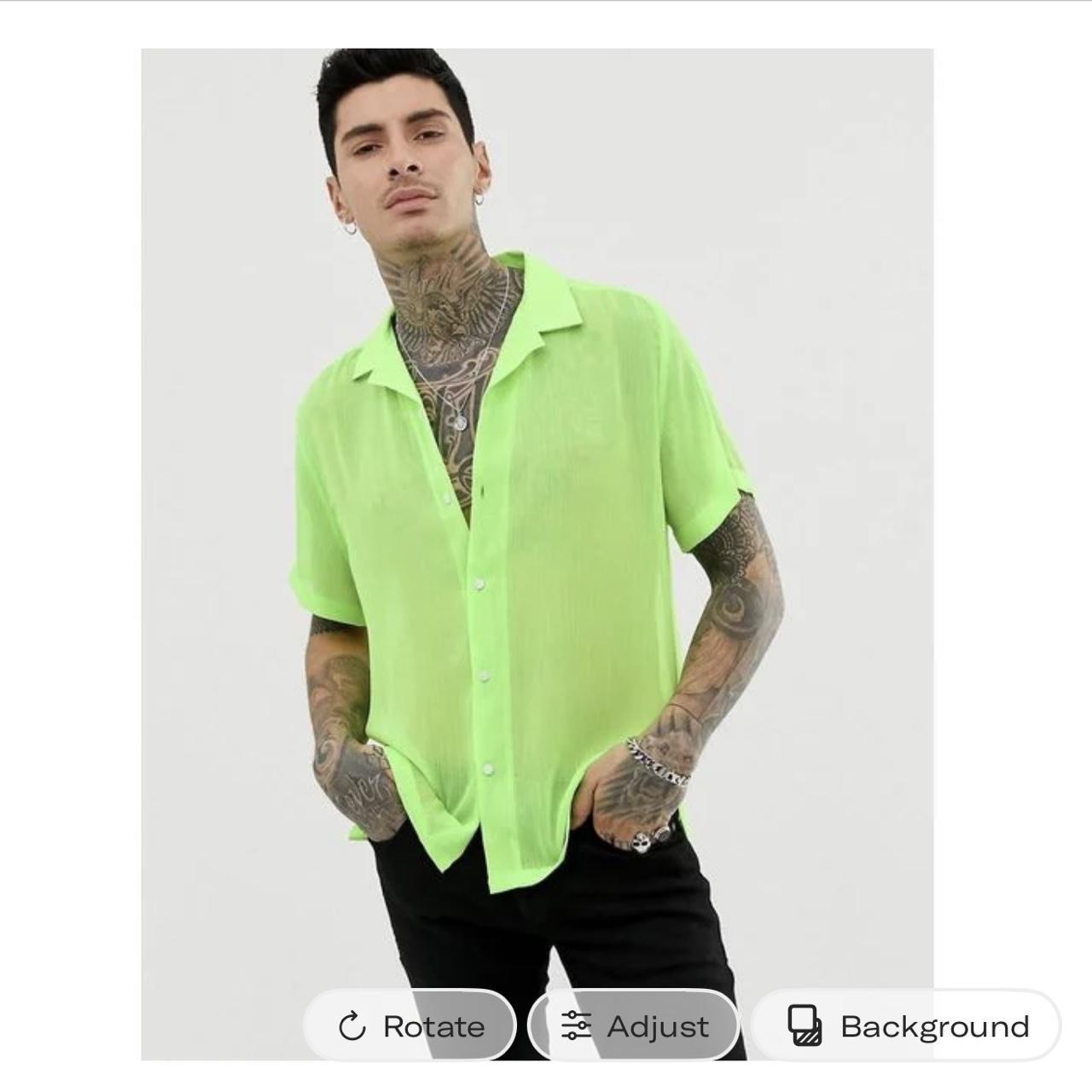
- **Fabric Physics:** The source garment is a lightweight, semi-sheer material (likely a linen-blend or thin synthetic) with a distinct "crinkle" texture. It has high translucency; the simulation must account for subsurface scattering, meaning the user's skin tone and torso tattoos should be faintly visible through the fabric where it touches the skin tightly. It has a matte finish but high luminosity due to the neon pigment.
- **Key Features:** The Camp Collar (Revere collar) structure must be maintained, sitting open at the neck. The white pearlescent buttons, the specific rolled hem of the short sleeves, and the vertical textural creases of the fabric are critical. The shirt's relaxed, flowy silhouette must replace the structure of the current oversized t-shirt.
PHASE 2: FIT & DRAPE SIMULATION
- **Body Mapping:**
- **Left Arm (Raised):** Gravity will cause the sleeve to slide down towards the shoulder, bunching slightly at the deltoid. The fabric along the left lateral torso must be pulled taut upward, creating tension folds radiating from the armpit.
- **Right Arm (Resting):** The sleeve should hang naturally with a slight gap between the fabric and the arm. The bodice should hang straight but loose, respecting the user's leaner frame compared to the source model.
- **Neckline:** The V-shape of the open collar needs to sit naturally on the user's clavicles.
- **Occlusion Handling:**
- **Necklace:** The silver chain worn by the user is a hard occlusion layer. It must be masked and composited to sit *on top* of the user's skin within the open "V" of the new shirt, but the shirt collar itself must sit *around* the chain.
- **Left Hand/Cap:** The hand touching the cap is outside the garment zone, but ensure no artifacting occurs near the shoulder if the bounding box is loose.
PHASE 3: ENVIRONMENT & LIGHTING
- **Light Match:** The user image uses soft, high-key studio lighting, diffused evenly with a slight bias from the front-left. The neon green shirt must receive this soft lighting; shadows should be diffuse, not harsh. Deep shadows should only appear in the folds under the raised left arm and inside the open collar.
- **Color Calibration:** The source image has high contrast/saturation. The neon green must be balanced to match the slightly cooler, desaturated color grading of the user's photo. The green radiance (color bleed) on the user's skin (neck and arms) should be calculated to simulate light bouncing off the bright fabric.
PHASE 4: IDENTITY PROTECTION
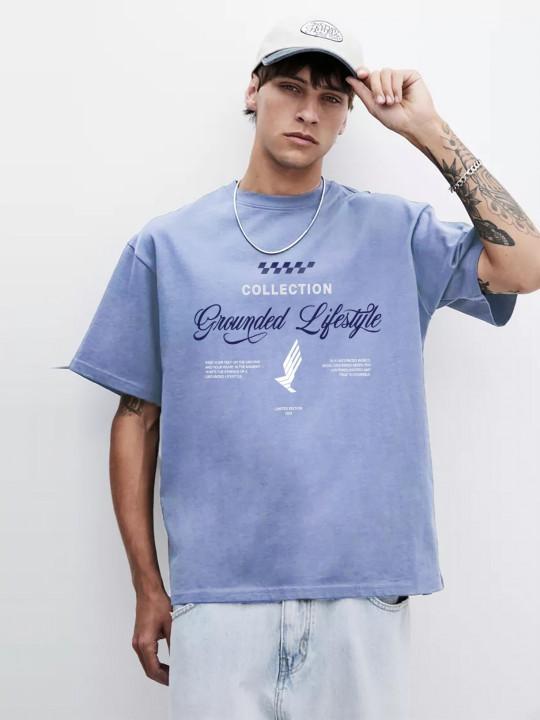
- **Facial Lock:** The user's face, neck structure, jawline, ears, and the baseball cap (including hair visible beneath it) must remain pixel-perfectly frozen.
- **Body Integrity:** The user has a slimmer build than the source model. The simulation must drape the cloth over the *user's* existing mesh, not warp the user to fit the shirt. **Critical:** The user's arm tattoos are a defining biometric feature; they must be fully preserved on the exposed arms and unaffected by the texture transfer.