Thinking Process
PHASE 1: VISUAL DECONSTRUCTION
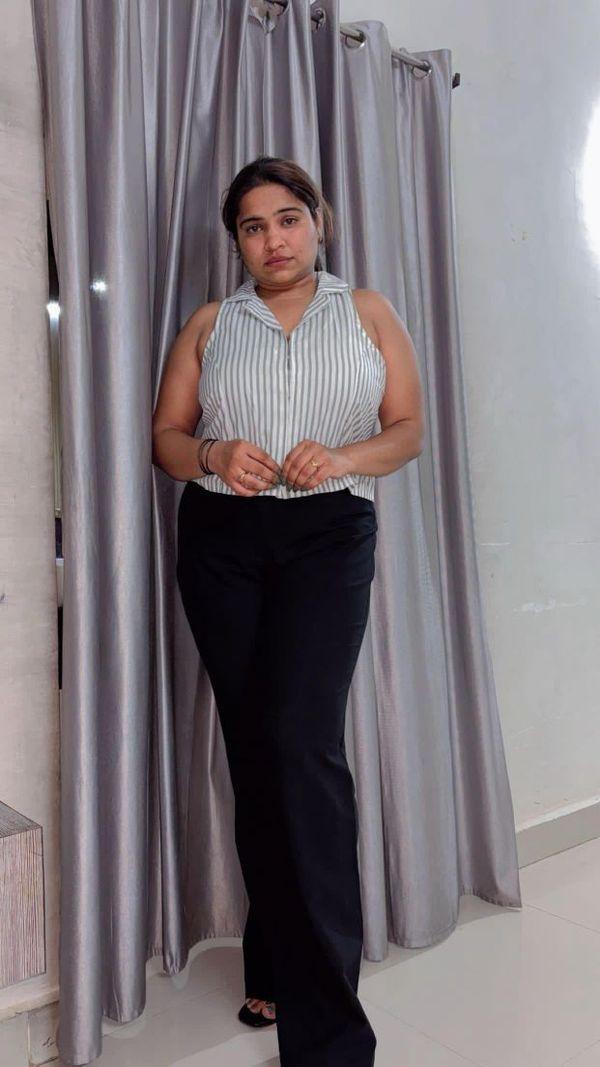
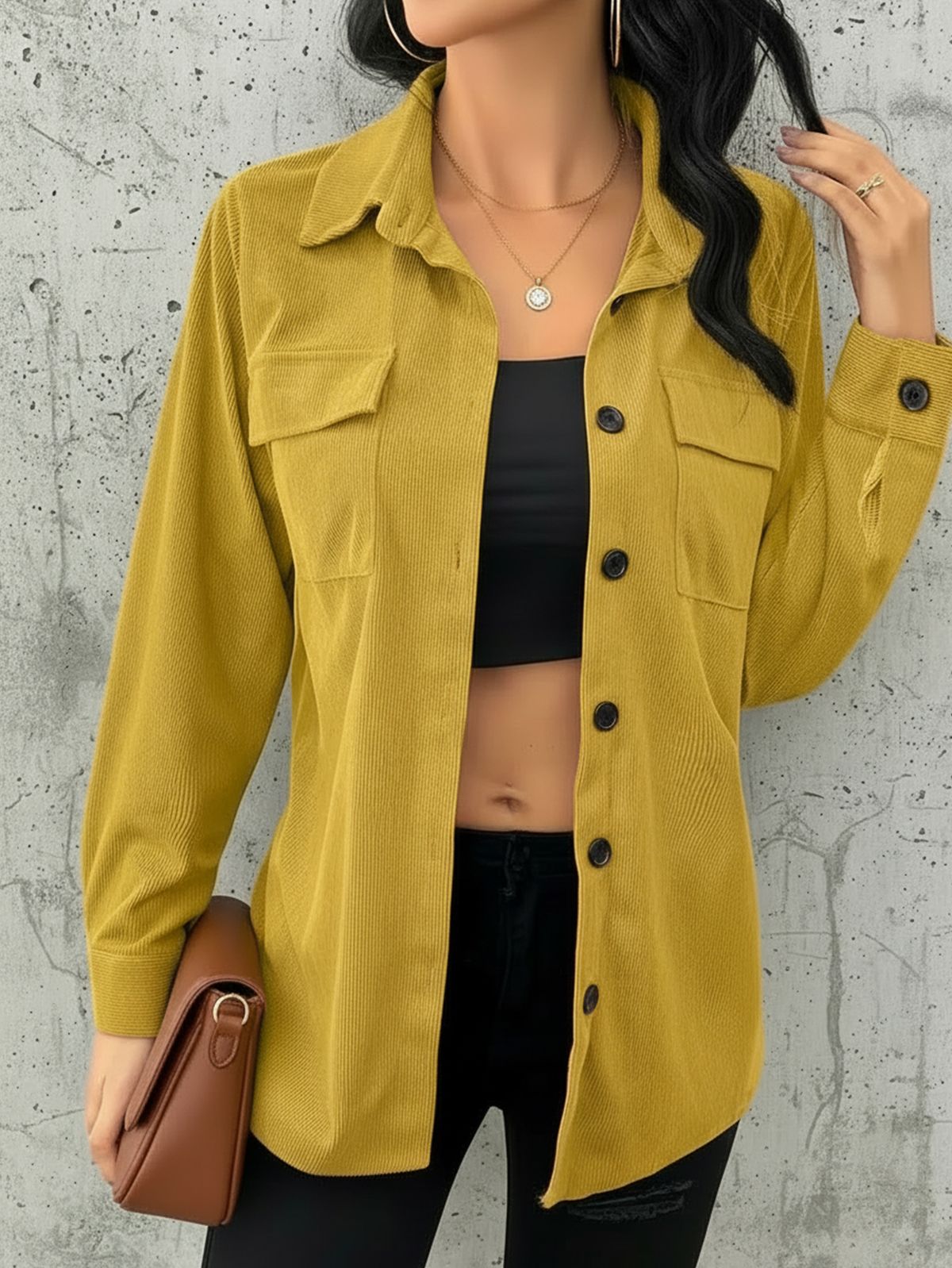
- **Fabric Physics:** The source garment is Corduroy (likely cotton or cotton-blend). It possesses a high weight and medium stiffness. Unlike the user's current thin synthetic top, this material will not cling to the skin. It features vertical "wales" (ridges) which create anisotropic reflection—appearing lighter or darker depending on the angle of light due to the pile. It absorbs light more than it reflects, resulting in soft, velvety highlights rather than sharp specular shines.
- **Key Features:** The vertical ribbed texture must be upscaled to remain visible. Critical elements to preserve include the structured turn-down collar, the two chest pockets with flap closures, the dark contrast buttons, and the buttoned cuffs. The "shacket" (shirt-jacket) silhouette must maintain its boxy structure rather than tapering significantly at the waist.
PHASE 2: FIT & DRAPE SIMULATION
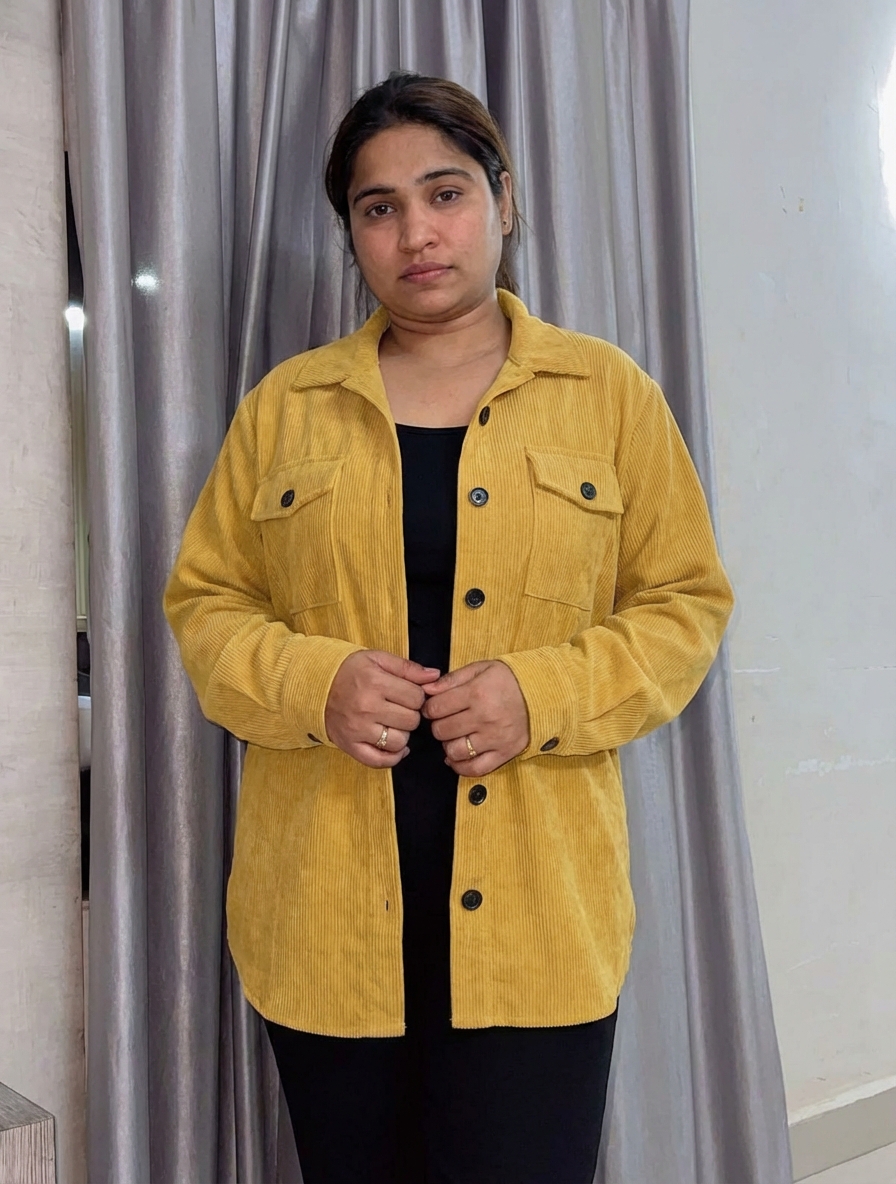
- **Body Mapping:** The garment must be resized from the source model's petite frame to fit the target user's broader shoulder width and bust. The sleeves, currently straight on the mannequin, must undergo skeletal deformation to bend at the user's elbows (approx. 90-100 degree angle) to accommodate her clasped hands. The hemline should fall below the user's waist, likely covering the top portion of the black trousers. Gravity requires the fabric to hang vertically from the bust apex, creating a "tented" gap at the midriff rather than following the curve of the stomach.
- **Occlusion Handling:** The user's clasped hands and forearms are the primary occlusion layer. The yellow jacket must be generated *behind* the hands and forearms where they cross the torso. The lower front of the jacket will be compressed or pushed outward by the wrists/hands. The user's hair is tied back, so neck occlusion is minimal, but any loose strands at the nape must be layered over the collar.
PHASE 3: ENVIRONMENT & LIGHTING
- **Light Match:** The user's environment has diffuse, soft indoor lighting, likely from a source to the top-left (indicated by curtain highlights). The source garment is lit by high-contrast studio lighting. The rendered jacket must have its exposure lowered and contrast reduced. Shadows must be cast on the right side of the user's torso (viewer's right) and under the collar and pocket flaps to match the ambient occlusion of the room.
- **Color Calibration:** The source "Mustard/Ochre" yellow is highly saturated. To integrate into the user's grey/neutral-toned room, the saturation of the jacket must be reduced by approximately 15-20%, and the color temperature slightly cooled to match the ambient light reflecting off the grey curtains and white tiles.
PHASE 4: IDENTITY PROTECTION
- **Facial Lock:** Absolute freeze on the facial region from the chin upwards, including the jawline contour and the specific hairstyle (bun with loose strands). The skin tone of the face and neck must remain unaltered.
- **Body Integrity:** Strict prohibition on warping or slimming the target user's torso or arms. The garment mesh must expand to accommodate the user's natural measurements. The width of the shoulders and the volume of the arms must reflect the target user's anatomy, not the source model's.