Thinking Process
PHASE 1: VISUAL DECONSTRUCTION
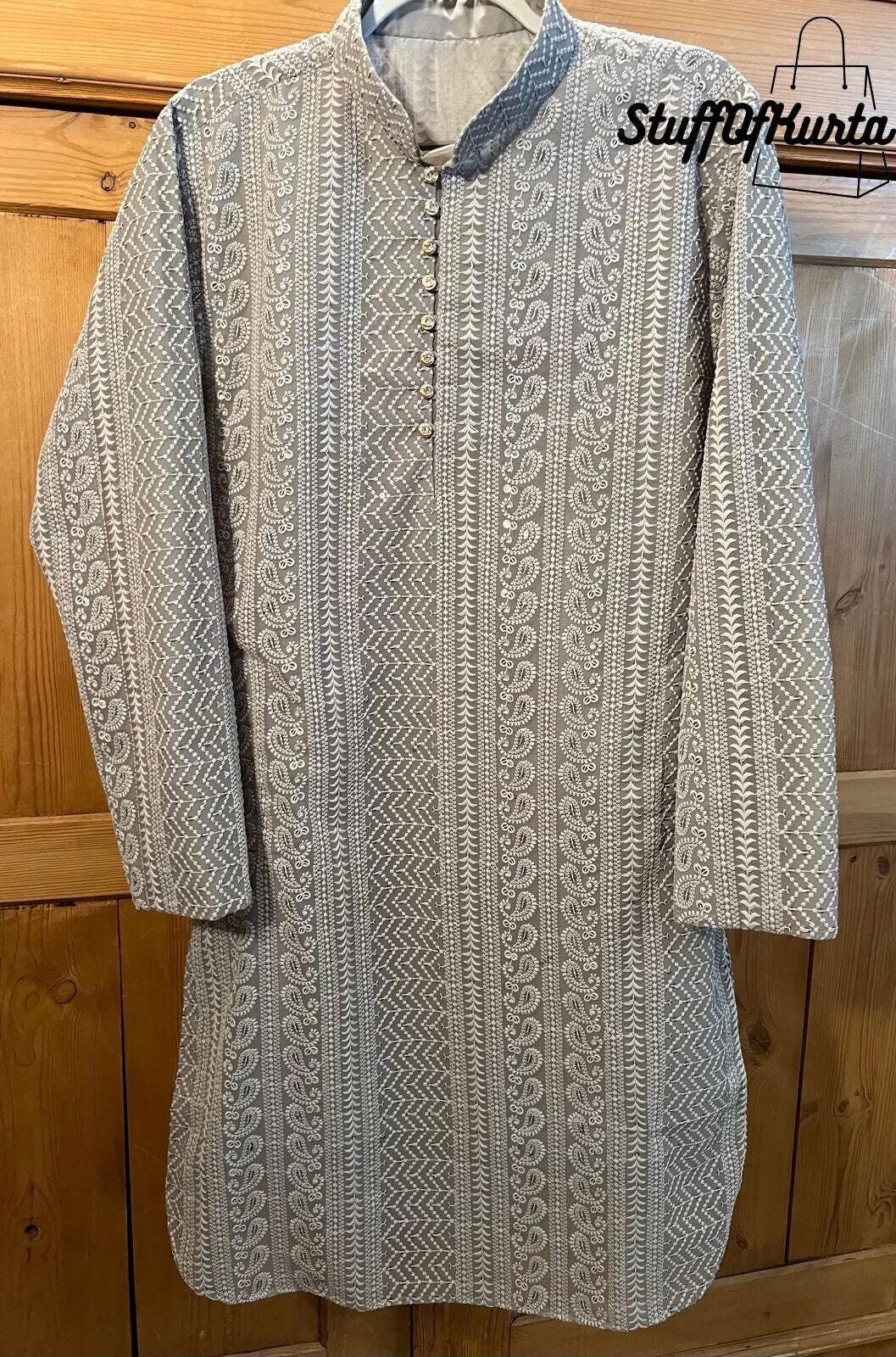
- **Fabric Physics:** The source garment is a patterned Kurta, likely made of cotton or a cotton-linen blend with embroidered texture (Chikankari style). It has a matte finish with high surface friction, meaning it will not reflect light specularly but will have significant self-shadowing within the embroidery grooves. The fabric is medium-weight—heavier than the current t-shirt, resulting in stiffer folds rather than soft clinging.
- **Key Features:** The vertical geometric and paisley embroidery patterns are critical and must not be distorted by warping. The Mandarin collar (stand-up collar) and the central button placket (approx. 5 buttons) must be preserved. The "Stuff of Kurta" watermark must be removed via in-painting, reconstructing the pattern underneath.
PHASE 2: FIT & DRAPE SIMULATION
- **Body Mapping:**
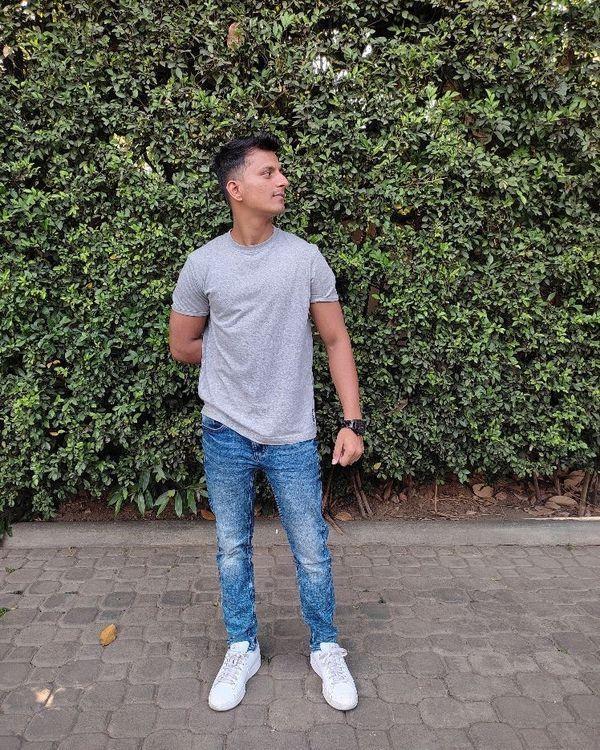
- **Torso:** Unlike the current form-fitting t-shirt, the Kurta is a loose-fit tunic. It must drape linearly from the shoulders, avoiding the pectoral definition visible in the source image.
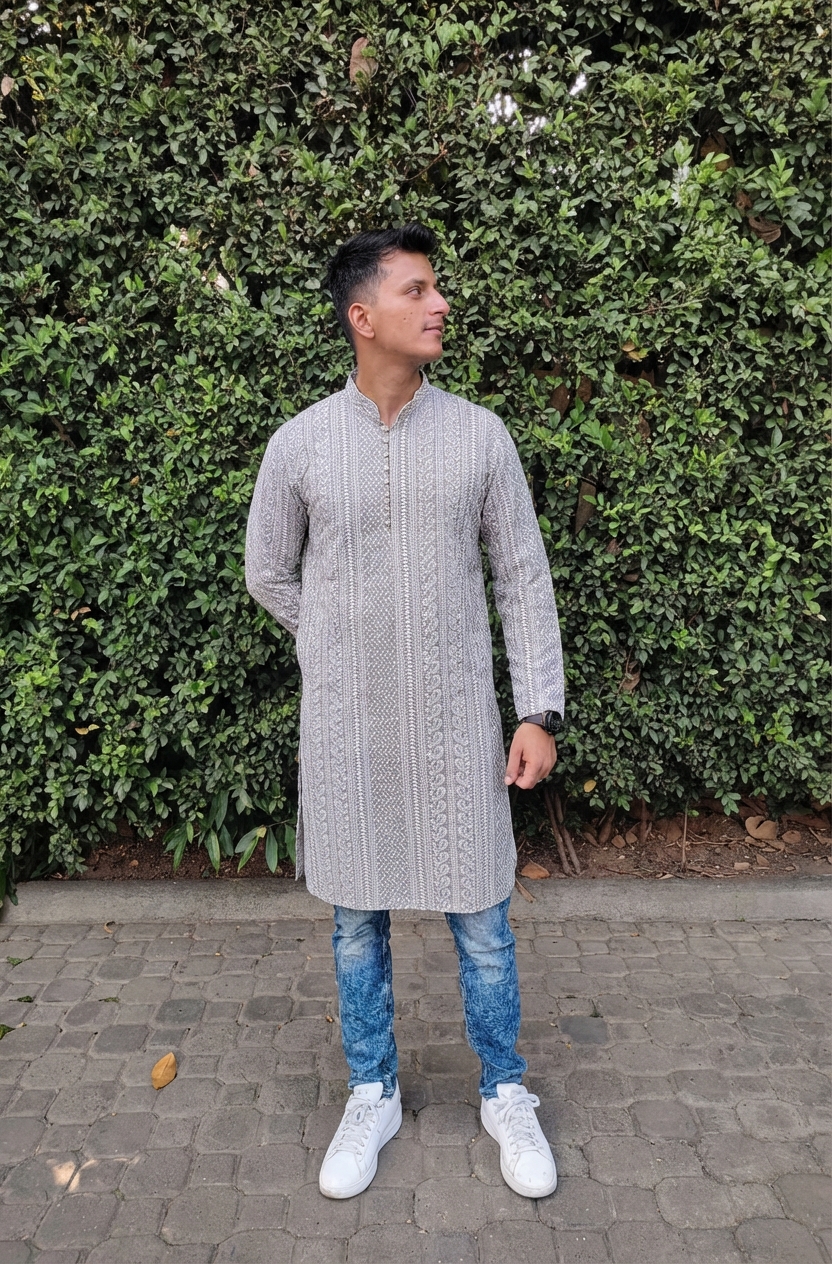
- **Length Extension:** This is a long garment (knee-length). The simulation must generate fabric extending past the user's hips, covering the upper thighs and the pockets of the jeans.
- **Right Arm (Behind Back):** This poses a high-tension anchor point. The fabric must stretch tightly across the right anterior deltoid and bunch significantly at the right armpit. The right sleeve will disappear behind the lumbar region.
- **Left Arm:** The sleeve should hang straight with gravity. As the user's arm is slightly bent, slight transverse folding should occur at the inner elbow.
- **Occlusion Handling:**
- **Watch:** The user's watch on the left wrist will likely be fully occluded by the long sleeve. If the sleeve length falls short in simulation, the watch must layer *over* the fabric.
- **Neck/Chin:** The Mandarin collar rises higher than the current crew neck; it must occlude the base of the user's neck without clipping into the jawline.
PHASE 3: ENVIRONMENT & LIGHTING
- **Light Match:** The user is in diffuse, soft outdoor daylight (overcast or shade) with cool ambient tones. The source cloth is lit by warm, yellow indoor artificial light.
- **Action:** Desaturate the warm yellow tones from the Kurta to match the neutral/cool white balance of the outdoor scene.
- **Shadows:** Generate soft ambient occlusion shadows under the collar, inside the sleeves, and where the new long hemline casts a shadow onto the denim jeans.
- **Color Calibration:** The grey of the Kurta must appear neutral or slightly cool to harmonize with the green hedge background, removing the brownish tint from the wooden background of the source image.
PHASE 4: IDENTITY PROTECTION
- **Facial Lock:** The entire head (hair, eyes, nose, mouth, jawline, and ear) and the neck area above the new collar line must remain pixel-perfectly frozen. The gaze direction (looking left) must not be altered.
- **Body Integrity:** Do not slim the user's shoulders or chest. While the garment adds volume to the silhouette, the user's underlying skeletal structure and the position of the legs/sneakers must remain unchanged. The jeans below the new Kurta hemline must remain the original denim texture.