Thinking Process
PHASE 1: VISUAL DECONSTRUCTION
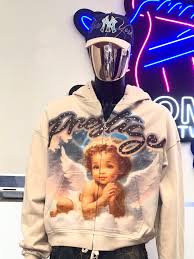
- **Fabric Physics:** The source garment is a heavyweight cotton fleece or terry cloth blend. It has high structural stiffness compared to the user's current polyester activewear. It has a matte finish, absorbing light rather than reflecting it, except for the rhinestone embellishments. The ribbed cuffs and hem are elasticated and denser than the body panel.
- **Key Features:**
1. **Rhinestone Script:** The "Prestige" text features studded/rhinestone elements which must exhibit specular highlights (glint) distinct from the matte fabric.
2. **Central Graphic:** The large cherub/cloud print must remain continuous across the zipper line but warp naturally with fabric folds.
3. **Hardware:** The metal zipper mechanism (center front).
4. **Silhouette:** Drop-shoulder seams and the "kangaroo" split pocket structure.
5. **Hood:** The hood bulk around the neck area must be generated to replace the current crew neck visibility.
PHASE 2: FIT & DRAPE SIMULATION
- **Body Mapping:**
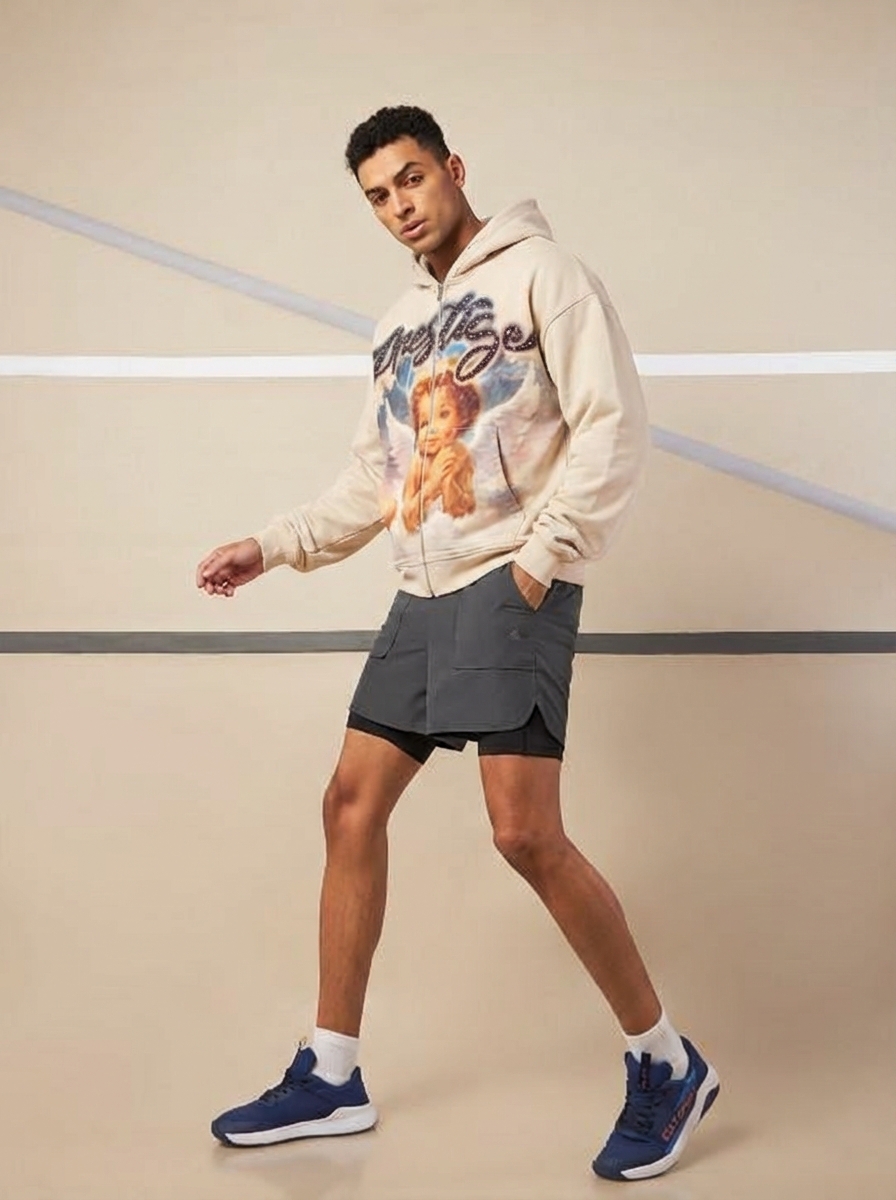
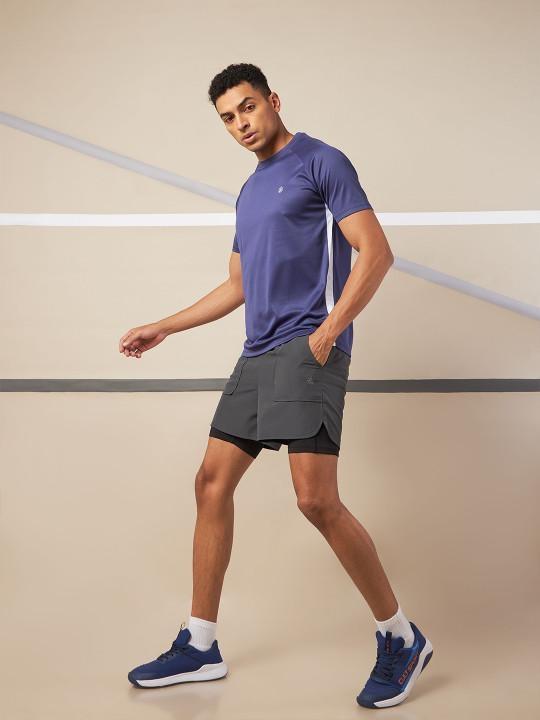
- **Torso Volume:** Unlike the user's current slim-fit athletic tee, the target hoodie is an oversized/boxy fit. The simulation must expand the upper body silhouette significantly, creating air gaps between the user's skin and the garment, particularly at the waist.
- **Shoulder Mechanics:** The drop-shoulders of the hoodie must fall lower on the deltoid than the current shirt's raglan seams.
- **Elbow Dynamics:**
- *Left Arm (Bent):* Significant transverse compression/stacking of the heavy fabric at the inner elbow.
- *Right Arm (Extended):* Tension lines radiating from the armpit to the shoulder; the sleeve cuff should pull slightly up the forearm due to the extension.
- **Occlusion Handling:**
- **Waistband Interaction:** The hoodie is longer than the current t-shirt. It will likely drape *over* the waistband of the shorts. The simulation must calculate the collision with the upper hips/shorts fabric.
- **Hands:** Both hands are clear of the torso, but the left wrist is close to the body; ensure the bulky sleeve of the hoodie does not intersect the hand geometry.
PHASE 3: ENVIRONMENT & LIGHTING
- **Light Match:** The user is in a high-key studio setting with soft, diffuse lighting originating from the upper-left (indicated by the shadow casting on the floor). The hoodie must cast self-shadows (folds, hood shadow on chest) consistent with this direction, unlike the harsh neon lighting in the source image.
- **Color Calibration:**
- **Neutralization:** CRITICAL. The source hoodie reflects strong blue and pink neon light from its environment. These reflections must be removed and replaced with the neutral, warm beige/taupe tones of the user's studio environment.
- **White Balance:** The cream/beige of the hoodie must be white-balanced to match the warmth of the user's skin tone and background wall.
PHASE 4: IDENTITY PROTECTION
- **Facial Lock:** The user's entire head (hairline, ears, jawline, facial features) must be masked and frozen. The neck area below the chin must be re-rendered only to accommodate the shadow of the new hood, but skin tone must remain consistent.
- **Body Integrity:** Strict prohibition on body warping. The user's athletic leg definition and broad shoulder structure must remain unaltered. The garment must adapt to the body, not the body to the garment. Retain the exact pixel data of the shorts and shoes.