Thinking Process
PHASE 1: VISUAL DECONSTRUCTION
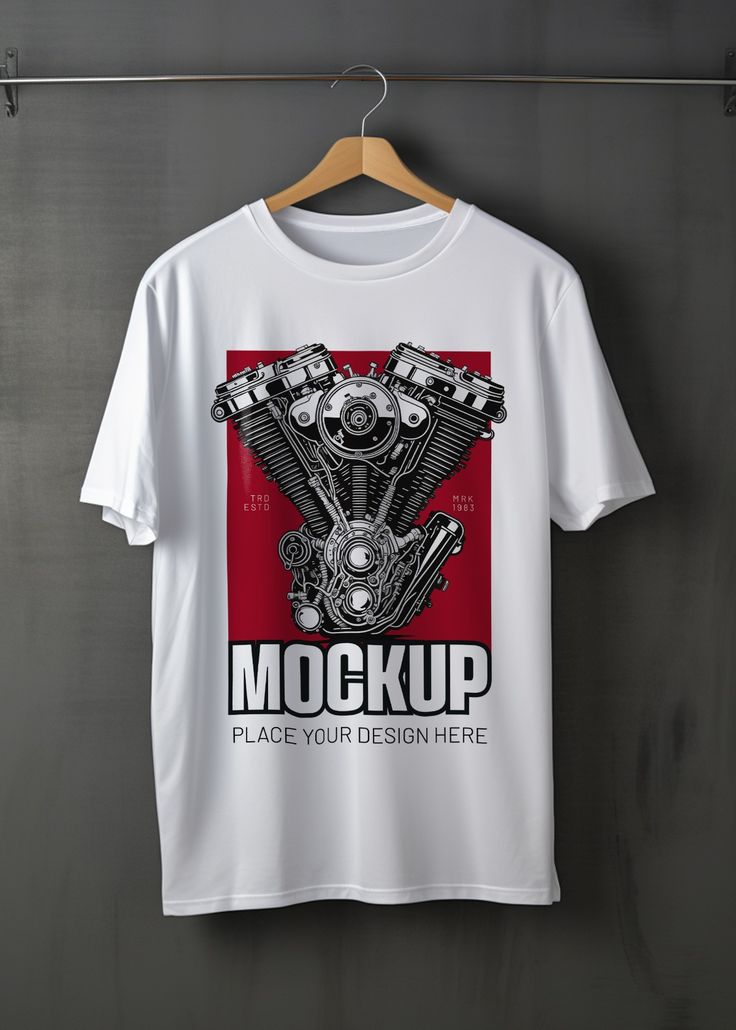
- **Fabric Physics:** The source garment is a standard 100% cotton jersey. It possesses a matte finish with low specularity. It is pliable but not fluid; it should exhibit soft, rolling folds rather than sharp creases. It must absorb light rather than reflect it, maintaining a "dry" texture appearance.
- **Key Features:** The central graphic (V-twin engine illustration on a red rectangular field) and the text "MOCKUP PLACE YOUR DESIGN HERE" must remain undistorted in the center chest area. The ribbed crew neck collar and the double-stitched hem on the short sleeves are critical construction details to retain.
PHASE 2: FIT & DRAPE SIMULATION
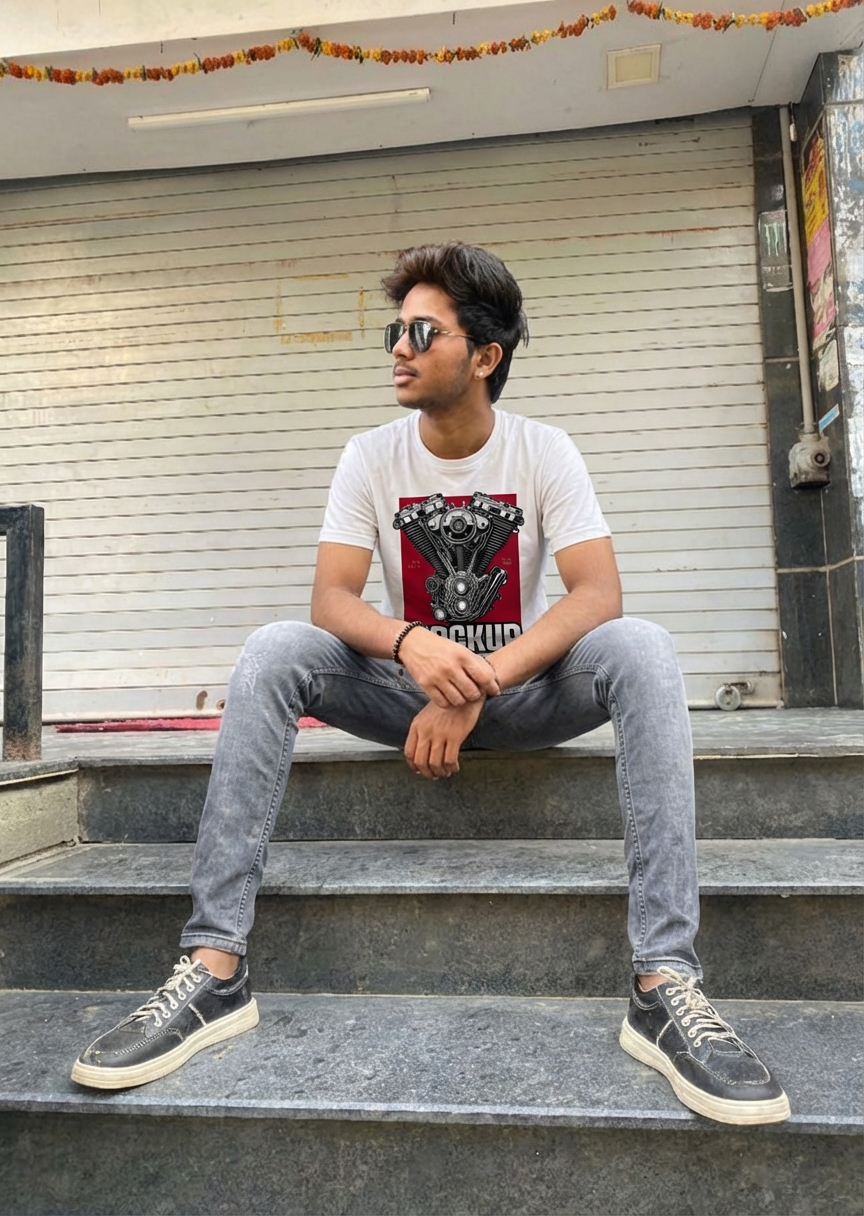
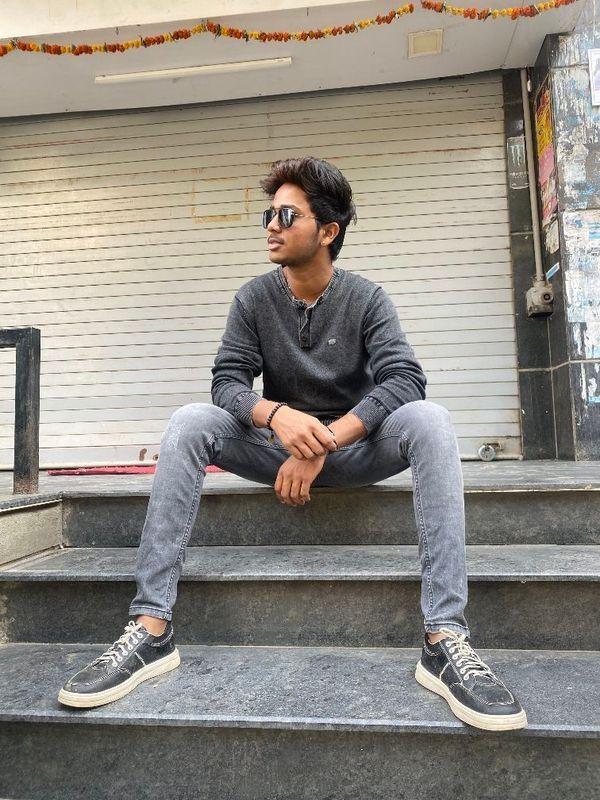
- **Body Mapping:** Due to the user's seated posture, the fabric physics must simulate compression at the midsection. The t-shirt should exhibit horizontal "bunching" or folding across the stomach area just above the belt line. The fabric must drape downwards from the shoulders, following gravity, but pool slightly where the torso meets the thighs. Important: The source is short-sleeved while the target is wearing long sleeves; the simulation must effectively generate/inpaint natural skin texture for the user's forearms and biceps to replace the existing grey sleeves.
- **Occlusion Handling:** The user's clasped hands and the beaded bracelet on the right wrist are positioned low, near the crotch. The bottom hem of the t-shirt will likely interact with the wrists; the hands must be segmented as the foreground layer, ensuring the shirt hem falls *behind* or rests gently *on top* of the wrists without clipping through them.
PHASE 3: ENVIRONMENT & LIGHTING
- **Light Match:** The scene utilizes diffuse outdoor daylight (overcast or shaded), creating soft, non-directional shadows. The new garment must accept this ambient lighting, casting soft ambient occlusion shadows under the armpits and inside the stomach folds. The light source appears to be coming broadly from the front-top.
- **Color Calibration:** The stark white of the source tee must be tone-mapped to match the exposure of the user's environment. It should not be pure #FFFFFF; it requires a slight desaturation and exposure reduction to match the grey concrete surroundings, picking up subtle cool grey bounce light from the steps and shutter.
PHASE 4: IDENTITY PROTECTION
- **Facial Lock:** The user's entire head region, specifically the voluminous hair, sunglasses, nose, and jawline, must remain pixel-perfectly frozen. The neck transition needs a hard mask to blend the new crew neck collar with the existing skin.
- **Body Integrity:** The user's slim-to-medium physical build must be preserved. The simulation must not inflate the torso to match the width of the hanger image. The shoulder slope and the spread of the knees must remain exactly as is; do not artificially slim the waist or broaden the chest.