Thinking Process
PHASE 1: VISUAL DECONSTRUCTION
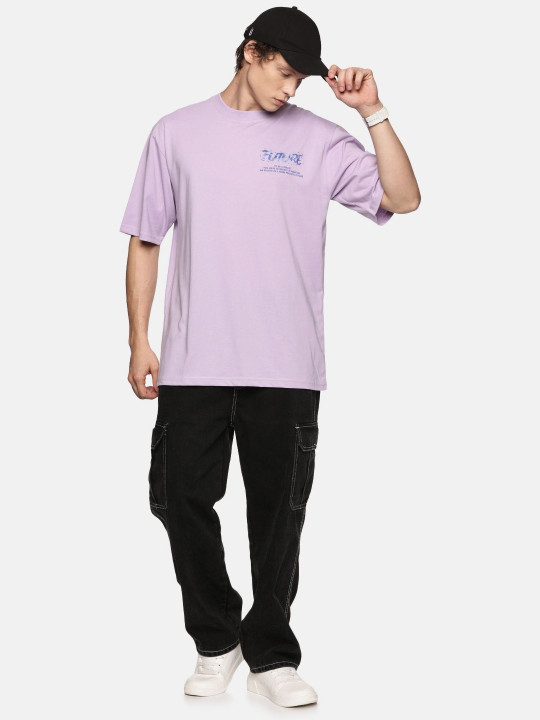
- **Fabric Physics:** The source garment is a heavyweight cotton jersey with a matte finish. It possesses a "relaxed/oversized" structural cut, distinct from the user's current fitted undershirt. Light interaction should be diffuse with minimal specularity (non-reflective). The fabric has medium stiffness, meaning it will hold fold shapes rather than draping like liquid/silk.
- **Key Features:** The specific shade of lavender/lilac must be preserved. The "FUTURE" text graphic on the left chest (viewer's right) is the primary anchor point and must be rendered clearly. The crew neckline ribbing is thicker than the target's current shirt. The drop-shoulder seam placement is a critical design element to maintain the "oversized" aesthetic.
PHASE 2: FIT & DRAPE SIMULATION
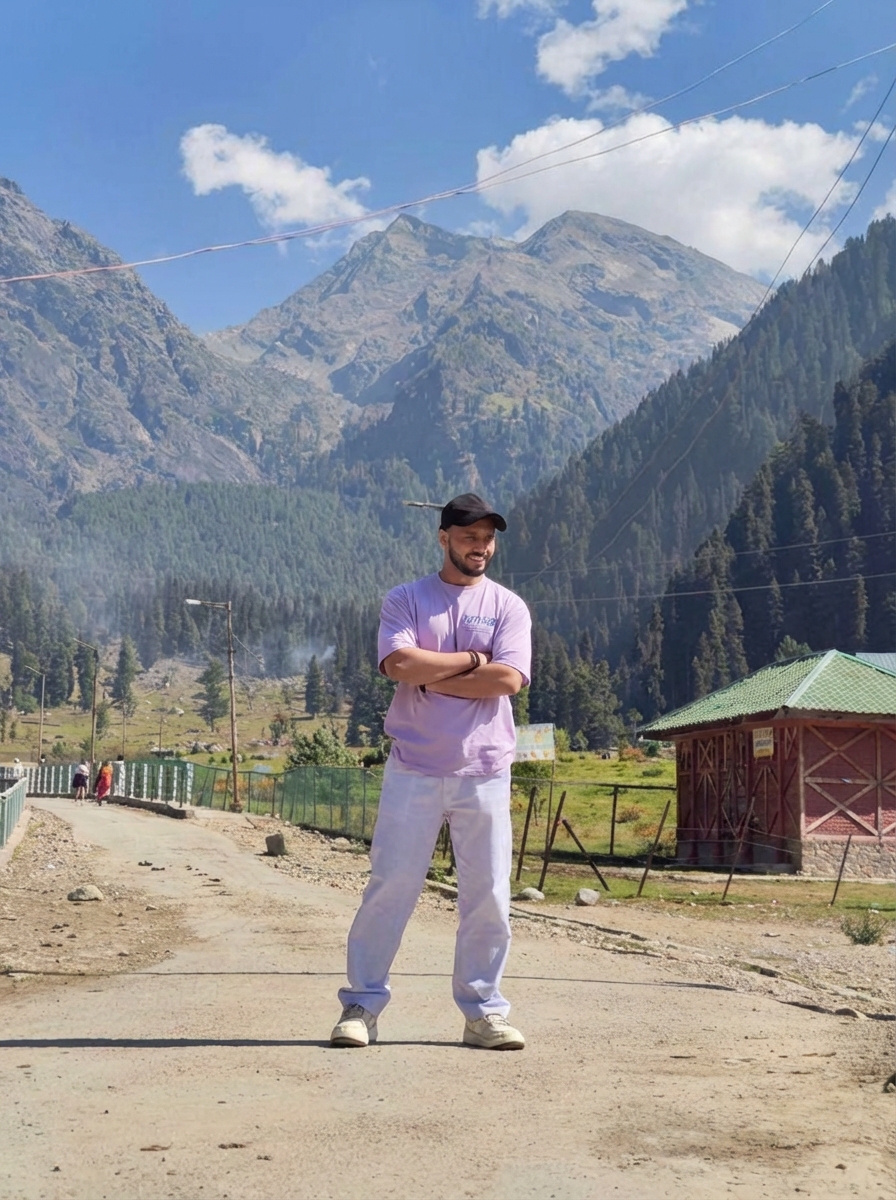
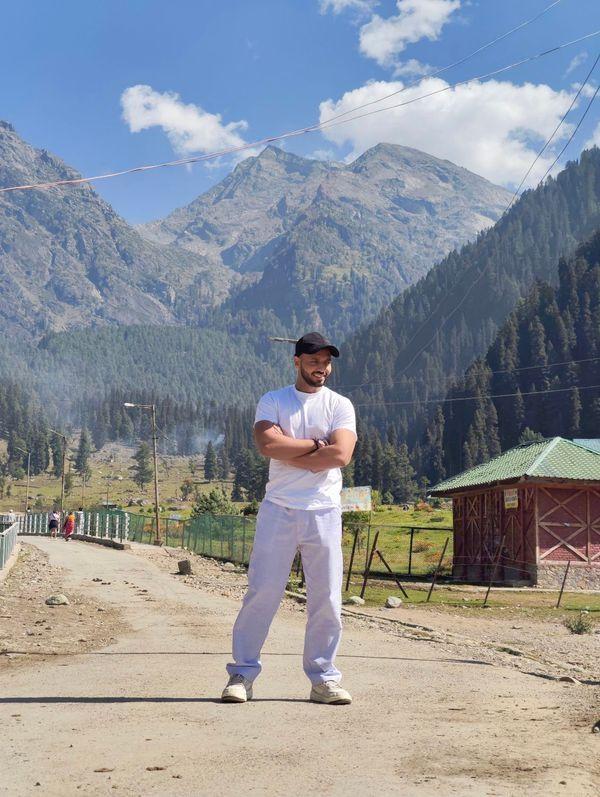
- **Body Mapping:** The user's "arms crossed" pose creates high-tension physics. The loose fabric of the source shirt must be simulated to compress tightly under the armpits and stretch across the deltoids and upper back. Significant horizontal folding/bunching must be generated immediately above and below where the forearms press against the torso. The "FUTURE" logo will sit high on the pectoral muscle and must follow the curvature of the chest, potentially tilting slightly backward due to the user's posture.
- **Occlusion Handling:** CRITICAL: The user's forearms, wrists, and hands are the primary occlusion layer. The lavender shirt must be rendered *behind* the crossed arms. A precise segmentation mask is required for the arms to ensure the shirt appears tucked naturally behind the biceps and under the forearms, not pasted over them.
PHASE 3: ENVIRONMENT & LIGHTING
- **Light Match:** The target environment features harsh, high-contrast outdoor sunlight coming from the upper right (viewer's perspective). The source image is soft studio lighting. We must introduce hard, cast shadows onto the lavender shirt—specifically, the user's crossed arms must cast a deep, sharp shadow onto the stomach area of the new shirt. The left side of the torso (viewer's left) should be in partial shadow to match the global illumination.
- **Color Calibration:** The source shirt is cool-toned studio lit. The target scene has a high dynamic range with blue ambient skylight and warm direct sunlight. The lavender hue must be adjusted to accept a warmer highlight on the right shoulder and a cooler, bluish cast in the shadows to integrate with the mountain atmosphere.
PHASE 4: IDENTITY PROTECTION
- **Facial Lock:** The user's entire head, including the facial structure, beard, ears, and the black baseball cap, must remain pixel-perfect and frozen.
- **Body Integrity:** The user has a muscular/athletic build. The simulation is strictly forbidden from narrowing the shoulders or slimming the biceps to fit the garment. The garment must expand to accommodate the user's muscle mass, ensuring the silhouette remains broad and grounded.