
Thinking Process
PHASE 1: VISUAL DECONSTRUCTION
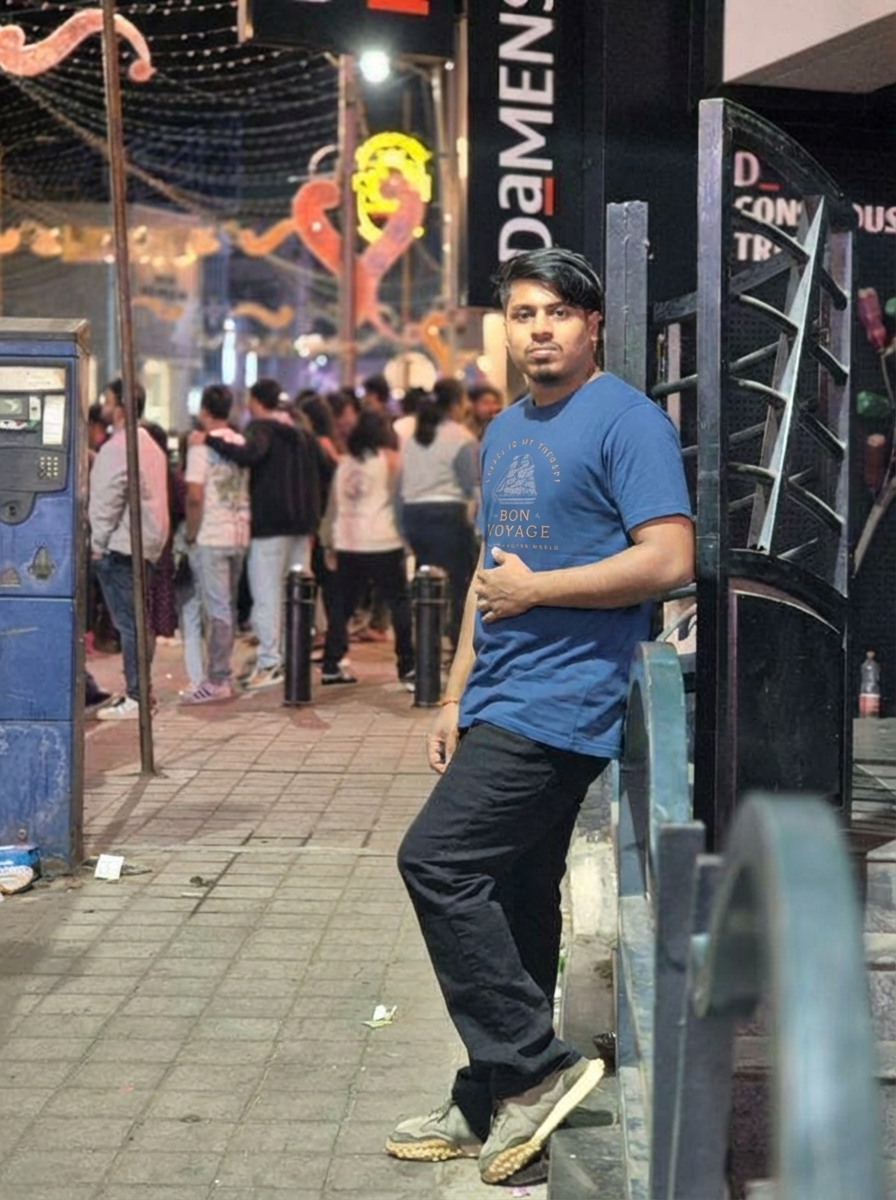
- **Fabric Physics:** The source garment is a standard cotton jersey knit. It possesses medium weight with a matte finish and low specularity. The simulation must treat the material as pliable but non-elastic in terms of glossy reflection; it should absorb light rather than reflect it. Folds should be soft and tubular (tension folds) rather than sharp creases.
- **Key Features:** The central graphic print ("TRAVEL IS MY THERAPY" + Ship Illustration + "BON VOYAGE") is the primary focal point and must remain centered on the sternum, accounting for perspective distortion. The crew neck ribbing width and the hem stitching on the sleeves must be preserved. The specific "dusty blue" hue and the orange/gold font color need to be maintained relative to the new lighting.
PHASE 2: FIT & DRAPE SIMULATION
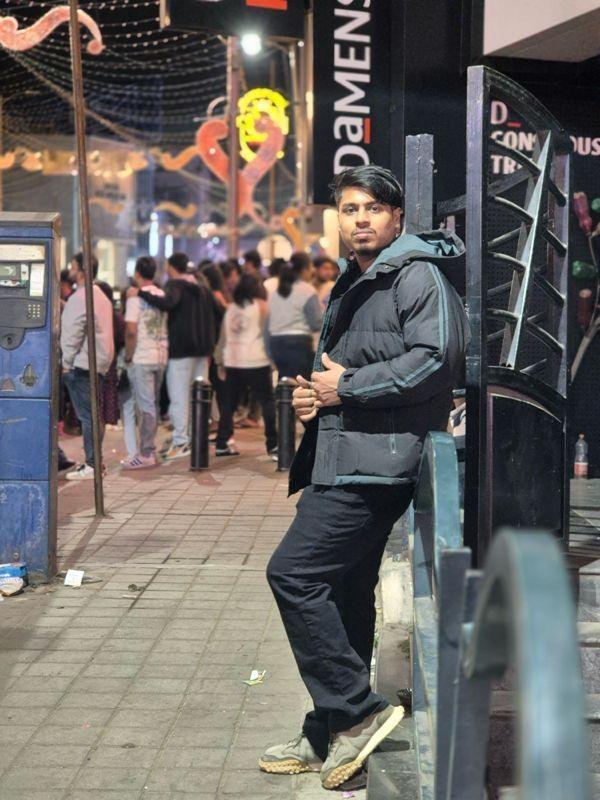
- **Body Mapping:** The user is currently wearing a high-volume puffer jacket. The simulation must estimate the user's actual torso volume beneath this bulk to apply the t-shirt correctly; the silhouette must reduce significantly from the current "puffed" outline to a natural human torso shape. Due to the user's backward lean against the railing, the t-shirt fabric must drape vertically relative to gravity, not the body axis, likely causing the fabric to pull tighter across the chest and hang looser at the lower back.
- **Occlusion Handling:**
1. **The Left Hand:** The user's left hand is positioned mid-torso, gripping the current jacket. This hand must be segmented and layered *over* the new t-shirt.
2. **The Railing:** The green metal railing structure in the immediate foreground (right side of the image) must be strictly masked to ensure the t-shirt does not render on top of it.
3. **Waistline Interaction:** The t-shirt hem must interact naturally with the existing black trousers, either tucked or falling over the waistband, replacing the lower visual bulk of the jacket.
PHASE 3: ENVIRONMENT & LIGHTING
- **Light Match:** The target environment is a high-contrast, nighttime urban setting with multiple artificial light sources (street lamps, neon signs). The lighting on the t-shirt must shift from the flat, diffuse daylight of the source image to a directional, hard-light setup. There should be a strong cool-toned highlight on the user's left shoulder/chest and deep, contrasting shadows on the right side and under the pectoral area.
- **Color Calibration:** The source t-shirt is sun-lit; it must be exposure-corrected downwards (darkened) to match the night scene. A noise/grain layer must be applied to the generated garment to match the high-ISO characteristics of the user's photo. The orange text on the shirt should pick up the warm glow from the background street lights.
PHASE 4: IDENTITY PROTECTION
- **Facial Lock:** The user's entire head, including the specific hairstyle, facial structure, skin tone, and facial hair, must remain pixel-perfectly frozen. The neck area where the chin meets the current jacket collar needs careful reconstruction to expose skin previously hidden by the jacket collar.
- **Body Integrity:** While the volume of the puffer jacket is being removed, the underlying skeletal structure and pose (leaning back, legs crossed) must not be altered. The user's hands and the lower body (trousers and shoes) must remain untouched.