Thinking Process
PHASE 1: VISUAL DECONSTRUCTION
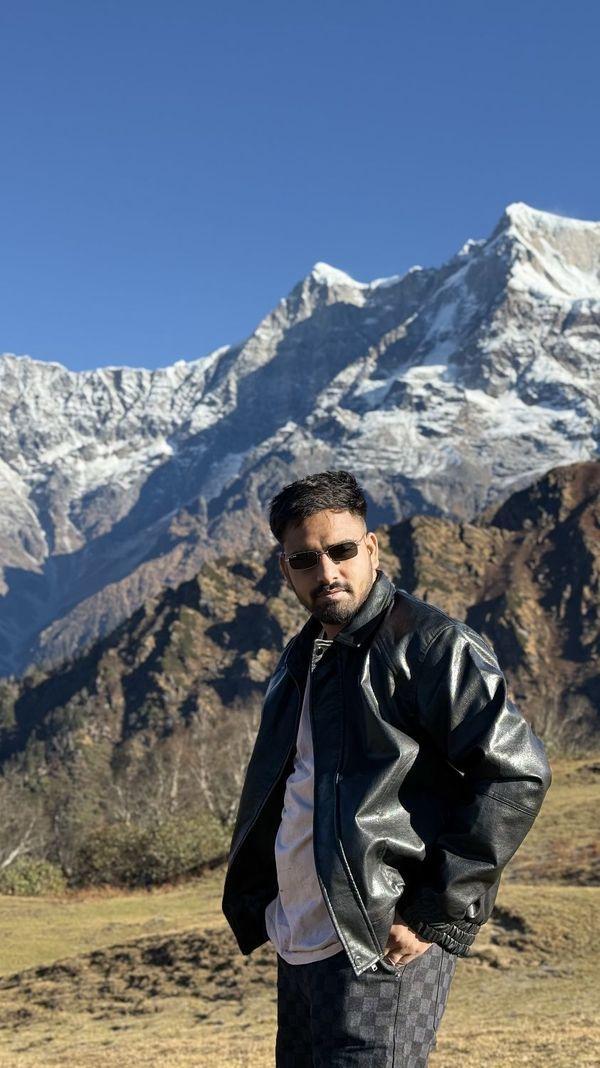
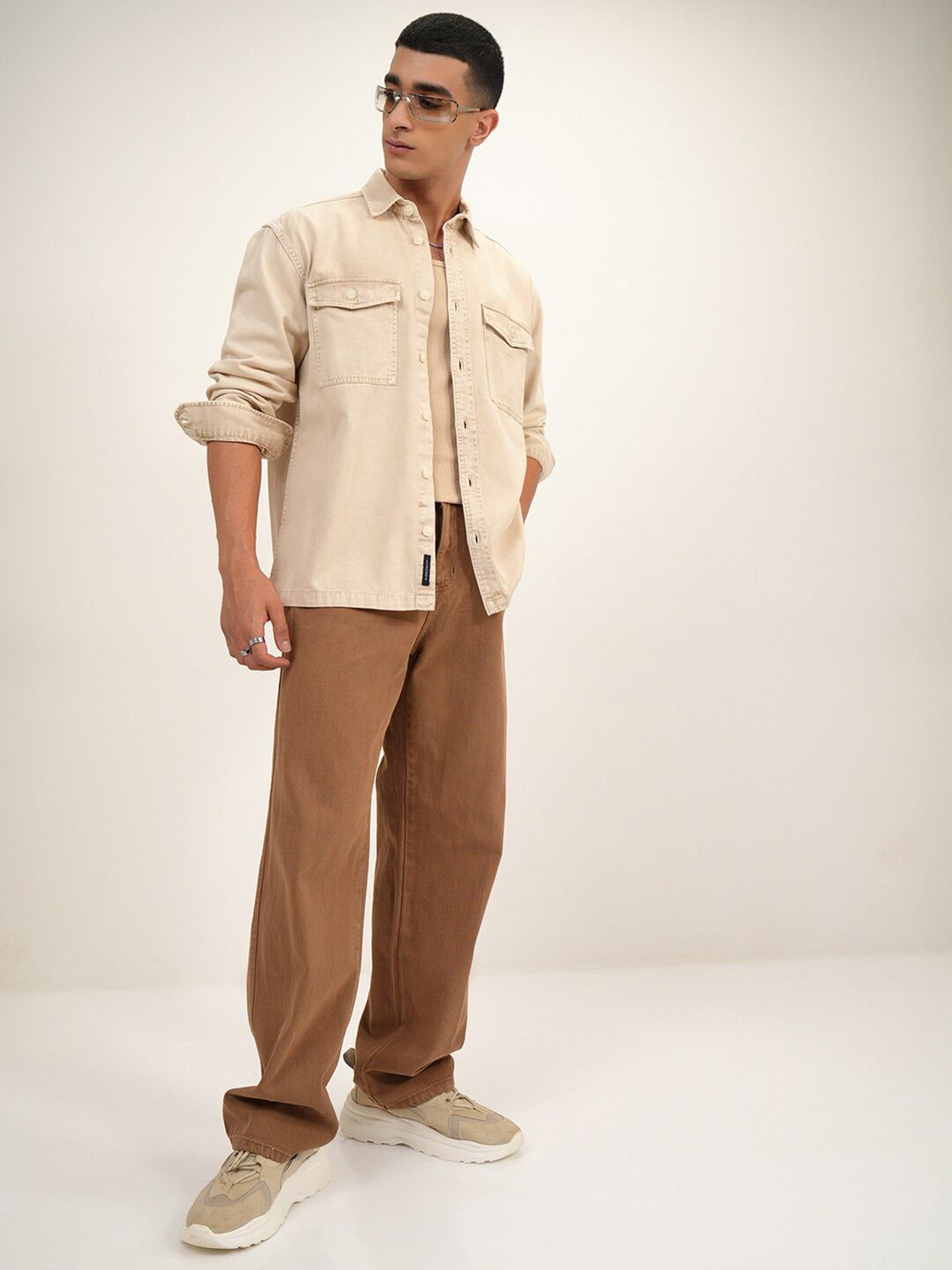
- **Fabric Physics:** The source garment is a heavy-weight cotton drill or canvas (shacket style) paired with a ribbed knit undershirt. Unlike the user's current leather jacket which has high specular highlights, the target fabric is matte with high structural rigidity. It should scatter light diffusely, showing minimal sheen but distinct localized shadows around seams and pockets. The rolled sleeves suggest a stiffness that holds its shape rather than draping softly like silk.
- **Key Features:** The double chest pockets with flap closures, the distinct rolled-up sleeve cuffs (mid-forearm length), the visible buttons, the small black brand tag near the bottom hem, and the ribbed texture of the inner tank top/shirt must be preserved. The open-front styling of the overshirt is critical to maintain.
PHASE 2: FIT & DRAPE SIMULATION
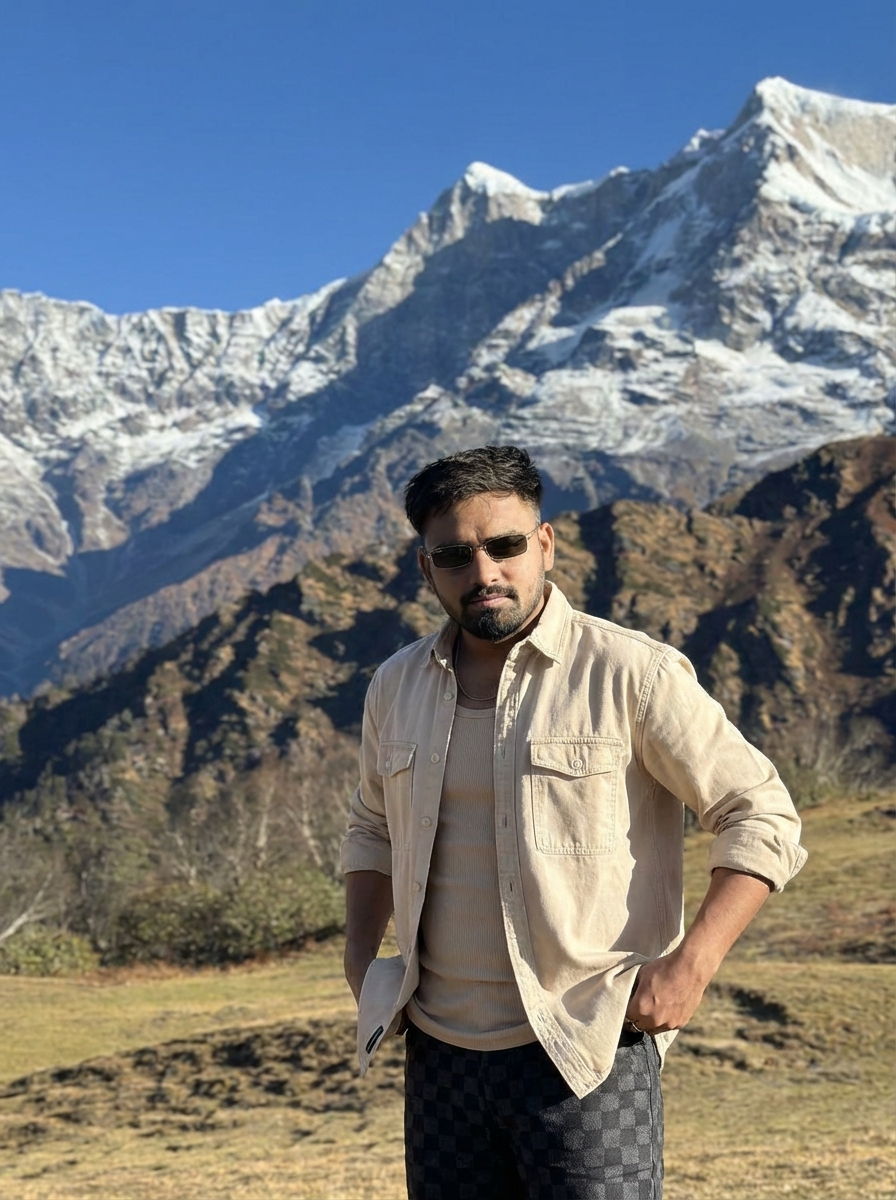
- **Body Mapping:** The user is standing with a slight twist and hands positioned near the waist/hips (likely in pockets). The new garment must account for the user's shoulder width, which appears broader than the source model's. The bottom hem of the beige shirt must flare slightly outward at the hips to mimic the interaction with the hands/pockets, similar to how the current leather jacket is pushed back. The collar must sit closer to the neck than the current jacket, replacing the crew neck t-shirt line with the collared shirt and lower-cut undershirt.
- **Occlusion Handling:** The user's hands are the primary occlusion point. The lower hem of the new shirt needs to be masked where the hands enter the pockets/trousers. The user's beard and chin must layer *over* the new collar area. The sunglasses and head are completely separate and must remain the top layer.
PHASE 3: ENVIRONMENT & LIGHTING
- **Light Match:** The user is in a high-altitude outdoor environment with harsh, direct sunlight coming from the top-left (indicated by the shadow on the right side of the face). The studio-lit source garment must be relit to match this high-contrast scenario. Deep, sharp shadows must be cast by the collar onto the chest and by the left arm onto the torso.
- **Color Calibration:** The neutral beige of the source cloth must be temperature-adjusted. The highlights should be warmer (solar yellow) and the shadows must take on a cool blue tint to reflect the ambient light from the sky and snow, contrasting with the current studio neutral tone. The overall brightness of the fabric must be increased to match the high exposure of the outdoor scene.
PHASE 4: IDENTITY PROTECTION
- **Facial Lock:** The user's entire head region, including the specific hair style, facial hair (beard/mustache), and sunglasses, must be rigidly frozen. The skin tone on the neck must be blended seamlessly where the new collar sits.
- **Body Integrity:** Strictly forbid warping the user's torso to match the slimmer physique of the source model. The simulation must drape the cloth over the user's existing volume and posture. The checkered trousers must remain untouched from the waist down.