Thinking Process
PHASE 1: VISUAL DECONSTRUCTION
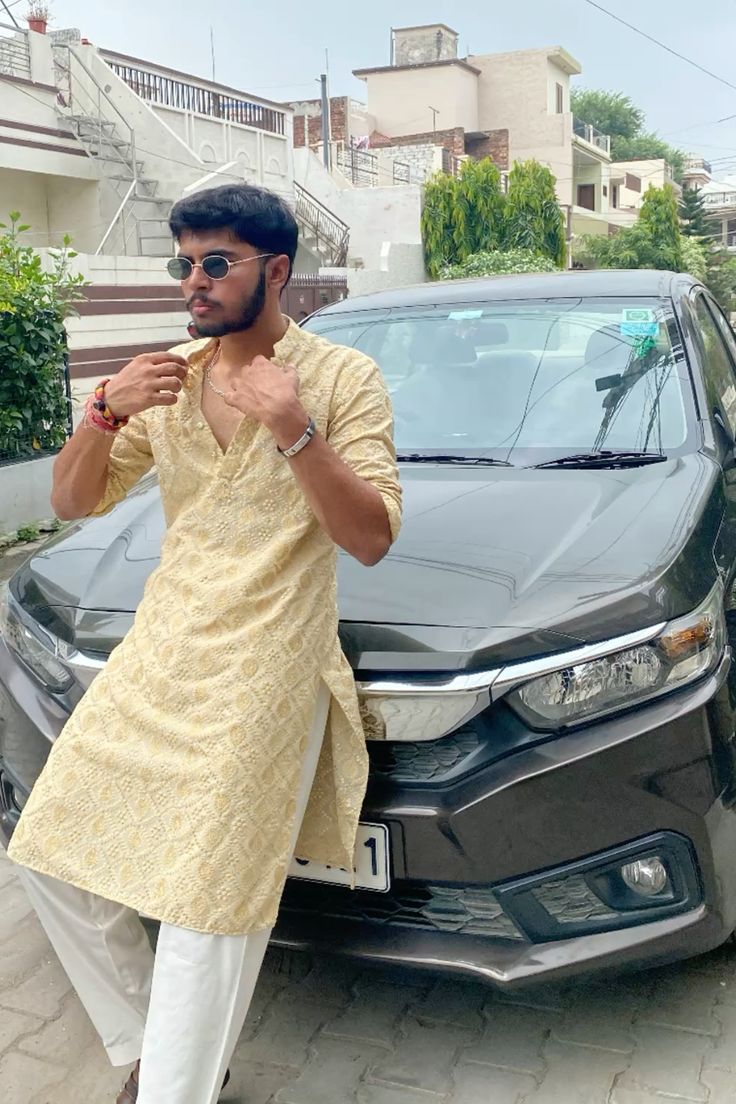
- **Fabric Physics:** The source garment is an embroidered Kurta, likely made of a lightweight cotton or linen blend. It possesses a "semi-structured" drape—soft enough to wrinkle naturally but stiff enough to maintain the crispness of the mandarin collar and the deep V-neck placket. The texture is complex (Chikankari-style embroidery), which implies a matte finish with subtle self-shadowing within the thread work. It should not shine like silk; it should diffuse light.
- **Key Features:** The dense geometric/floral embroidery pattern covers the entire front and must be preserved without blurring. The mandarin collar shape and the specific V-slit neckline are critical design elements. The hemline is long (tunic style) and includes side slits (chaak), which differentiates it from the user's current tucked/shorter shirt. The cream/pale yellow hue must be maintained.
PHASE 2: FIT & DRAPE SIMULATION
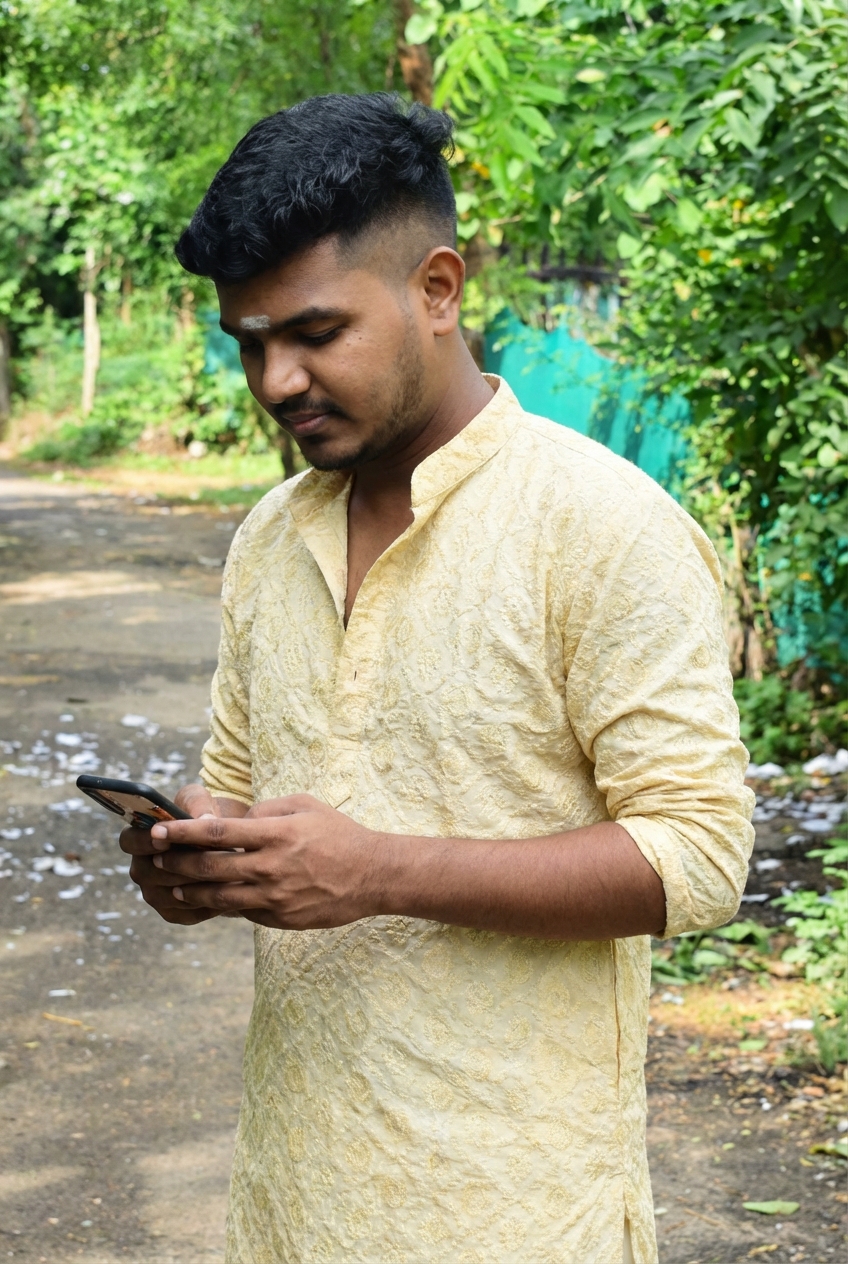
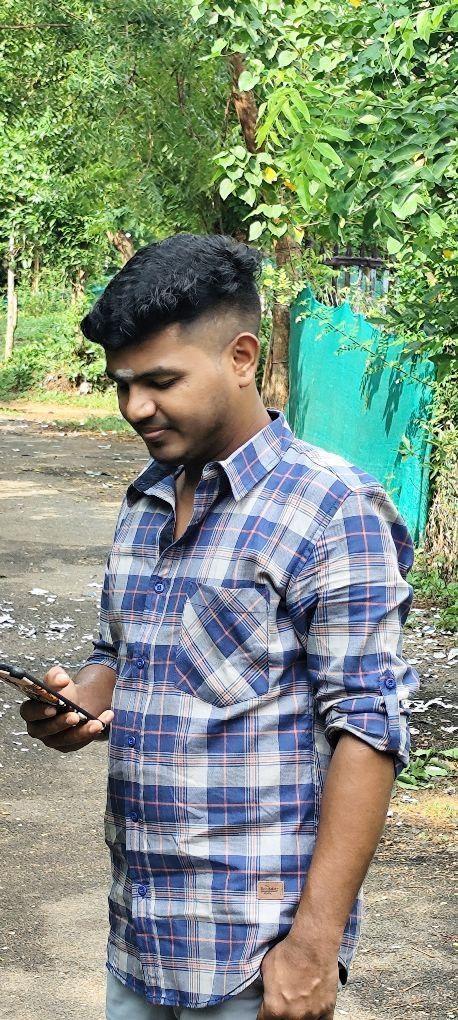
- **Body Mapping:** The user is in a semi-profile standing pose, leaning slightly forward to look at a phone. The Kurta must follow the curve of the kyphotic spine (upper back curvature) caused by the posture. Unlike the current plaid shirt, the Kurta is a tunic; it must hang vertically past the waistline rather than hugging the torso, only breaking its vertical fall where it contacts the user's protruding stomach or bent arms. The sleeves are long and must bunch significantly at the inner elbow (antecubital fossa) due to the acute angle of the arms holding the phone.
- **Occlusion Handling:** CRITICAL: The user's both hands and the mobile phone are positioned directly in front of the mid-torso. The simulation must rigorously mask these elements. The Kurta fabric must appear to pass *behind* the hands and phone/cables. The user's chin is tucked; the collar area must account for the shadow cast by the jawline.
PHASE 3: ENVIRONMENT & LIGHTING
- **Light Match:** The user is in an outdoor environment with diffuse overhead daylight filtering through trees (dappled light). The lighting on the user is soft with shadows falling downward and slightly to the left. The new garment must render with soft ambient occlusion in the folds. It should not have the hard, directional sunlight seen in the source image (the car reflection suggests brighter sun there).
- **Color Calibration:** The user is surrounded by greenery. The pale yellow/cream fabric of the Kurta must absorb subtle green bounce light (color bleed) from the surrounding foliage to sit naturally in the scene. The contrast of the Kurta should be lowered slightly to match the softer, less contrast-heavy exposure of the user image.
PHASE 4: IDENTITY PROTECTION
- **Facial Lock:** The user's entire head, including the specific fade haircut, ear structure, jawline, and facial hair, must be strictly frozen. The neck area above the collar bone must remain untouched to ensure a seamless skin tone match.
- **Body Integrity:** The user's arm thickness and specific shoulder width must be preserved. Do not warp the user's torso to match the leaner physique of the source model. The simulation must fit the garment to the user's existing volume, not slim the user down.