Thinking Process
PHASE 1: VISUAL DECONSTRUCTION
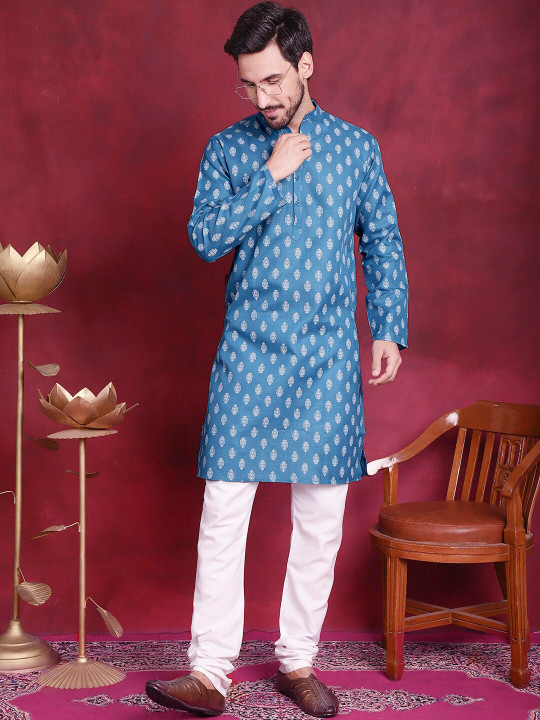
- **Fabric Physics:** The source garment is a traditional Kurta, likely composed of medium-weight woven cotton or a cotton-silk blend. It possesses a semi-matte finish with low specularity (minimal shine). The physics engine must simulate "structured softness"—meaning the mandarin collar and placket remain stiff and upright, while the body and sleeves drape vertically with moderate drag, resisting wind but succumbing to gravity.
- **Key Features:** The repeating white paisley/geometric motif on the teal background must preserve its scale and alignment; it should not distort excessively around the chest. The mandarin collar (standing collar) and the central button placket are the defining structural elements. The visible hemline on the sleeves needs to look hemmed, not raw. Note: The source image has a hand obscuring the upper placket; this region requires generative reconstruction to create a clean, unobstructed chest area.
PHASE 2: FIT & DRAPE SIMULATION
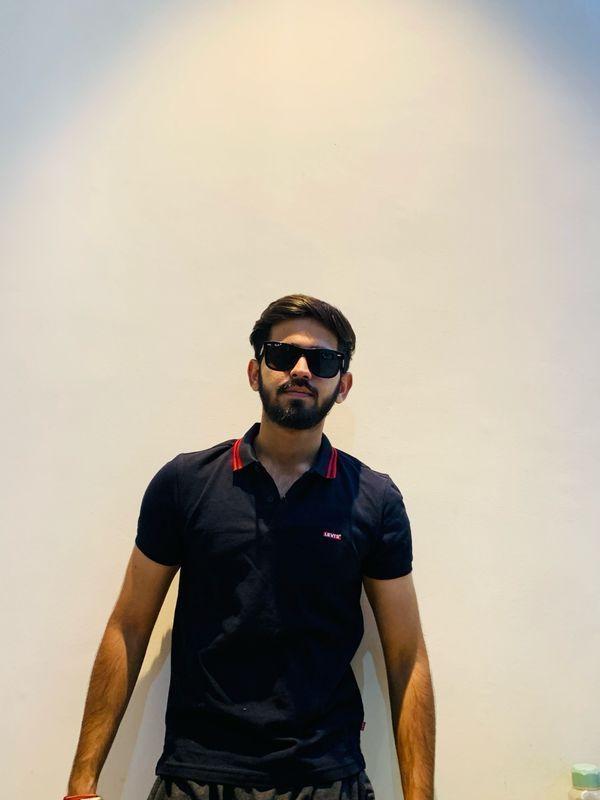
- **Body Mapping:** Unlike the user's current fitted polo, the Kurta is a loose-fit tunic. The virtual garment must sit flush on the trapezius muscles but hang freely from the chest down, creating a straighter, boxier silhouette than the current V-taper. The simulation must extend the sleeves from the current short-sleeve length to the user's wrist, adding realistic fabric gathering at the elbow (antecubital fossa) due to the slight bend in the user's arms.
- **Occlusion Handling:** The user's beard and chin define the upper boundary; the collar must sit *under* the beard line. There are no complex occlusions like long hair or crossed arms. However, the simulation must account for the change in sleeve length; the user's exposed forearms must be completely enveloped by the new fabric, requiring a replacement of skin texture with cloth texture.
PHASE 3: ENVIRONMENT & LIGHTING
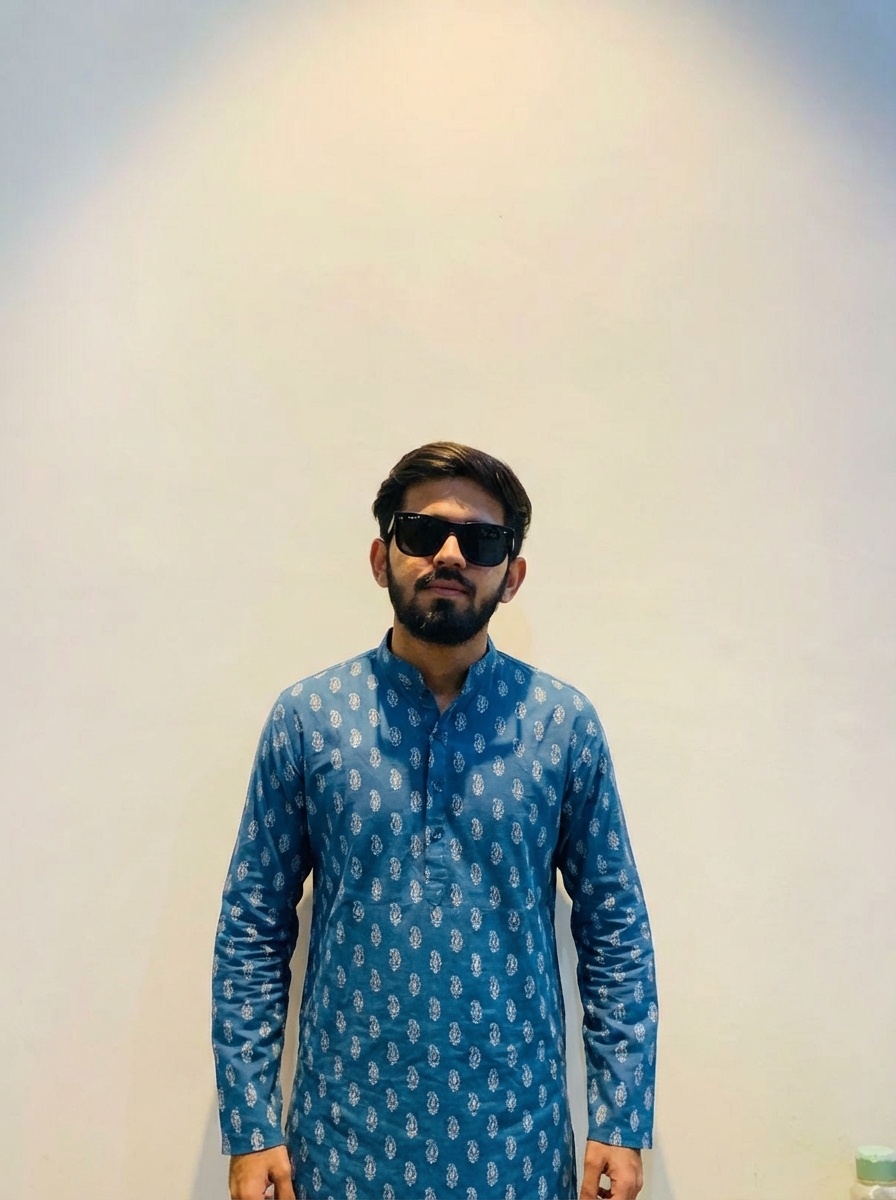
- **Light Match:** The user is under soft, overhead, warm-toned indoor lighting (likely 3000K-3500K), casting soft shadows downwards and slightly to the user's left (viewer's right). The source garment's studio lighting (cool/neutral) must be neutralized. The new garment must accept a warm cast to integrate with the cream-colored background. Ambient occlusion needs to be generated under the collar and in the armpits.
- **Color Calibration:** The source teal is vibrant; it must be slightly desaturated and warmed to match the lower-contrast environment of the user image. The white patterns on the Kurta should reflect the warm ambient room light, appearing slightly cream rather than stark white.
PHASE 4: IDENTITY PROTECTION
- **Facial Lock:** Absolute pixel preservation required for the region above the thyroid cartilage, including the full beard, lips, nose, sunglasses, forehead, hair, and ears. The neck connection point must be seamless.
- **Body Integrity:** The user's skeletal structure (shoulder width and arm length) must remain immutable. While the garment adds volume due to its loose fit, the underlying biometrics (posture, head-to-shoulder ratio) must not be slimmed or exaggerated. The user's skin tone on the hands (which remain visible) must match the face.