Thinking Process
PHASE 1: VISUAL DECONSTRUCTION
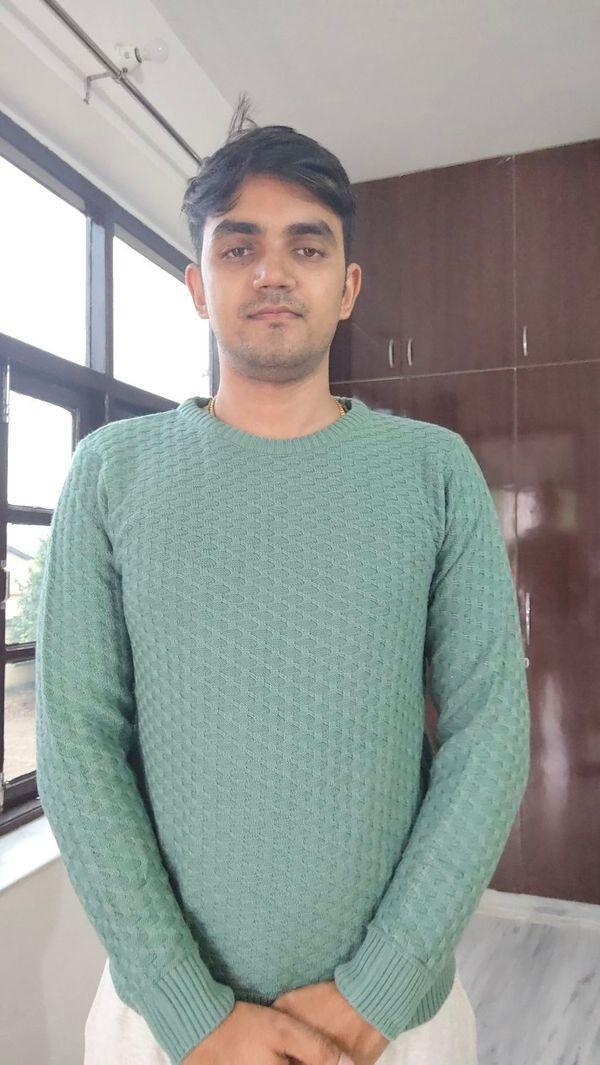
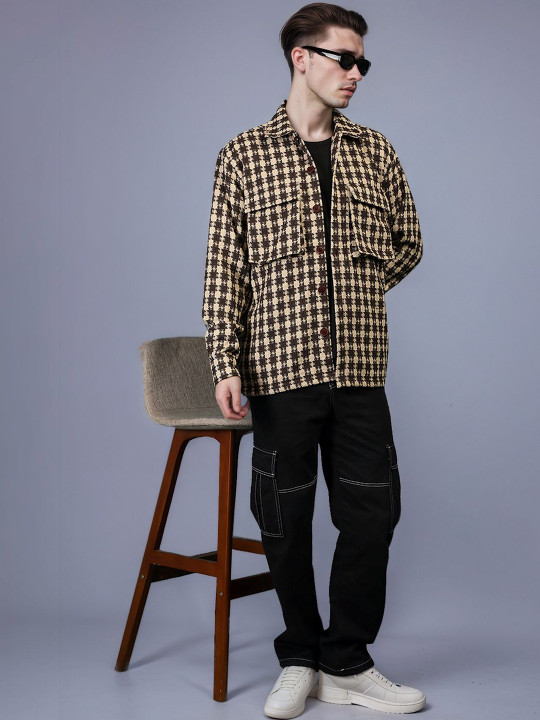
- **Fabric Physics:** The source garment is a heavyweight flannel or wool-blend "shacket" (shirt-jacket). It possesses high structural rigidity and low elasticity. Unlike the user's current knit sweater, this fabric will not conform tightly to the biceps or chest. Light reflection should be matte and diffuse, characteristic of brushed cotton or wool, with zero specular highlights.
- **Key Features:** The distinctive brown and cream houndstooth/checkered pattern must remain geometrically consistent without warping. The two chest pockets with flap closures, the dark contrast buttons, and the structured collar points are critical rigid elements. The open-front styling (revealing the black undershirt) from the source image should be preserved if possible, or intelligently buttoned while maintaining the placket alignment.
PHASE 2: FIT & DRAPE SIMULATION
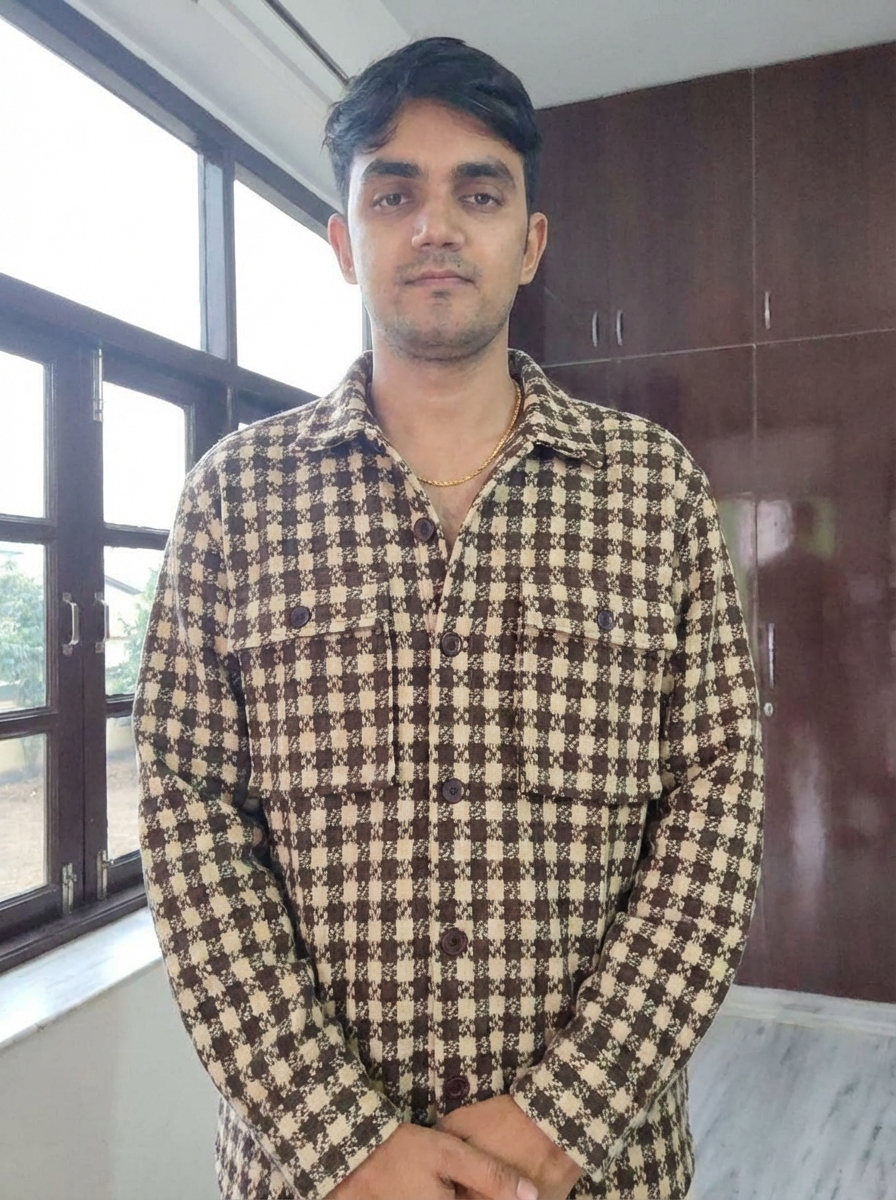
- **Body Mapping:** The target user has a relaxed standing posture with slight shoulder rounding. The flannel shirt must hang with a boxy silhouette, descending vertically from the shoulders rather than tapering at the waist. Due to the thicker material, the fabric should bridge the gap between the chest and the waist without clinging to the midsection. The shoulder seams must align with the user's anatomical acromion, ignoring the bulk of the current green sweater.
- **Occlusion Handling:** The user's clasped hands at the waist are a critical occlusion zone; the bottom hem of the shirt must be masked *behind* the fingers and wrists. The thin gold chain around the user's neck is a high-priority detail that must be segmented and layered *over* the new garment's collar or visible neckline.
PHASE 3: ENVIRONMENT & LIGHTING
- **Light Match:** The user is illuminated by a strong, cool daylight source from the window on the viewer's left. The simulation must apply a lighting gradient to the new garment: bright, cool highlights on the left sleeve and torso, transitioning to deep, soft shadows on the right side of the body. The shadows must match the density of those seen on the user's face and background wardrobe.
- **Color Calibration:** The source garment is warm-toned (brown/cream). To integrate into the user's cool-toned environment, the garment's white balance must be shifted slightly cooler (towards blue) to avoid looking like a pasted sticker. The contrast should be lowered slightly to match the dynamic range of the user's mobile photo.
PHASE 4: IDENTITY PROTECTION
- **Facial Lock:** Absolute freeze on the facial region from the chin upwards, including the ears and the specific hairstyle (including the tuft of hair at the crown). The neck skin tone must blend seamlessly with the new collar.
- **Body Integrity:** Strictly forbidden to transfer the source model's slender/tall body type onto the user. The volumetric estimation must respect the user's actual shoulder width and torso circumference. The user's body shape must remain natural and unaltered.