Thinking Process
PHASE 1: VISUAL DECONSTRUCTION
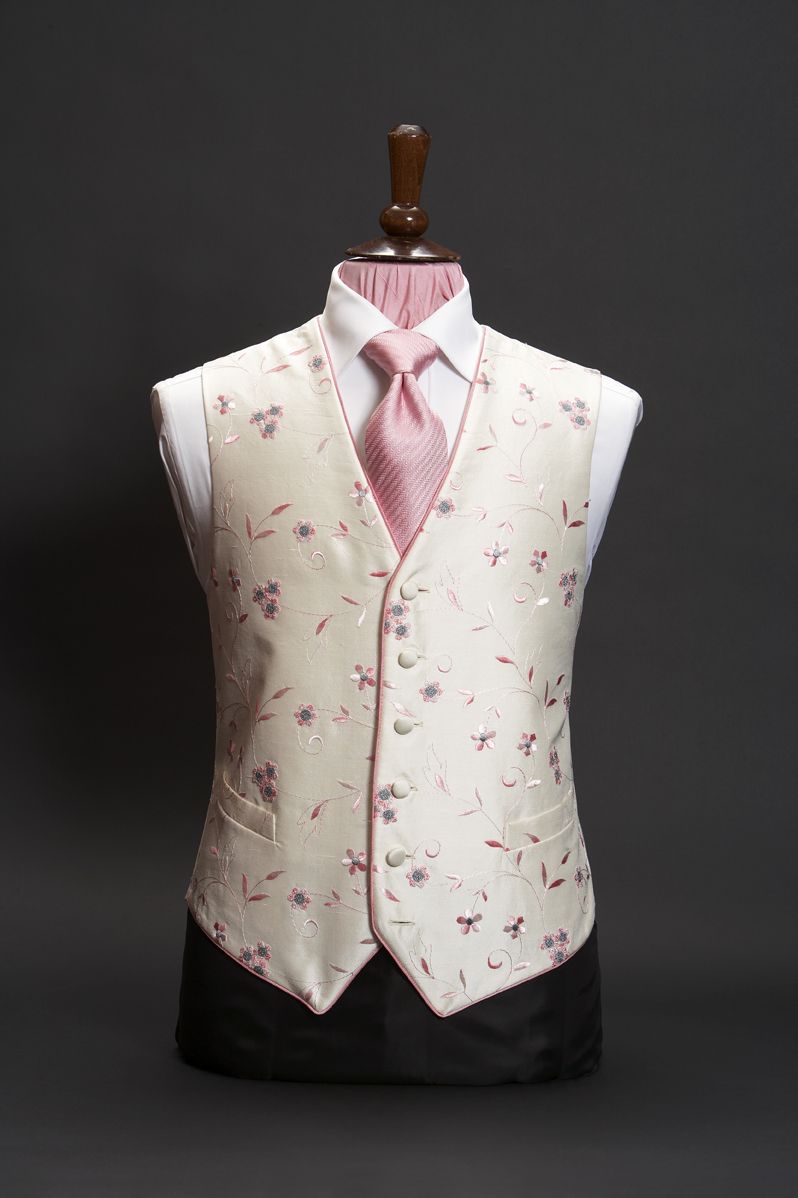
- **Fabric Physics:** The source garment is a layered ensemble (waistcoat over dress shirt). The waistcoat appears to be a silk or satin brocade, which possesses high stiffness and distinct specular highlights (shine) compared to the matte cotton of the underlying white shirt. The tie is a textured woven silk. The simulation must treat the waistcoat as a semi-rigid shell that resists crumpling, while the shirt sleeves (if generated) must behave like crisp cotton.
- **Key Features:** The pink floral embroidery pattern, the precise 5-button vertical alignment, and the pink piping along the lapel edges must be preserved. The "V" neckline depth, the specific knot of the pink tie, and the pointed bottom hem of the waistcoat are critical geometric details. The welt pockets must remain flat against the structure.
PHASE 2: FIT & DRAPE SIMULATION
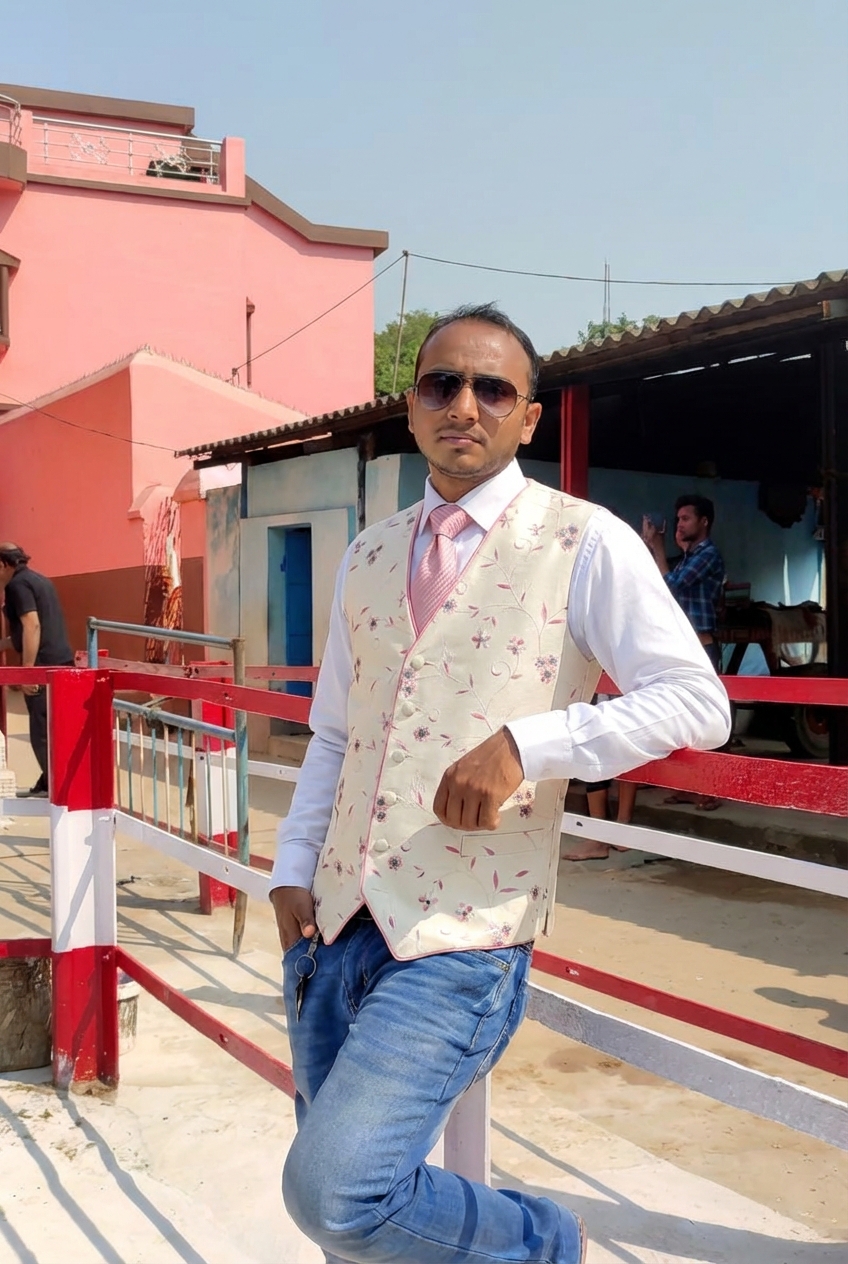
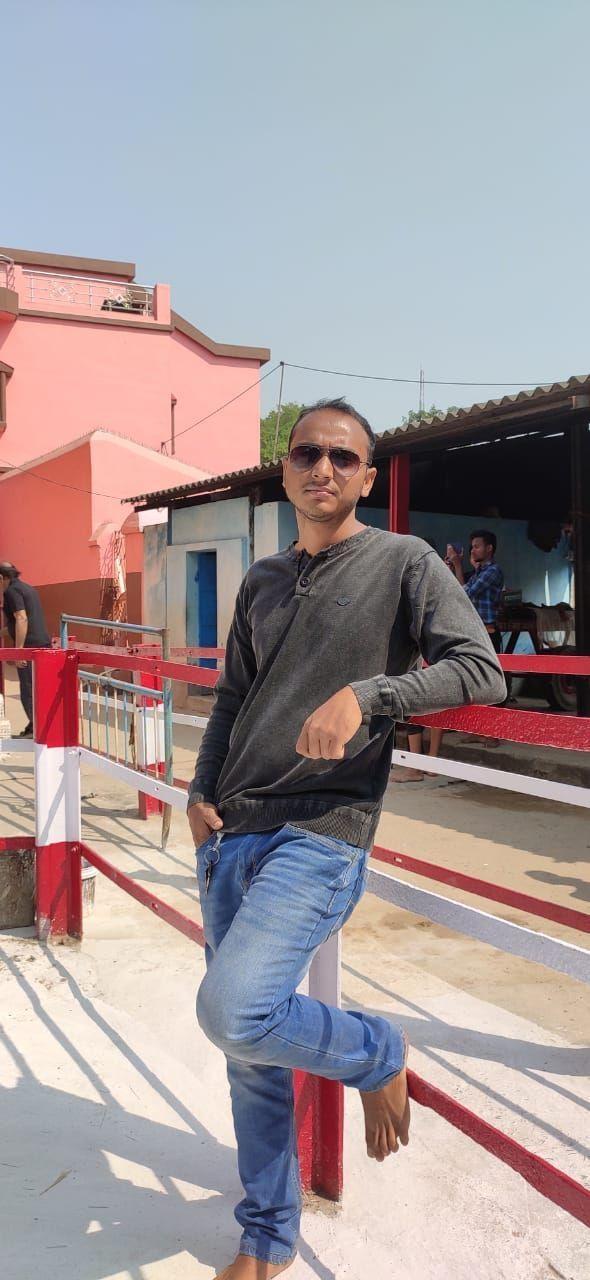
- **Body Mapping:** The user is leaning backward and to his right against a railing. The waistcoat must rotate along the Z-axis to match the tilt of the spine. Unlike the current soft knit henley which clings, the waistcoat must maintain a structured, slightly cylindrical shape, bridging the gap between the chest and waist without collapsing into the abdomen folds. The left shoulder is raised due to the arm resting on the railing; the garment shoulder pad/seam must elevate accordingly.
- **Occlusion Handling:** The user's right hand is tucked into the jeans pocket; the bottom point of the waistcoat will likely overhang this area, requiring a cutout or layer calculation where the hand enters the pocket. The left forearm rests on the red railing; the new garment (specifically the white shirt sleeve) must terminate or compress against this surface. The sunglasses and neck area above the collar bone must remain the top layer.
PHASE 3: ENVIRONMENT & LIGHTING
- **Light Match:** The user is in harsh, direct outdoor sunlight coming from the upper right (viewer's perspective), creating hard shadows. The source garment is lit by soft, diffuse studio lighting. The rendered garment must generate a hard shadow on the user's left side (viewer's left) and cast a shadow onto the railing behind. The silk texture of the vest must catch a strong, warm specular highlight on the right shoulder/chest area to match the sun's intensity.
- **Color Calibration:** The source garment is cool/neutral cream. It must be color-graded with a warmer, slightly yellow/orange tint to match the ambient temperature of the outdoor sunny scene. The white shirt must not appear "studio white" but rather "sunlight white" (slightly warm).
PHASE 4: IDENTITY PROTECTION
- **Facial Lock:** The entire head, including the hairline, ears, jawline, and sunglasses, must be frozen. The neck skin tone must be preserved and blended seamlessly where it meets the new white collar.
- **Body Integrity:** The user's lean torso width must be respected; do not expand the shoulders to match the mannequin's width. The lower body (jeans) and the specific stance (crossed legs) must remain untouched. No slimming or muscular enhancement filters are to be applied.